







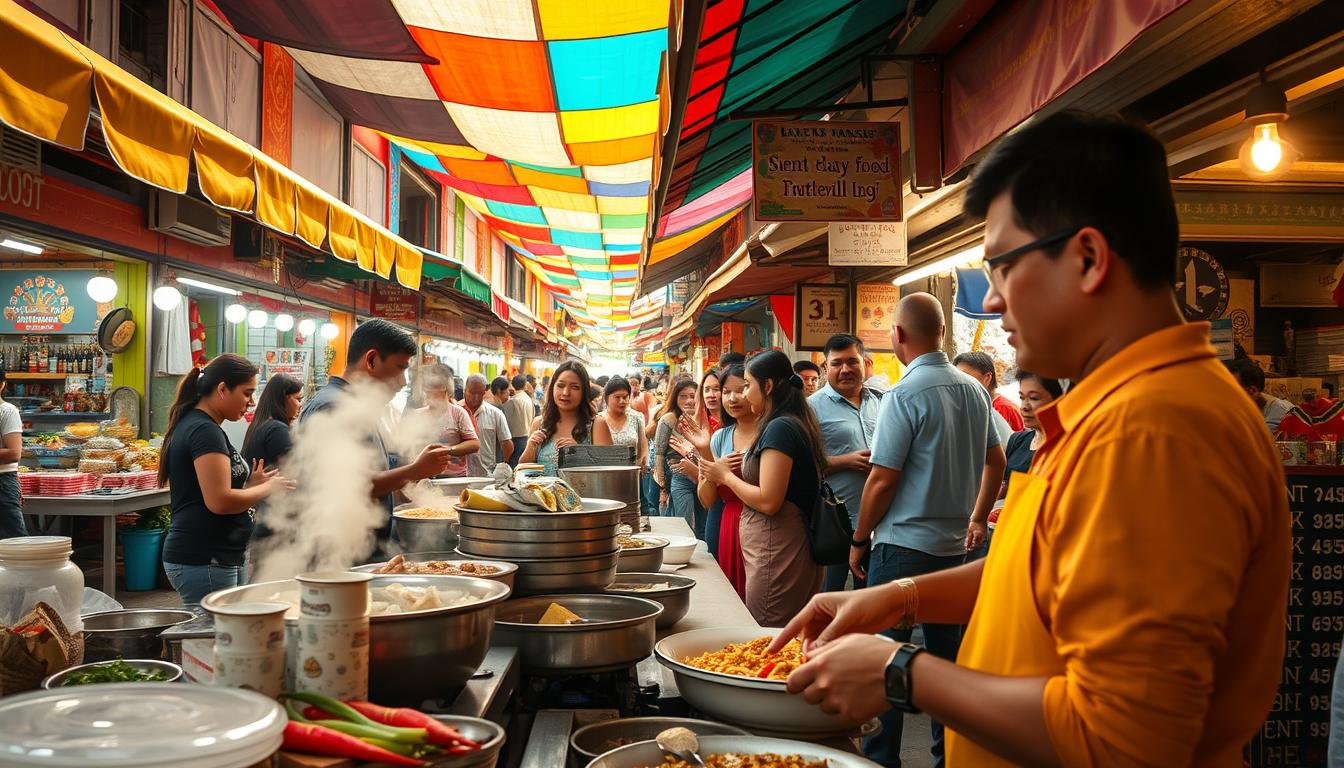
Street food is more than just a quick meal. It’s a window into the soul of cities, from Bangkok’s markets to New York’s carts. Over 2.5 billion people enjoy it every day, showing its importance in culture.
In Thailand, 76% of city folks love street food. It’s not just about food; it’s about culture. In 2017, 103,000 vendors made $8.3 billion, proving its value.
Every dish tells a story of history and migration. Filipino Lumpia and Cambodian Nom Banh Choc are examples. In the U.S., street food helped New York grow, blending cultures.
Today, people want affordable, tasty food. Street food keeps telling our stories, showing who we are and where we’ve been.
The Essence of Street Food: A Global Perspective
Street food is more than just a meal; it’s a peek into the soul of global street food culture. Every day, over 2.5 billion people enjoy dishes from markets to food carts. From Bangkok’s coconut soup to Mexico City’s tacos, these dishes share stories of survival, innovation, and heritage.
“Food has the remarkable ability to bring people together,” says an expert. This shows how street food connects cultures and strangers.
“Food offers a unique opportunity to learn about different cultures and broaden our understanding of the world.”
In Thailand, street food makes up 30% of food sales. India’s international street cuisine market is worth $5 billion annually. New York’s food trucks and Brazil’s authentic street vendors, like the Baianas selling acarajé, show how traditions last.
In Cairo, koshari vendors and Nigerian suya sellers prove street food’s role in keeping cultural identity alive.
Street food traditions evolve but stay true to their roots. Falafel, born in the Middle East, now appears in New York tacos and Berlin salads. These dishes are loved because they’re affordable and reflect local values: efficiency in Manhattan, community in Lagos.
As global markets expand, street food remains a symbol of humanity’s shared love for connection and flavor.
Street Food as a Reflection of Local Identity
Street food shows off local identity through its ingredients and traditions. Coastal cities like Bangkok are known for seafood dishes like pad thai and som tam. Inland areas, on the other hand, offer rich curries and noodle soups.
Geography plays a big role in shaping street food. For example, northern Thai khao soi is coconut-rich, while mango sticky rice is sweet and tropical. These dishes tell stories of climate, trade, and cultural exchange.
“Geography has a deep impact in determining the culinary identity of the nation.”
Community street vendors keep neighborhood food culture alive. In Oaxaca, Mexico, tlayudas show Zapotec heritage. Kansas City’s burnt ends highlight BBQ traditions.
Vendors mix flavors to please local tastes but keep traditional methods alive. Thai street food, for instance, combines Chinese, Indian, and Malay flavors. In New Orleans, beignets and po’ boys connect to French and Creole roots.
These vendors are more than just sellers. They are storytellers. Their stalls become places where regional pride is celebrated, linking every bite to a place’s history and soul.
Street Food and Social Connections
Street food markets are more than just places to eat—they’re street food community building spots. Picture a New Orleans jazz festival, where food trucks offer crawfish étouffée. People laugh and share plates, turning strangers into neighbors.
In Mexico City, taco stands are open late, attracting families and friends. They gather under streetlights to make corn tortillas. These moments create communal dining culture, where meals are stories told together.
At Portland’s food carts, customers are more than just buyers—they’re part of a food vendor relationships network. Vendors recall favorite orders, and patrons bring friends, making stalls local icons. Even mooncakes, eaten during the Mid-Autumn Festival, connect generations with their sweetness.
These traditions endure as street food evolves: think ice cream-filled mooncakes in today’s markets. Yet, as cities expand, vendors face challenges from regulations and costs. Social media helps share their stories, linking old and new communities.
Street food’s strength is in its simplicity. A shared meal can turn a busy corner into a welcoming place for everyone.
Health and Safety Concerns in Street Food
Street food is loved worldwide, but it faces a big challenge. Governments are working hard to make it safe. They have street food safety regulations to fight off contamination risks.
Studies show a big push for food safety in cities. But, there are many hurdles. In India, for example, 29.6% of street vendors use unsafe water. This breaks 
There have been serious outbreaks, like the 1983-1992 Shandong Province incidents. These incidents killed 49 people. Today, places like Portland and Thailand are finding new ways to keep food safe.
The FAO says keeping street vendors clean is key. But, in India, 4.5% of water samples had E. coli. In Colombia, 30% of vendors had Salmonella, showing a need for better training.
To eat safely on the streets, look for stalls with permits and clean areas. Cities like Singapore show it’s possible to keep traditions alive while ensuring safety. As cities grow, smart rules can help keep food safe and traditions alive.
The Economic Impact of Street Food
Street food is more than just a snack; it’s a key driver of the economy. In Thailand, street food economic benefits account for 32.4% of the food industry’s revenue. Over 103,000 vendors bring in 271,355 million Thai baht each year. These food cart businesses create jobs, buy local ingredients, and draw tourists who spend 20% of their travel budgets on street food.
From Bangkok’s Michelin-starred stalls to Phuket’s UNESCO-recognized food scene, street vendors show that culinary entrepreneurship can succeed with little money.
Vendor microeconomics reveal how small businesses impact economies. Thailand’s street food supports 69% of its food businesses, connecting farmers to consumers and boosting supply chains. But, many vendors face challenges like lack of permits and eviction threats.
Cities like Bangkok use street food’s appeal to attract visitors. The Tourism Authority of Thailand spends 20% of its budget on food tourism promotion. This mirrors global trends where street food economic benefits draw visitors to cities like New York and Los Angeles through food carts and pop-up markets.
Street vendors work around the clock, serving everyone from office workers to tourists. Their vendor microeconomics model—low startup costs, high turnover—opens doors for immigrants and women in business. But, without formal recognition in urban planning, their future is uncertain. As cities rethink public spaces, embracing street food’s economic value could lead to new growth and cultural pride.
Street Food Trends in the United States
New York City’s street food history goes back centuries. Oyster stands once lined the Hudson River, feeding the city. Today, the American street cuisine scene is a mix of old and new. Over 10,000 vendors in NYC, from The Halal Guys to Smorgasburg, keep the tradition alive.
Food trucks like Wafels & Dinges and Korilla BBQ show mobile dining is creative. You can find gourmet items like truffle fries and kimchi burgers. Markets like the Pennsy Food Hall offer everything from $1 coconut ice cream to Michelin-starred dishes.

Social media plays a big role in this change. A TikTok video can make a truck famous overnight. Brands like Delicioso Coco Helado attract people with low prices, while others like Nuts 4 Nuts appeal to professionals.
“Naruto” inspired sushi bars, while “Harry Potter” fan theories revived butterbeer sales nationwide
As food halls grow, like the South Bronx market, American street food keeps changing. It’s a blend of history, technology, and global tastes, all in carts or stalls.
The Role of Technology in Street Food
Technology is changing how street food vendors meet their customers. Apps like StreetEats and TripTruck make it easy to order food online. They show where food trucks are, in real time.
Street vendor apps now have loyalty programs and menu updates. This helps manage crowds at food festivals. It shows how street food marketing is evolving, mixing old and new.
Social media is key for street food marketing today. Vendors share photos of their dishes, drawing in followers. Fans then order using QR codes.
This approach builds loyalty, as seen in cities like Austin. Food trucks there use GPS to tell fans where they are. A study says this tech helps vendors connect and build relationships.
Technology helps vendors adapt fast, too. During the pandemic, they started using contactless payments and delivery. This boosted sales by 30% in some places.
Apps like PoshTaco help track inventory and cut waste. This supports sustainable practices. But, small vendors might face challenges with app costs or learning digital skills.
It’s important to keep the human touch in street food. As cities grow, the mix of tradition and tech keeps street food a key part of city life.
Sustainability and Environmental Considerations
Street food is loved worldwide, but it also faces big challenges and chances for green ideas. From sustainable street food practices to eco-friendly food carts using solar power, vendors are changing how we eat outside. In the U.S., green food vendors use compostable containers and local ingredients, reducing waste and keeping prices low.
Old ways like banana leaf wrappings and bamboo trays help cut down on trash. New ideas include reduced waste street dining thanks to groups like the Alliance for Sustainable Packaging for Foods (ASPF). They aim to make half of plastic packaging recyclable or compostable by 2025, matching U.S. Plastics Pact goals. Some vendors even install water-saving stations, helping to reduce the 800 liters of water used daily in food prep.

But, there are also big challenges. Street food waste harms water, and charcoal shortages affect cities. Yet, new ideas like the DDI approach, focusing on sustainable, culturally accepted ingredients, give us hope. At events like the FMI Midwinter Conference, leaders talk about making these ideas real. As cities grow, eco-friendly food carts show we can eat well without harming the planet.
Cultural Preservation Through Street Food
Street food is like a living museum, showing us preserving culinary heritage. Vendors in places like Tokyo and Mexico City keep traditional food techniques alive. These dishes tell stories of cultures and traditions.
In Japan, washoku artisans are recognized by UNESCO for their sushi-making skills. In India, the Slow Food Movement protects indigenous street cuisine like Kerala’s appam. It’s made with local coconut and rice.
But, cultural food preservation is facing challenges. Fast food is growing fast in Asia, threatening family recipes. Yet, young chefs are bringing back dishes like Vietnam’s pho with a modern twist.
A 2023 UNESCO report says heritage cuisine evolves but stays true to its roots. It talks about how mole poblano in Mexico adapts while honoring its Aztec origins.
Heritage cuisine is a bridge between past and future, says chef Ayesha Takia of Mumbai’s Spice Revival Project. “Every bite of our grandmothers’ recipes is a lesson in survival.”
Street food is affordable, making it a common bond. Over 70% of Asian youth seek out traditional dishes to connect with their heritage. By supporting these vendors, we protect not just flavors but the stories behind them.
Challenges Facing Street Food Vendors
Street vendors around the world face big challenges. These come from street vendor regulations and urban policy impacts. Zoning laws and permits often limit where they can sell. Rising rents also push them into less desirable areas.
In many cities, street food gentrification is a major issue. It leads to vendors being pushed out, breaking up communities that have relied on these food spots for years.

Getting basic resources is a huge problem. In Lesotho, 90% of vendors don’t have clean water. In Uganda, 80% lack proper sanitation. This makes health risks much higher, with over 600 million people eating street food daily facing contamination threats.
More than 60% of vendors globally don’t get food safety training. This puts them at risk of outbreaks from harmful bacteria like E. coli and Salmonella.
Education is another big hurdle. In Sub-Saharan Africa, adult literacy rates are under 60%. This makes it hard for vendors to deal with complex vendor displacement issues. But, there’s hope. Cities like South Africa are starting to prioritize the rights of informal vendors. This shows that it’s possible to balance rules with preserving cultural traditions.
The Future of Street Food
Street food is always changing, with new vendors bringing fresh ideas to the table. From Seoul’s tteokbokki carts to London’s lively markets, they mix old traditions with new tech. Mark Laurie of the Nationwide Caterers Association notes that street food is becoming more popular in the UK.
It’s now a go-to for fresh, real meals that people love. This shift is making pre-packaged foods less popular.
Looking ahead, health and being green will be big. South Korea is leading the way with more vegetarian and organic street food. Central Asian studies show that city centers want more energy-rich foods, pushing vendors to be creative while staying true to their roots.
Technology and growing cities will change how street food brings people together. New vendors use digital tools to make things easier but keep the personal touch that makes street food special. Street food has come a long way, from its humble beginnings to its global fame today.
It’s a bridge between the past and the future, showing its lasting importance in our culture.