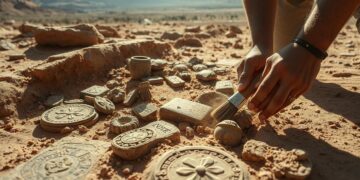





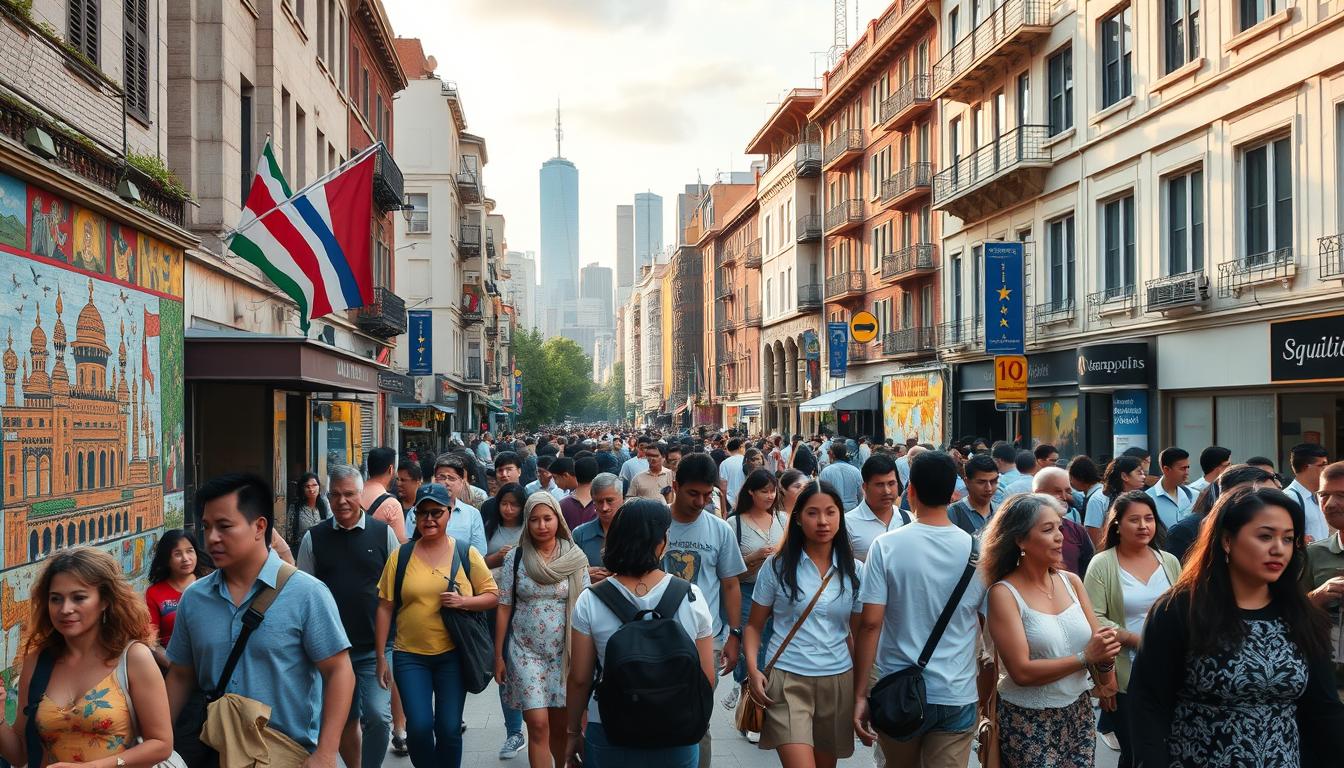
Human history is filled with the stories of migration. People moving carry their cultures, traditions, and ideas to new places. This blending of cultures creates vibrant exchanges.
The African diaspora, for example, has greatly influenced global societies. This happened through both forced and voluntary movements over centuries.
Migrations have always led to cultural changes. The Huns moving to Europe in 100 B.C. and today’s urbanization in cities like Calcutta show this. Even in crises, like the 1919 influenza pandemic, migration helped spread both diseases and survival strategies.
Today, 230 million international migrants (UN, 2004) continue this legacy. They mix traditions in new ways.
Migration breaks down cultural boundaries, leading to more diversity. Studies show that communities like Kawangware District in Nairobi keep their land control but adopt new practices. Holmes County migrants also used family networks to adapt, adopting birth control methods by 1970.
These stories show that cultural identity is always evolving. It changes through constant interaction.
Modern diaspora communities, like those in Manhattan’s early 20th-century neighborhoods, show migration’s power. As populations grow, so does cultural capacity. This creates a feedback loop that drives human creativity.
Understanding Migration: A Brief Overview
Human migration has shaped societies for thousands of years. It has driven cultural evolution from ancient times to today’s global migration. Now, people move for many reasons, like economic opportunities or to escape conflict.
These movements lead to demographic change, changing neighborhoods and economies. It’s a big shift.
In the UK, ethnic minority populations grew by 53% from 1991 to 2001. This shows how migrant communities impact local and national identities. Cities like London and New York are now multicultural societies, blending traditions.
But migration’s effects vary. Displacement can strain health systems and social bonds. Debates over mental health support for displaced groups show this.
“Diversity enriches every society and contributes to social cohesion,” declared the 2016 United Nations Summit on refugees and migrants. This vision contrasts with rising xenophobia, urging global collaboration to address both challenges and opportunities.
It’s important to understand migration’s layers. Its causes, consequences, and cultural effects are key to navigating today’s world. As borders blur, cultural boundaries also fade, shaping a future of shared stories and traditions.
Culture: What Does It Mean?
Culture is more than just traditions. It’s the shared knowledge and practices that shape how groups live. It’s like a living system. Through cultural transmission, humans pass down values, art, and customs.
This process, studied by scholars like Boyd and Richerson, lets societies adapt faster than genes can evolve. From music to laws, these elements form a group’s cultural heritage. Yet, they’re always changing.

Cultural boundaries define groups but aren’t set in stone. Migration breaks these lines, mixing ideas and creating new cultural diversity. Take the U.S., built by waves of immigrants blending traditions into its identity.
Even cultural evolution happens when people share skills or foods. Like how Mexican cuisine became a staple in American cities.
Today, cultures evolve through exchange, not isolation. The old idea of fixed cultures clashes with reality. As societies grow more connected, cultural transmission speeds up.
Think global music trends or social media’s role in sharing stories. This shift means understanding culture isn’t just about preservation. It’s about how we adapt and learn from each other.
How Migration Influences Languages
Linguistic diversity grows where migration meets culture. Over 281 million international migrants carry their languages across borders. This sparks language evolution through contact. In Miami, Cuban Spanish terms like “vaina” blend into English, creating phrases like “making a party” instead of “hosting.” Such examples show how migration fuels multilingualism and cultural hybridization.
Norse settlers in England left marks in Old English, shaping modern terms like “sky” and “egg.” Today, Berlin’s Kiezdeutsch merges Turkish and Arabic into German. Oslo’s “Kebabnorsk” mixes Arabic and Punjabi. These dialects show how migration reshapes speech patterns, proving language is never static.
“Language evolution accelerates where migration brings diverse speakers together,” noted a 2022 study on global linguistic shifts.
Data shows 70% of languages face change due to migration. In urban hubs, 50% of residents speak non-dominant tongues, fostering cross-cultural influence. Yet, 60% of second-generation immigrants retain ancestral language fragments, blending traditions with new identities.
Migration enriches linguistic diversity but also threatens lesser-known tongues. One language dies every two weeks, often due to dominant languages overshadowing smaller ones. Yet, efforts like MLE (Multicultural London English) show how youth code-switching creates vibrant new forms of expression.
The Role of Food in Cultural Exchange
Food is a universal language that bridges cultural divides. Immigrant cuisine, from taco trucks to pho stalls, creates vibrant culinary landscapes in cities worldwide. These eateries aren’t just businesses—they’re cultural touchstones where traditions like culinary traditions are preserved while adapting to new tastes.
When communities migrate, they bring dishes but often blend them with local flavors. This food fusion creates hybrids like Tex-Mex or sushi burritos. For instance, Italian immigrants brought pizza to America, now a staple far beyond its origins. British love for Indian curry shows how flavors travel and transform.

Yet preserving heritage matters too. Over 70% of immigrants prioritize cultural preservation, teaching children traditional recipes. Projects like Sabadell’s 2007-2008 initiative highlight this: women merged cooking with fashion, blending cultural stories through meals and textiles. “Sharing recipes builds trust,” one participant noted, proving food’s role in community bonding.
Modern cities like Vancouver show how cultural assimilation happens daily—markets now stock global ingredients, and fusion dishes appear on 15% of U.S. menus. Even staples like pizza or sushi, once foreign, are now symbols of cultural unity. Every bite tells a story of migration, resilience, and shared humanity.
Migration and Art: A Cultural Transformation
Immigrant artists have always been key in cultural innovation. They mix traditions from their home countries with new places. The play Les fils de Hasard, Espérance et Bonne Fortune is a great example. It has been performed in Liège every year for five years.
This play celebrates 70 years of Belgian-Italian labor agreements. It tells stories of migrant miners and today’s struggles. By 2019, it had drawn 23,000 viewers. It also showed historical artifacts and modern migrant stories, linking past and present through artistic heritage.
Studies, like a 2014 book on New York and Amsterdam, show second-generation artists’ impact. They reinterpret traditions, making works that show their mixed identities. IMISCOE’s network and the 2010 POPADIVCIT committee show more research on migration’s artistic influence. Even in the pandemic, artists in Brussels used digital platforms to keep cultural talks going.
Migration has always inspired cultural innovation. From Impressionists to today’s global art, it keeps evolving. Cities like Liège show how artistic heritage is not just kept but also reinvented by those who move.
Traditions and Customs: The Changing Landscape

When communities move, their traditions change. Immigrant customs like Diwali lanterns or Lunar New Year parades mix with local ones. Religious practices and holiday celebrations also evolve to fit today’s world.
Families balance keeping old traditions and trying new ones. A second-generation Mexican American might combine their ancestors’ cultural rituals with Thanksgiving. This shows how identity can blend past and present.
Host societies also play a part. Some welcome immigrant traditions, while others push for assimilation. Yet, over time, even those who were skeptical often accept these customs. For example, London’s Notting Hill Carnival is now a shared cultural event.
Technology speeds up these changes. It lets diaspora communities share holidays worldwide. A Turkish family in Berlin might video-call elders during Ramadan, mixing digital and traditional practices. Younger generations are reimagining rituals, making cultural heritage a living story.
These changes are not losses but reinventions. As traditions evolve, they connect different worlds. This creates a richer cultural scene where immigrant traditions inspire both newcomers and hosts to see heritage as a shared journey.
The Socio-Economic Impact of Migrant Communities
Migrant entrepreneurship boosts the economy by filling job gaps and sparking new ideas. Small businesses, like ethnic grocery stores or tech startups, create jobs and make local economies stronger. In the U.S., immigrant founders make up 27% of science and engineering master’s graduates, adding to the skilled workforce.
Workers send $689 billion back home each year, helping families in their countries of origin. This money often goes to education and healthcare, helping break the cycle of poverty. In host countries, migrant labor fills important roles, from farming to tech, preventing slowdowns in key sectors.
Research shows migrant workers increase productivity. A 2012 study found their arrival raised U.S. native workers’ wages by 0.6%, helping to solve skill shortages. Immigrants also innovate more, filing patents at twice the rate of native-born, driving economic growth. This helps both migrants and host communities achieve long-term social mobility.
Over time, economic success often leads to cultural adaptation but not full assimilation. Second-generation migrants often bridge cultural gaps while improving financially. Their success shows how economic integration shapes modern economies and vice versa.
Education: The Intersection of Cultures
Schools today are where cultures meet and mix, shaping the next generation. With over 15% of the world’s migrants being children, education systems worldwide face a big challenge. They must foster multicultural education while boosting academic achievement.
In classrooms from Ukraine to the U.S., immigrant students face a dual world. They balance their heritage languages with new societal norms. 
Bilingual education programs show great promise. In Finland, teachers work with specialists to support learners. Scotland integrates English as an Additional Language (EAL) services into curricula. These efforts show educational integration is a two-way street.
Research shows that when schools value students’ home languages, their knowledge transfer skills improve. This leads to better academic success.
Recent studies highlight that immigrant students often do well academically, despite challenges. For example, Ukrainian refugee children in European schools bring resilience and multilingualism. These traits enrich class dynamics.
Yet, biases like “cultural deficit” myths persist, overlooking traditions like language brokering. By embracing frameworks that honor all forms of knowledge, schools can create spaces where hybrid identities thrive.
The Role of Technology in Cultural Exchange
Technology changes how cultures meet. Today, the digital diaspora is strong, thanks to apps like WhatsApp or Zoom. These tools help migrants stay connected to their home traditions.
Social media lets families share recipes, festivals, or music across oceans. This creates virtual communities that connect continents. Platforms like Instagram or TikTok make cultural practices global, mixing globalization and culture in real time.
But, there are challenges. While 80% of Americans use social media, minorities often face slower internet speeds or fewer devices. This technological diffusion isn’t equal. Low-income families struggle to get the tools others take for granted.
During the pandemic, this issue became clear. Schools saw that 13% fewer rural homes had broadband than urban areas.
Yet, there’s hope. Programs like the Emergency Connectivity Fund help, funding devices for 240,000 students. Immigrants want to learn digital safety and tools, showing they want to be included.
As technology grows, so must our efforts to make sure everyone can join the global cultural conversation.
Legislation and Policy: Shaping Cultural Dynamics
Government policies greatly influence how migration changes cultural identity. Integration policies and multicultural governance strategies decide if communities keep their traditions or try new things. For example, citizenship laws often require a certain language, affecting how newcomers connect with local culture.
Recent studies reveal that migration leads to cultural convergence. This means home and host societies become more similar over time. This change is driven by “cultural remittances”—ideas migrants share, changing both cultures. Policies like immigration reform can speed up or slow down this cultural exchange.
Cultural remittances are the dominant force driving cultural convergence, challenging assumptions about cultural decline.
Nations must make tough choices when balancing cultural rights. Some countries push for assimilation, while others support diversity by backing ethnic organizations. Legal frameworks also influence access to education and public services, affecting tradition persistence or evolution.
Research from 208,000+ studies shows the importance of policies that value cultural diversity without isolating groups. As discussions on citizenship laws and immigration reform continue, the goal is to promote inclusion without losing heritage. Effective multicultural governance needs policies that understand global trends and local realities.
Community Identity: Growing Beyond Borders
Modern migration changes how we see cultural belonging. Today, communities mix traditions from different places, creating hybrid cultures that go beyond old borders. For example, Germany’s Turkish diaspora has grown, with over 2.5 million people balancing transnational identity through dual citizenship and cultural exchange.
Diaspora networks are strong online, connecting millions with digital tools. With 4.9 billion internet users, people share customs, art, and ideas worldwide. This sharing leads to new traditions, like fusion foods and music that blends global styles.
But, it’s hard to balance loyalty to one’s culture and adapting to a new one. Studies show 14 countries now allow dual citizenship, showing this balance is becoming more common.
Now, communities work together across borders. Migrant workers are key in sectors like agriculture and hospitality, helping economies grow while keeping ties to their roots. These connections spark debates on preserving culture versus adapting to new environments. As policies change, identities become more fluid, influenced by both heritage and new experiences.
The Future of Cultures in a Migratory World
Migration is changing how we live together, making us think about keeping cultures alive while joining the world. New traditions are emerging, blending old ways with modern tech and shared experiences. Studies show that migration leads to both similarities and differences in cultures.
People moving to new places often change things back home and in their new homes. Sadly, over 600 languages have disappeared in the last 20 years, threatening our cultural heritage. It’s important to keep diversity alive while embracing change.
Children of immigrants are creating new identities by mixing traditions. Programs like language apps and global art projects help keep cultural roots strong. Even in tough times, like Moldova after 1998, cultural exchange can lead to new ideas.
Now, technology helps communities save their languages and customs, making sure traditions grow and change. This way, we can keep our cultural heritage alive.
Climate change and conflicts will push more people to move, testing our cultural strength. But cities like New York and Berlin show that diversity can spark creativity. The goal is to integrate globally while honoring our heritage and welcoming new ideas.
As cultures mix, they bring fresh solutions to our problems. From new foods to ways to fight climate change, every culture adds to our shared future. Our journey is about adapting and evolving together, with every voice counted.