






Storytelling has been a key part of human communication for ages. It connects generations through shared tales. From cave paintings to digital screens, it shows our need to understand the world and bond with others.
Oral history started over 30,000 years ago, with the Lascaux cave paintings in France. These images were more than art; they were stories passed down through speech. Epic poems like The Iliad and religious tales from cultures like the Choctaw show how oral stories kept traditions alive before writing.
Now, digital platforms carry on this tradition, allowing anyone to share stories worldwide. But the main goal remains the same: to inspire, teach, and bring people together. This evolution from cave walls to social media highlights storytelling’s enduring role in connecting us.
The Origins of Storytelling
Ancient storytelling was key for early humans to connect and survive. In France’s Lascaux cave, paintings from over 30,000 years ago show prehistoric narratives of hunts and rituals. These images were matched with stories passed down through generations.
The Ngadjonji tribe of Australia has a story about volcanic eruptions. Scientists now believe this happened 10,000 years ago.
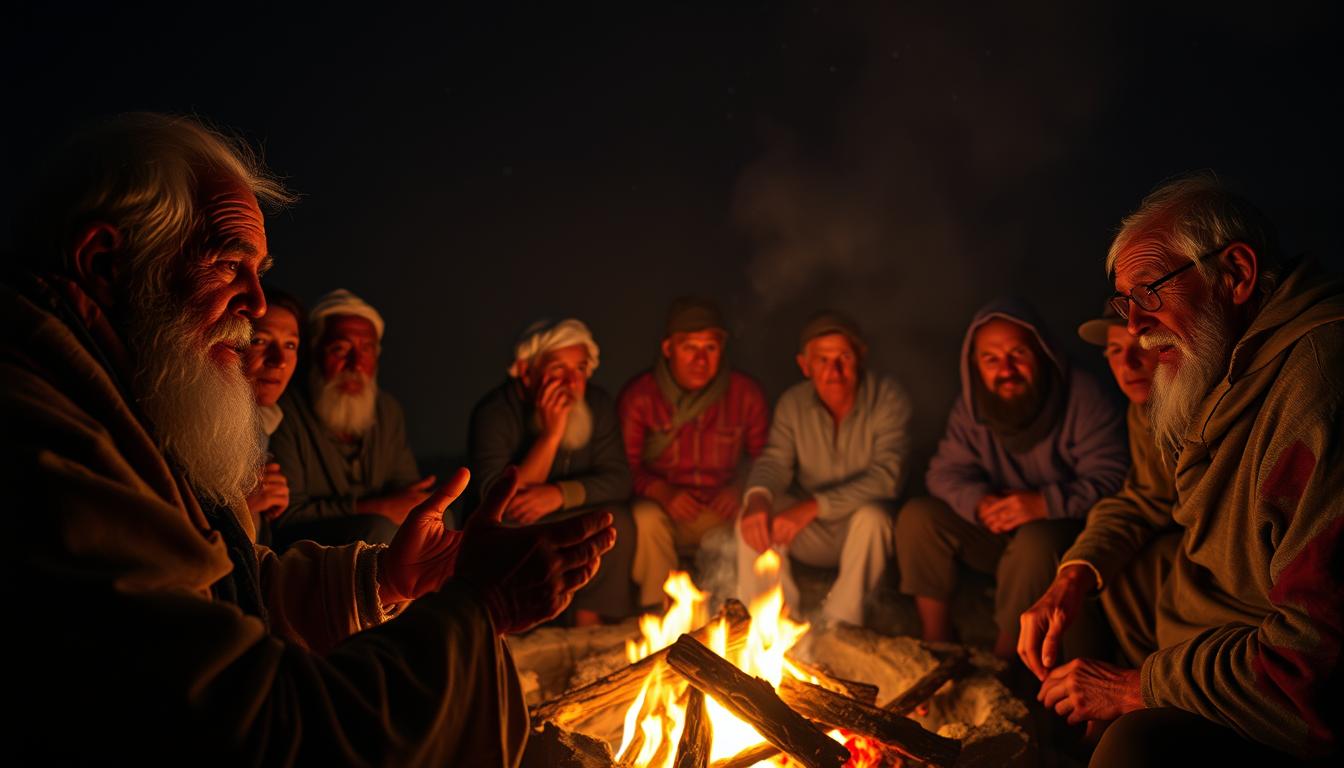
Oral traditions thrived around campfires, where people shared myths and lessons. In foraging cultures, 84% of nighttime talks were about stories. These stories mixed fun with learning.
Griots in West Africa memorized family histories and stories. Celtic bards sang epic tales like the Táin Bó Cúailnge. These stories kept cultural memories alive before writing existed.
From cave walls to campfires, these methods helped humans understand their world. Stories shared wisdom, reducing risks. Even fictional tales often had truths, like accurate plant descriptions in Indigenous Australian myths.
As societies grew, so did their storytelling methods. But the main goal stayed the same: to connect people through shared stories.
Early Written Storytelling
Before books, stories first appeared on clay tablets and stone. The Epic of Gilgamesh, written in Sumerian, is one of humanity’s oldest epic poems. In Egypt, scribes used hieroglyphics to tell of pharaohs and gods on temple walls. They combined art and text to keep sacred stories alive.

These ancient texts changed how we share stories. Scribes in Mesopotamia and Greece wrote down tales like Homer’s Iliad. This kept details the same over time. Clay tablets and papyrus scrolls carried wisdom, blending written and spoken traditions.
Early epic poems like the Mahabharata in India were both memorized and written. This shows how writing and memory worked together. The flexibility of ancient texts allowed myths to grow while keeping their core lessons. This way, stories like the Epic of Atrahasis reached many, even far from where they started.
Storytelling in Different Cultures
Cultural stories shape who we are worldwide. From West Africa’s griots to Indigenous tales, they are key. Griots in West Africa keep history alive with their words, a skill passed down through generations.
Women, known as griottes, carry on these stories. They make sure folklore lives on in their communities.
Choctaw traditional tales tell of creation and migration. Hawaiian moʻolelo mix history and legend to teach morals. These stories, often told with song or dance, show different views of the world.
In Ireland, seanchaí once roamed villages, sharing old stories. Today, people are getting interested in these tales again.
Modern storytelling also thrives. The 2004 Nextel campaign used a “Done” slogan for Hispanic markets, calling it “Ya.” This shows how mythology and folklore shape how we communicate. From Latin America’s detailed stories to Anglo cultures’ straightforward ways, it’s all about connection.
Stories from everywhere, like Norse sagas and Indian epics, show how important they are. By celebrating these stories, we honor our shared human desire to share, remember, and teach through tales.
The Evolution of Storytelling Mediums
Storytelling has changed a lot over time. Storytelling mediums have evolved with technological evolution. Early humans painted stories on rock walls over 40,000 years ago. They showed myths and everyday life in colorful pictures.
The invention of writing, like cuneiform around 3100 BC, made stories last longer. It turned tales into permanent records, like the Epic of Gilgamesh. The printing press in 1440 made books more common, sharing stories with more people.
Modern performance art started in theaters, where Shakespeare’s plays brought stories to life. The 20th century saw radio dramas, TV shows, and movies. These added visuals and sound to create deep experiences.
Now, digital storytelling is big through podcasts, YouTube, and social media. Over 2 million podcasts offer new voices. Video games like Final Fantasy VII and virtual reality let us dive into stories, mixing multimedia narratives with action.

Smartphones and algorithms have changed how stories spread, but old ways are not forgotten. Families share stories, and books are loved. The technological evolution has added new tools, not replaced old ones.
From cave drawings to VR headsets, each medium adds to our shared stories. It shows that stories change but stay true to our human nature.
The Role of Storytellers and Bards
Across cultures, professional storytellers have been key in keeping traditions alive. Bards in Celtic societies, griots in West Africa, and shamans in Indigenous communities all used stories to shape identity. Bards, trained for years, memorized laws, myths, and genealogies, making them oral historians. Their performances mixed music and poetry, often in structured forms.
Griots in Mali and Senegal recite genealogies that span centuries, linking families to ancient empires. Their role as oral historians ensures history survives without written records. Shamans, on the other hand, blended stories with spiritual practices. They used tales to explain natural phenomena or moral codes.
“A griot’s voice is the thread that stitches together the past and future,” says a modern West African storyteller. “Every word we speak honors ancestors while guiding the living.”
Today, professional storytellers use digital platforms to share myths. Podcasters and YouTube creators now share stories once told around fires. While bards once relied on patronage, modern storytellers use social media to reach global audiences. Yet their core mission remains: preserving narratives that bind communities.
From ancient Celtic competitions to TikTok poets today, these figures transform stories into living legacies. Their work reminds us that every tale, whether sung, recited, or streamed, carries the heartbeat of humanity.
Storytelling and Human Connection
Storytelling connects generations and cultures, making family stories part of our cultural identity. Families share past struggles and triumphs, passing down values and humor. These shared experiences form bonds that technology can’t replace.

Communal stories are found everywhere, from ancient times to today. African American families kept their heritage alive through oral tales during slavery. Now, college students in projects like Suitcase Stories share personal stories, building empathy. One student said, “Hearing someone else’s pain made my fears seem smaller.”
Stories are the ties that bind us to each other and our pasts.
Studies show that storytelling in schools helps understand different cultures. Students in learning communities saw things differently after analyzing stories about inequality. Gargiulo said active listening builds trust. Storytelling, from myths to service projects, brings us together. It turns individual stories into a shared human truth.
The Impact of Technology on Storytelling
Technology has changed how we tell and share stories. The printing press made written stories more common. Now, digital tools like TikTok and Instagram let anyone make visual stories quickly. These tools are great for visual learners, who make up 40% of the population.
Interactive stories are now big online, mixing text, video, and choices. Tools like Adobe Premiere and Canva make it easy for anyone to create and share stories worldwide. Movies like Memento show how digital editing can change how we see stories. Even old classics like The Wizard of Oz used early color technology to add depth.
AI is changing storytelling too. Movies like Sunspring (2016) and The Safe Zone show AI’s power. But studies say people prefer stories written by humans. Nils Köbis and Luca Mossink found this out, and Eric Nichols’ team suggests working with AI can help.
Social media and digital tools have made storytelling more open to everyone. But there are questions about AI’s role. Does it help or hurt creativity? The answer is finding a balance. As technology grows, so will the stories we tell, mixing old and new.
Storytelling Techniques and Structures
Every great story has a narrative structure that guides it. This can be the hero’s journey or the three-act structure. These story patterns help us follow the story. The hero’s journey shows real-life struggles and victories, making characters relatable everywhere.

Good character development brings stories to life. Archetypes like the mentor and the trickster connect with us all. They appear in many cultures, showing their deep psychological value. Emotional stories grow as characters face challenges and make choices.
“The best stories don’t just tell—they feel.”
Techniques like emotional storytelling draw us in with pacing and sensory details. Starting in media res grabs our attention right away. The Fichtean Curve builds tension with repeated crises. Nancy Duarte’s “sparkline” method contrasts reality with dreams, used in speeches from Churchill to MLK.
From ancient epics like The Mahabharata to modern TV, storytelling frameworks evolve but keep their essence. Whether told around a campfire or streamed online, stories connect us all. They are a timeless language, as old as fire and as new as technology.
The Future of Storytelling
Storytelling is about to get a big upgrade. Virtual reality and interactive stories are changing how we connect with tales. Imagine being part of a story that changes as you make choices. Or picture a world where books, apps, and games all come together.
New tools like 360° filming and AI are helping indie creators shine. Today, 70% of marketers use stories to win over fans. But, only 15% of stories show diverse voices, even though 76% of people want more.
New places like TikTok and VR arcades are helping to fill this gap. They offer fresh ways to share stories.
“Stories thrive where technology meets humanity,” says a 2022 study on immersive media. “The future belongs to those who merge innovation with authenticity.”
Efforts to save oral histories are keeping diverse voices alive. The gaming world, worth $200B, shows how stories can branch out and engage us. As technology advances, stories will become even more personal, fitting each viewer’s taste.
The secret? Keeping the human touch in every tale.
Conclusion: The Timelessness of Stories
Stories have been a part of human history, from ancient cave walls to today’s screens. The Bible and Quran have shaped beliefs for billions of people. These tales connect us to our past and present, keeping cultures alive for centuries.
Today, stories are key in how we connect. Netflix has over 230 million subscribers who enjoy modern tales. Social media shows how stories can change opinions for 54% of users. Even schools use stories to teach morals, reaching 75% of parents.
Stories help us understand and care for each other. They boost retention by 65% and empathy by 50%. This shows the power of stories in our lives.
Stories have always connected us, from oral tales to TikTok videos. They help us make sense of our world. Whether it’s a bedtime story or a viral hashtag, stories remind us of our shared humanity.
Even as screens replace campfires, the essence of stories remains the same. They help us face challenges and celebrate victories. Your next message or blog post is part of this timeless tradition. So, tell your story and add to the legacy that began long before writing.