




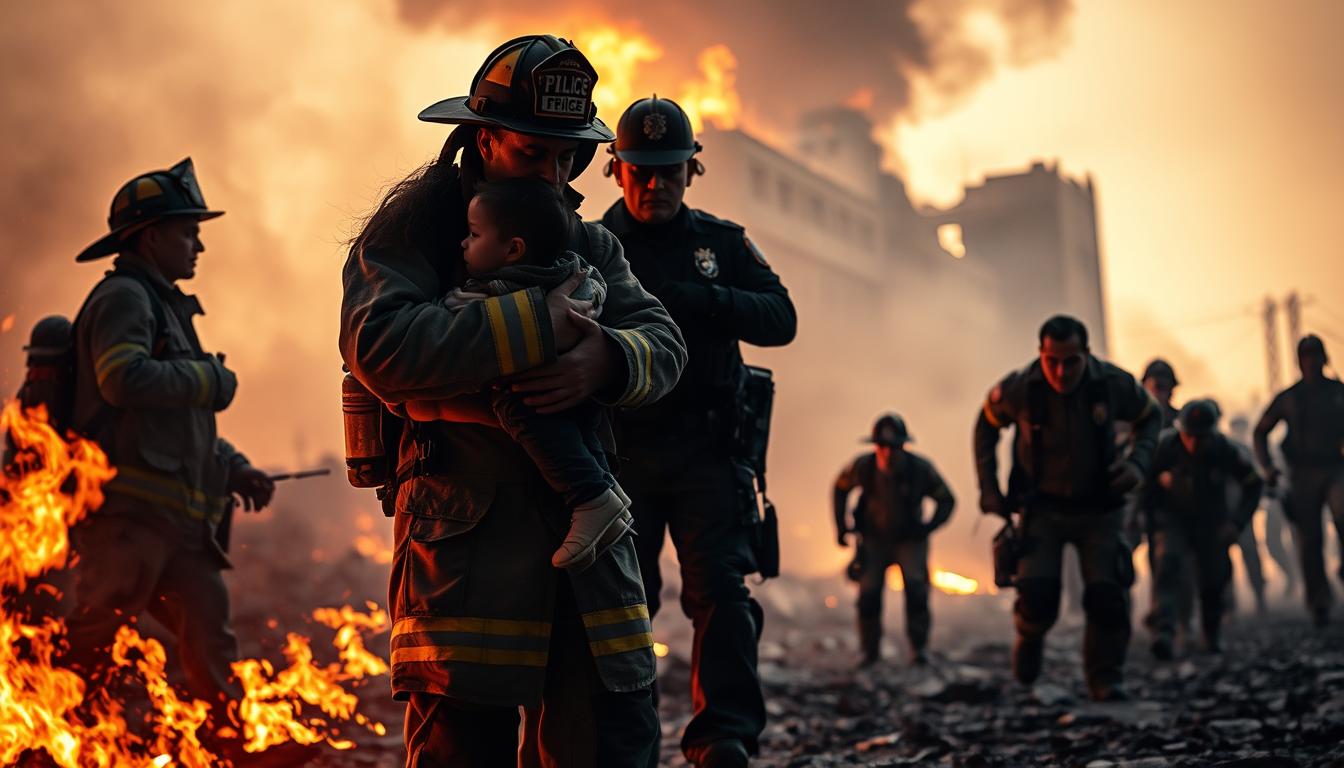
Every day, we hear about people who risked their lives to save others. These stories show us the bravery in humanity. For example, 10-year-old Kiera Larsen saved two friends by pushing them out of the way of a car in California.
Unfortunately, she lost her life in the process. Her bravery reminds us that even kids can be heroes in dangerous situations.
Her story is not unique. Throughout history, many have made the ultimate sacrifice. From the Titanic’s engineers to the Chernobyl workers, these acts are tragic but show the power of human courage.
Each life lost while saving others teaches us about the true meaning of courage. These stories are a reminder of the extraordinary acts of ordinary people.
Historical Context of Sacrifice in Society
Humanity’s view of sacrifice has changed a lot over time. Historical heroes who sacrificed themselves were once seen as gods. But others were seen as wrong. Émile Durkheim’s Suicide showed how some people died for their society. This is very different from today’s views on self-sacrifice.
Early cultural views on sacrifice were very different. In ancient Egypt, King Djer’s 318 retainers were buried with him. This showed loyalty even in death. The Aztecs, on the other hand, sacrificed 80,400 people at Tenochtitlan’s pyramid. This shows how sacrifices changed over time.
Anthropologists like Sir Edward Tylor found that sacrifices changed from pleasing gods to keeping society together. Sacrifices have evolved from blood rituals to symbolic acts. Even today, we see old ideas like “do ut des” (I give so you give) in our language.
Stories like Iphigeneia’s and biblical tales of kings sacrificing sons have shaped our memories. These stories help us understand how societies view heroism and what they expect from it.
Military Heroes Who Gave Their Lives
Stories of military sacrifice stories often highlight soldiers who act, even when it means death. Names like Michael Monsoor and Jason Dunham are among the medal of honor sacrifice recipients. They saved their teams by taking the impact of grenades. These acts of combat heroism show the bravery in split-second decisions.

In 1967, Marine Pfc. Douglas Dickey soldiers who died saving others when he jumped on two grenades. This saved five Marines. His calm actions show the training and selflessness of these acts. Out of 58 Marines awarded the Medal of Honor in Vietnam, 44 got it after they died.
Recent conflicts also show bravery. Soldiers like Travis Atkins and Jared Monti saved their comrades from explosions. Paul Smith’s leadership during an ambush saved dozens. Over 6,800 U.S. service members have died in Iraq and Afghanistan, adding to the nation’s history.
These stories show the lasting impact of military sacrifice stories. From Dickey’s final act to Michael Murphy’s call for help before dying in Afghanistan, they shape our view of duty and courage. Their heroism is remembered in memorials and ceremonies, like Memorial Day’s 3 p.m. remembrance.
First Responders and Their Courage
Every day, over 4.6 million first responders in the U.S. risk their lives to protect us. Firefighters, police officers, paramedics, and EMTs face dangers to save others. In 2021, 63 firefighters lost their lives while on duty.
These heroes rush into danger without hesitation. They climb burning buildings and rescue people. Their bravery is unmatched.
Police officers also face great risks. Over 23,000 have been police officers killed protecting public in history. Paramedics and medics risk their lives too, often in active shooter situations.
They make quick decisions to save lives. Their work is filled with danger and sacrifice.
Behind the uniforms are families left behind. Over 1,000 families received support in 2022. Yet, first responders keep answering calls, driven by duty and compassion.
Their legacy lives on in memorials like National Police Week. It’s attended by 30,000+ each year. Every alarm they answer shows their courage.
Acts of Valor in Civilian Life
Everyday heroes make sacrifices we often don’t see coming. Ten-year-old Kiera Larsen is a perfect example. She saved her younger friends in California by pushing them out of a car’s path. Sadly, she lost her life in the process.
Her mother called her a true hero, saying she will always be their guardian angel.
“She is truly a hero. She will forever be my kids’ guardian angel.”
Civilian heroes face danger head-on, even when it’s scary. Parents like Kiera’s family and strangers who risk their lives show our strength. The Carnegie Hero Fund Commission has honored over 10,000 such acts.
Twenty percent of these heroes lost their lives. Their bravery is seen in many situations, from disasters to quick decisions.
Bystander intervention deaths show courage has no age limit. The Carnegie Medal is given to both teens and adults. In 2023, a hero pulled strangers from a sinking boat.
Even in death, their bravery lives on. It supports their families through scholarships and grants. Andrew Carnegie started this after a 1904 coal mine tragedy.
Everyday heroes show us bravery isn’t just for soldiers or police. Their stories inspire us to act when needed. They remind us anyone can be a hero, no matter the cost.
Civil Rights Activists Who Paid the Price
The fight for equality has always needed courage. Civil rights martyrs like Medgar Evers and Vernon Dahmer lost their lives to fight racism. Dahmer, a NAACP leader, was killed in 1966 for helping Black voters. His family, with six sons in the military, kept his spirit alive.
Evers, killed in 1963, faced over 20 trials for justice. His killer was convicted decades later. Their stories show the high cost of social justice ultimate sacrifice.
Today, the fight for justice goes on worldwide. In 2021, 200 environmental activists murdered fought to protect land and communities. Like the four girls killed in the 1963 Birmingham church bombing, these human rights defenders killed become symbols of resilience.
Their struggles led to laws like the 1964 Civil Rights Act. Yet, threats continue. From Rosa Parks’ bus defiance to Indigenous leaders today facing death for land rights, sacrifice remains a thread in the fabric of change.
“Their lives were taken, but their mission lives on in every step toward justice.”
Every name—Addie Mae Collins, Denise McNair, Medgar Evers—anchors the movement. Their sacrifices remind us: progress requires courage. By honoring these heroes, we honor the fight itself.
Medical Professionals on the Front Lines
Healthcare workers who died saving patients became symbols of resilience during the pandemic. In 2020, over 3,600 U.S. healthcare workers lost their lives to COVID-19. Nurses and doctors faced severe shortages of PPE, with some reusing masks for weeks.
Adeline Fagan, a 28-year-old OB-GYN resident, spent $79 on a single N95 mask. This was nearly 15% of her monthly income. Yet, she contracted the virus despite her efforts to protect herself.

Doctors Without Borders casualties rose sharply in war zones and disease hotspots. In India, Dr. Shatrughan Panjwani became the first physician to die. Italy lost over 60 doctors.
Medical researchers also faced risks. Virologists studying vaccines risked exposure, embodying the medical researchers ultimate sacrifice. Their work saved millions but came at a heavy cost.
These pandemic medical sacrifices highlight systemic gaps. Over 4,100 OSHA complaints revealed PPE shortages. Yet, a third of deaths went unreported. Even after vaccines arrived, over 400 more healthcare workers died.
Their stories remind us that courage and sacrifice remain central to medicine’s mission.
The Role of Sacrifice in Popular Culture
Stories of sacrifice in movies and books have shaped our view of heroism. Films like Rogue One: A Star Wars Story and Wonder Woman make heroic death in fiction key moments. Characters like Jyn Erso or Steve Trevor show selflessness.
Capt. Miller inSaving Private Ryan says, “Earn this.” This line connects personal sacrifice to legacy. Such scenes show death for others as noble, not pointless. FromGame of Thrones’ Hodor toDoctor Strange’s hand-sacrificing sorcerer, courage and loss are linked.
Modern films likeLoganorAvengers: Endgame show heroes dying to protect others. This echoes ancient myths but with a modern twist. Even animated films likeFrozenorInside Out teach empathy through sacrifice. These stories entertain and teach us about duty and love.
Commemorating Sacrifices: Monuments and Memorials
Memorials for heroes who died tell stories of bravery. The National Law Enforcement Memorial in Washington, D.C., lists over 22,000 names. Each name represents a life given in service.
These monuments remind us of sacrifices made everywhere. At Virunga National Park in Congo, eight rangers killed in 2021 have their names on a stone archway. This ensures their efforts to protect wildlife are never forgotten.

Communities honor sacrifices in many ways. The National Fallen Firefighters Memorial in Maryland stands alongside online platforms where families share stories. Schools like Kiera Larsen’s alma mater display her photo, showing how memorials can be small.
Over 136 U.S. national cemeteries hold 3.7 million graves. This shows how physical spaces and digital efforts work together. Even a single headstone in a rural town connects past and present.
Modern methods go beyond stone. VA data shows 364,698 memorials were placed in 2018 alone. Social media tributes and VR experiences let people globally “visit” memorials like the Vietnam Veterans Memorial.
These digital ways to honor sacrifice keep legacies alive for younger generations. Veterans Day ceremonies and online donation drives also show how giving back fuels remembrance.
Every name on a plaque or a digital post asks us to reflect. Whether walking past headstones in a VA cemetery or sharing a story online, we join a chorus of gratitude. These acts ensure that commemorating fallen heroes becomes more than a moment—they become a promise to never forget.
Stories of Sacrifice from Modern Conflicts
Today, heroes include soldiers, aid workers, and journalists risking their lives in ongoing conflicts. Recent stories show courage is key in global crises. In Mexico, over 50 human rights defenders were killed in 2021, with Indigenous communities hit hard.
These tragedies show the dangers faced by those defending land, rights, and peace. They risk their lives to protect others.
In 2021, Mexico recorded 54 killings of human rights defenders, with over 40% Indigenous individuals.
War correspondent deaths are on the rise, seen in Syria and Ukraine. Reporters like those covering Russia’s invasion risk their lives to tell the truth. Advances in medicine, like tourniquets and rapid evacuation, have lowered fatality rates in Iraq and Afghanistan.
Yet, dangers remain for military personnel and civilians caught in crossfires.
Today’s stories of sacrifice show resilience in the face of danger. From aid workers shot while giving aid to soldiers protecting their comrades, their legacy lives on. These tales remind us that courage is always present, even when headlines fade. Their sacrifices remind us to strive for a safer future.
How to Honor Those Who Trusted Their Lives
Supporting families of fallen heroes begins with action. Groups like the Fallen Heroes Fund help with money and emotional support. Communities can help by volunteering or pushing for laws that protect people like Joannah Stutchbury, who died fighting to save Kiambu Forest.

Carrying on the work of fallen activists means fighting for big changes. Join efforts for justice for those who protect the environment. Teach kids about heroes like Stutchbury, linking their stories to today’s fights for fairness and nature.
Teaching about sacrifice starts at home. Schools can teach about bravery and its impact. Events like Memorial Day and projects like planting trees in honor of heroes keep their memories alive. Every action, big or small, turns sorrow into a reason to keep going.
“Freedom is never really free; it’s almost always bought with the blood of patriots.” —Franklin D. Roosevelt
Supporting these efforts creates a future where sacrifice is remembered and valued. By pushing for change and supporting those who continue the fight, we honor every life given for a greater cause.
Teaching Future Generations About Sacrifice
Teaching kids about sacrifice starts with stories they can relate to. These stories link courage to values we all hold dear. School programs on heroism use tales from history and today to show how sacrifices help communities.
For the youngest, sacrifice might mean sharing or helping others. Older students can dive into deeper topics like land rights defenders who risk everything for justice.
Books like “A Child’s Garden of Heroes” and documentaries on activists like Greta Thunberg are great resources. Teachers can talk about real heroes, like the 50 small-scale farmers killed in 2021 for their land. These stories show that heroism isn’t just about uniforms but also about standing up for what’s right.
Parents and teachers can use games, art, and visits to memorials to teach about heroism. It’s important to be honest but also to offer hope. For example, talking about farmers risking their lives for land rights teaches kids about struggles beyond their own.
Online platforms like the National Veterans Association have lesson plans that mix history with today’s issues. By adding heroism education to school curricula, we can teach kids to be resilient and aware. When they see sacrifice as part of everyday courage, they learn to value all kinds of bravery. This prepares them to be informed and compassionate leaders.
The Ongoing Impact of Their Sacrifice
The long-term effects of heroic sacrifices are felt far and wide. Activists in Nicaragua, who lost their lives for land rights, brought global attention to violence. Their deaths led to changes in policies, like better medical care for soldiers, saving 44% more lives.
Lives saved by heroes go beyond war. They also lead to safer workplaces and better environmental protection. These changes come from the lessons learned from past sacrifices.
Stories of heroism, like those from World War II, show their lasting impact. Over 183,000 U.S. children lost fathers in the war. Yet, their sacrifices led to important memorials and lessons in courage.
Today, 44 million Americans travel for Memorial Day. They honor the sacrifices that shaped our safety and civil rights. Each name on a tombstone teaches us about courage and guides our actions today.
Some sacrifices, like the 1.5 million children lost in the Holocaust, remind us to fight against hatred. Others inspire us to take action. The 170,000+ remains moved to permanent cemeteries after WWII show both loss and legacy.
These stories urge us to keep fighting for a safer world. We must advocate for Indigenous rights and support veterans. Their sacrifices ask for more than just remembrance; they ask for action to protect and unite future generations.