





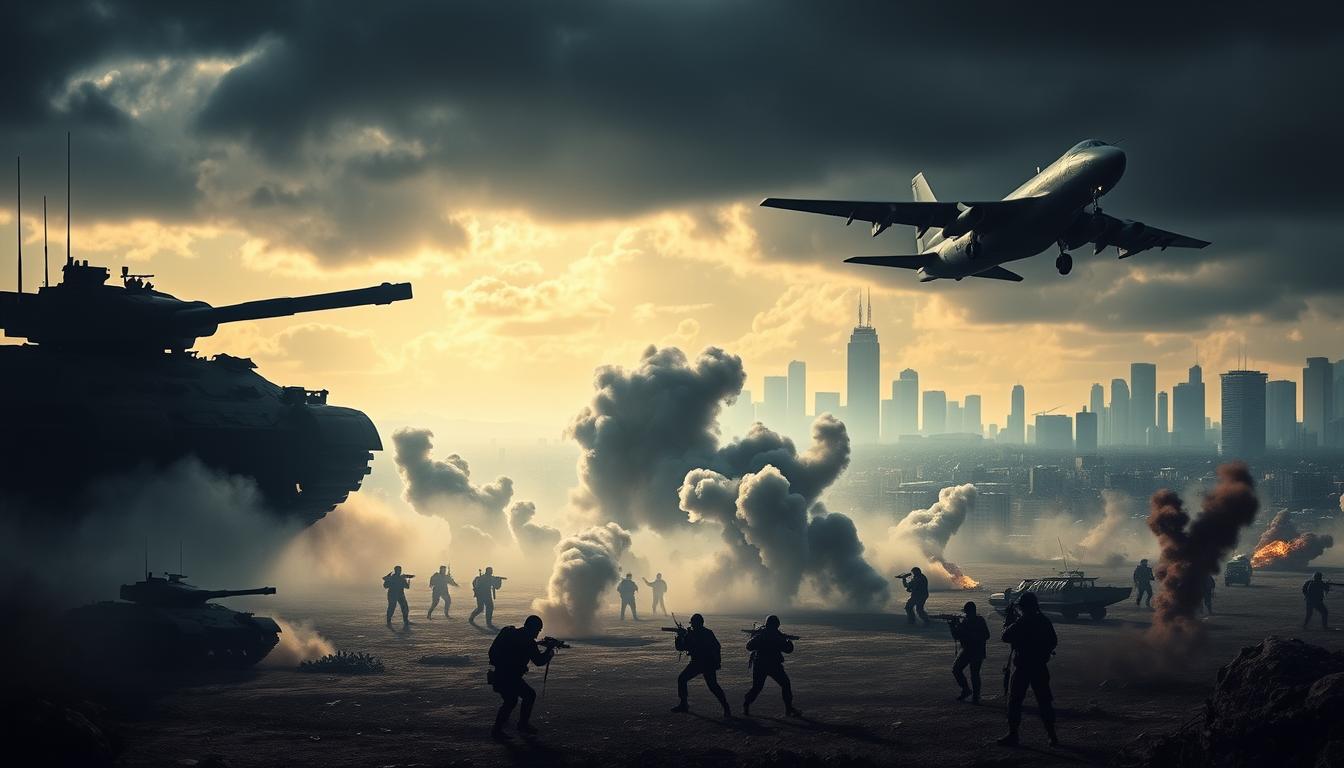
Wars have led to unexpected progress through innovation. Over 140 years, the U.S. became a global power after World War I. This change brought about new developments in medicine, borders, and daily life.
Military technology, like vaccines and triage systems, was first used in battlefields. Now, they improve health and global systems. This shows a paradox: destruction and discovery are intertwined.
World War II introduced innovations like radar and antibiotics. These were born from the urgency of war. This article looks at how medical breakthroughs and geopolitical shifts, caused by conflict, shape our world today.
These changes, from Middle Eastern borders to civil rights movements, continue to influence technology, medicine, and global relations. They show that even in tragedy, there can be lasting advancements.
Inventions Born from Conflict
War has always driven technological progress. Radar technology was first used in the 1930s to spot enemy planes. But after the war, it evolved into something new: the microwave oven. Percy Spencer discovered this in 1945, when a candy bar melted near a radar magnetron.
This showed how military inventions can change our homes. Today, millions use microwaves. It’s a quiet nod to the innovation sparked by war.

Computing advances also owe a lot to war. The ENIAC computer, built in 1946, was first used for artillery calculations. Now, it powers our smartphones and servers.
Duct tape, created to seal ammo cases, is now a common repair tool. It shows how simple military inventions can solve everyday problems.
These stories show a pattern: wartime breakthroughs often lead to new uses. From radar ovens to computing systems, history shows wartime technology has a lasting impact on civilian life. Even superglue, first tested in 1942, now fixes wounds and glass.
Such shifts remind us that conflict can lead to tomorrow’s innovations. It’s a reminder that even in darkness, there can be light.
Medical Advances Driven by War
Wartime medicine changed healthcare by meeting urgent needs. In World War II, the discovery of penicillin became a lifesaver. By 1944, millions of doses were ready for D-Day, showing antibiotics could save lives.
Emergency treatments also saw big steps forward. Dr. Charles Drew created a way to store and transport plasma safely. His work helped medics treat injuries fast, saving many soldiers. This work is the base for today’s blood banks and battlefield medicine.
The military also funded the first flu vaccine in 1945. It started for troops but soon helped civilians too. These advances, like plasma and antibiotics, show how war pushed medicine ahead. From penicillin to plasma, war needs became health solutions, showing humanity’s ability to heal even in chaos.
Communication Breakthroughs
Modern military communications systems started in the 1930s. Portable two-way radios, like walkie-talkies, changed how troops worked together. These devices are now used in emergencies and by retailers. The need for reliable wireless technology during wars led to many innovations we use today.

World War II saw big steps in code-breaking computers. Women like Jean Jennings Bartik and Grace Hopper worked on machines like the ENIAC. They helped crack enemy codes. Alan Turing’s Bombe and the Colossus computers were key in this effort.
In the 1960s, the U.S. military wanted a network that could survive nuclear attacks. This led to ARPANET, the first internet. It was made for military communications but became the basis for the internet we use today. The internet’s growth shows how war tech can change civilian life.
Wars have pushed for better ways to connect. From carrier pigeons to satellites, each war has brought new ways to communicate. Even small innovations, like code-breaking or packet-switching, come from the need to outdo enemies. Today’s smartphones and social media owe their existence to these wartime needs.
Transportation Transformations
Jet engine development changed how we travel around the world. In WWII, Germany and Britain made big strides in jet technology. These advances made flying across the globe fast and easy.
Navigation also got a boost. GPS started as a military tool for finding targets. By the 1990s, it was used by drivers and delivery apps. Now, it guides our daily trips, showing how war tech can unite us.
Vehicle improvements also come from war. Military needs led to durable engines and all-wheel drive, now in SUVs. Tires, suspension, and electric car batteries also owe their start to wartime research. This tech now helps families explore the roads.
Space technology began with missiles. The Cold War turned rocket science into space exploration. The 1969 moon landing used tech meant for military strikes. Today, satellites for weather and communication orbit Earth, thanks to that rivalry.

From fighter jets to family cars, war’s drive for speed and precision has transformed. What began as weapons now safely carries us across continents and into space.
Economic Impact of Wartime Innovations
World War II changed America’s economy and daily life. The war led to huge R&D investment and breakthroughs like radar. Radar is now used in medicine and weather forecasting.
After the war, these technologies were made available to the public. This move fueled commercial technology transfer. Factories that made tanks and planes started producing cars and appliances. This made life better and more affordable for many.

By 1945, the U.S. had become incredibly efficient thanks to R&D investment. The GI Bill helped veterans become engineers and entrepreneurs. By 1955, auto sales had quadrupled because of lower production costs.
Companies like IBM used military computing systems for business. Innovations from the war also improved plastics and aviation. These innovations found new uses in everyday products.
These changes didn’t just make companies richer. They also created jobs. The U.S. economy grew significantly after the war. This showed that wartime innovation can lead to lasting economic success.
Psychological Effects of War on Society
War changes minds and communities in big ways. It started with “shell shock” in World War I and now we have PTSD research. Today, therapies like cognitive processing therapy help both veterans and civilians worldwide.
War zones leave lasting scars. In Afghanistan, 62% of civilians faced four or more traumatic events in a decade. Studies in Cambodia found 48% of youth had PTSD three years after the conflict.
Children are hit hard too. A Balkans study found 17% of kids showed PTSD symptoms. Families with a parent’s military PTSD often struggle with stress passed down through generations.
But there’s hope. Psychological resilience programs, born from wartime studies, help disaster survivors rebuild. Military innovations in mental health screening and support networks now guide schools and workplaces globally.
Every war teaches us something new. By studying trauma treatment in conflict zones, researchers find ways for societies to heal. From military bases to schools, the lessons of war psychology offer hope and tools to address mental health challenges far beyond battlefields.
Environmental Changes Caused by Warfare
Warfare has a lasting impact on ecosystems, but it also brings unexpected benefits. Military actions have changed landscapes through deforestation, pollution, and toxic residue. Yet, the need for quick action in war has led to innovations like conservation technology and environmental monitoring systems.
Satellites originally used for spying now track deforestation in real time. Radar technology helps with climate research. These tools, created for war, now protect our natural habitats.
“War’s destructive force often conceals its hidden gifts to conservation.”
In Ukraine, over 1.2 million hectares of land are degraded, threatening 70,000 species. But, wartime pushed military to improve recycling and fuel efficiency. These improvements have helped the world manage resources better.
After wars, places like former battlefields in Europe become labs for nature recovery. Techniques tested there help clean polluted sites around the world.
Military lands, covering 1-6% of the Earth, protect rare species from development. Even though war causes 5.5% of global CO2 emissions, the technology developed in war is changing environmental science. It helps track methane leaks and restore damaged landscapes, showing the way to a sustainable future.
Cultural Shifts and Awareness
Wars often lead to unexpected cultural changes. During World War II, soldiers from different backgrounds came together. This shared experience helped break down prejudices, creating a more open society after the war.
Even in the midst of war, not everyone was fighting. Only 20% of soldiers were in combat. This shows that people can behave in ways that go beyond violence.
War documentation has changed how we remember conflicts. Mathew Brady’s Civil War photos shocked people, making battles unforgettable. Today, embedded journalism and social media keep us connected to war zones.
These efforts humanize both soldiers and civilians. They help us understand the true cost of war.
Art has also played a big role in shaping our views on war. Works like Wilfred Owen’s poetry and Saving Private Ryan have made us see trauma as a shared experience. They encourage empathy.
Legal changes, like the 13th Amendment and the 1964 Civil Rights Act, were influenced by wars. These laws expanded equality in society. Veterans’ stories today also help bridge gaps, showing the lasting impact of military integration.
War has a profound effect on our identities. Media and art turn chaos into a shared history. They remind us that even in the darkest moments, we can find unity and understanding.
The Future: Learning from the Past
War has long been a driver of innovation, but it comes with a double edge. Many foundational internet technologies and medical breakthroughs have military roots. Today, we face the challenge of using this innovation for peaceful applications while keeping to military ethics.
The U.S. spends $70 billion each year on defense research and development. Much of this research benefits civilians, like drones used in farming and delivery. This shows how military tech can be repurposed for good.
Frameworks for dual-use research are changing how we think about innovation. Technologies once for war, like medical kits and surveillance, now help in disaster relief and climate monitoring. DARPA is leading this shift, making sure innovations solve global problems without war.
Innovation ethics mean balancing security with humanitarian goals. Moving military tech to civilian use—technology transfer—needs teamwork. For example, AI funded by defense could focus on ethics to avoid misuse. Lessons from history show that redirecting war tech to common goals like clean energy or fighting pandemics can benefit all.
Steven Pinker points out that global violence is decreasing, but the power of past conflicts to drive progress is huge. By putting ethics into R&D, we can use military-driven advancements for everyone’s good. The future is clear: use war tools for peace, making sure innovation benefits humanity without the need for war.