





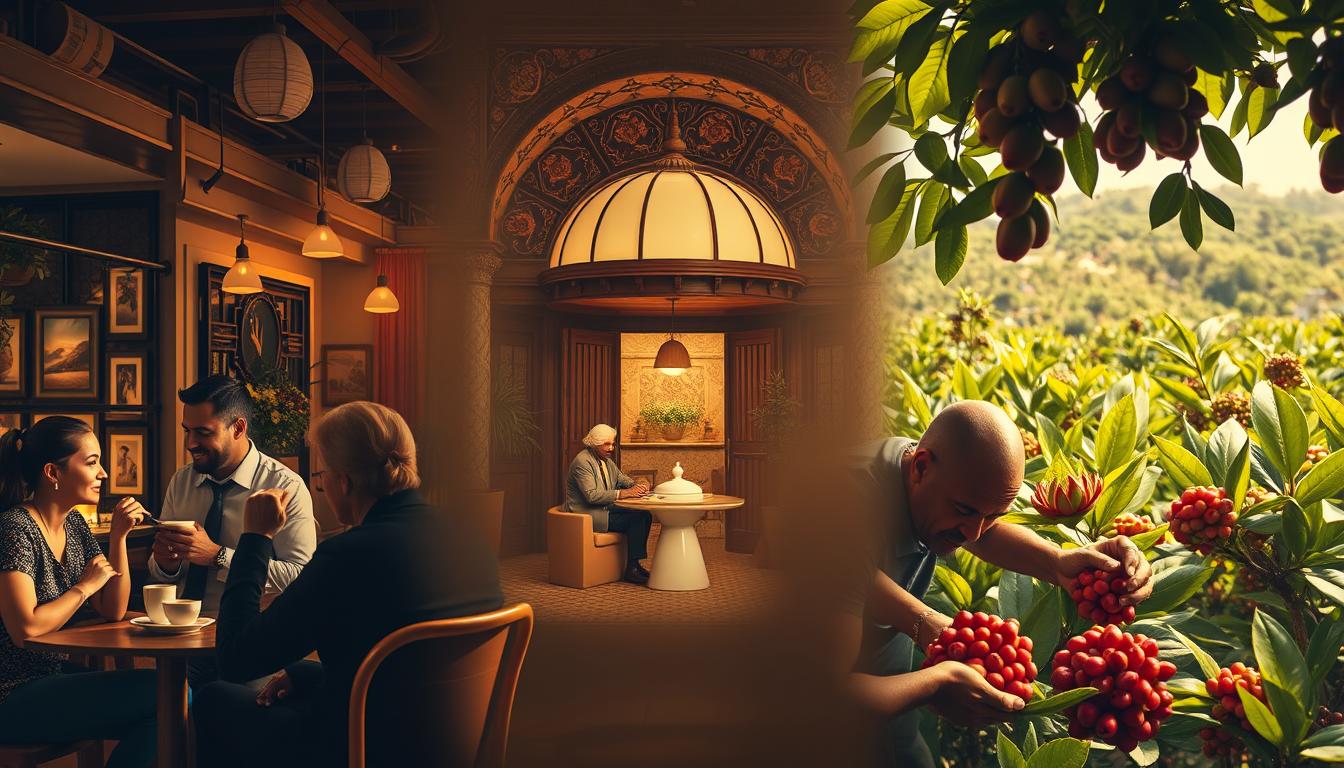
Coffee isn’t just a morning drink for 2.25 billion people. It connects cultures, starting conversations and traditions that go back centuries. From ancient Ethiopian coffee ceremonies to today’s U.S. specialty shops, its importance goes beyond caffeine.
The coffee market hit $102.15 billion globally in 2020. It’s a big deal economically and culturally. In the U.S., 55% of coffee sales are from specialty brands. This shows how traditions shape our daily lives.
Whether in a New York café or an Ethiopian “Buna” ceremony, every sip tells a story. Coffee’s journey from Yemen’s Sufi monasteries to today’s smart-brew devices is fascinating. This article explores its cultural importance, traditions, and why it’s key to human connection.
The Origins of Coffee: A Journey Through Time
In Ethiopia’s highlands, coffee origins go back centuries. A legend tells of Kaldi, a goat herder, who saw his goats dancing after eating red berries. This led to the first Ethiopian coffee brew, a tradition that lives on today.
Families come together three times a day for Ethiopian coffee ceremonies. They roast beans over fire and share cups, showing hospitality.
The history of coffee began in Yemen after beans were traded across the Red Sea. By the 15th century, coffeehouses called qahveh khaneh were popular in the Middle East. Later, European travelers brought beans to Venice, starting a craze.
In 1600, Pope Clement VIII even blessed it, calling it a “Christian beverage.”
As ships carried beans to the Americas, Brazil became a major player by the 1800s. Today, Colombia and Guatemala also grow coffee, using volcanic soil. From Ethiopia’s forests to global plantations, every sip tells this ancient story.
Coffee’s Cultural Significance Around the Globe
From Scandinavia to the Middle East, global coffee culture thrives through unique coffee rituals and cultural traditions. In Sweden, the daily “fika” isn’t just a coffee break—it’s a social coffee ceremony where colleagues and friends pause to connect. Italians follow strict rules: cappuccinos are reserved for mornings, sipped standing at a bar, while espresso is savored swiftly. These practices reflect how coffee shapes daily life.
“As black as hell, as strong as death, and as sweet as love.”
Colombians embrace coffee as a social glue. Morning “tinto” and afternoon “onces” (milk coffee) are woven into family routines. UNESCO even recognized Colombia’s coffee-growing regions as a World Heritage Site, celebrating its role in shaping cultural traditions. In Turkey, coffee transcends drink: after sipping, some read fortunes in the dregs of the cup.

In Japan, baristas master precise brewing techniques, turning each cup into an art form. Ethiopia, coffee’s birthplace, hosts ceremonies where families roast beans over open flames, passing stories as the brew steams. Even in modern workplaces, Nordic “fika” breaks foster collaboration, proving coffee’s timeless power to unite. These coffee rituals aren’t just habits—they’re stories of history, community, and identity.
The Evolution of Coffee Preparation Techniques
From Ethiopia’s ancient coffee rituals to today’s cutting-edge barista art, coffee brewing methods have changed a lot over centuries. Early methods included roasting beans over fires and steeping grounds in boiling water. This is seen in traditional Turkish coffee, where fine grounds simmer to make thick, aromatic brew.
By the 17th century, European innovation changed coffee preparation. The French press and drip systems came out, making coffee more accessible.
The 20th century saw espresso’s golden age. Italy’s lever-driven machines perfected espresso techniques, creating intense shots for lattes and cappuccinos. By the 1960s, home drip machines and instant coffee made coffee a daily drink. Specialty shops later focused on precision.
Today, baristas use pour-over devices, siphon pots, and nitro cold brew, mixing tradition with science. The cold brew coffee trend, steeping grounds for hours, is now big in summer menus. It shows that innovation never stops.
Modern advancements like temperature-controlled brewers and single-origin bean focus show the Third Wave movement’s ideals. Whether it’s a nitro brew or a hand-tamped espresso, each method carries centuries of history in every sip.
The Art of Coffee Tasting
Coffee tasting is like unlocking a secret in every sip. Experts use a method called cupping to check aroma, flavor, body, and acidity. This shows how coffee beans change from raw to roasted, creating unique flavor profiles. Even beginners can learn to spot citrus or chocolate notes with practice.

During cupping, coffee is brewed at 90–95°C (194–203°F) with a 1:12 coffee-to-water ratio. Tasters break the crust, sniff deeply, and slurp loudly to mix the flavors. The Specialty Coffee Association’s Flavor Wheel helps sort these flavors into groups like fruity, floral, or earthy. Ethiopian beans might have berry notes, while Guatemalan beans have cocoa flavors.
Every region’s climate and soil (terroir) affects its coffee’s taste. Light roasts keep the original flavors, while dark roasts add smoky depth. Keep a journal to track your findings, like how a Colombian bean’s bright acidity contrasts with Sumatra’s earthy taste. Use a scale and grinder to keep conditions the same, ensuring consistent tasting of coffee beans.
Getting good at coffee tasting takes time but is rewarding. Start by focusing on one thing, like the smooth body of a Brazilian roast or the floral notes in Yemeni beans. As you get better, every cup becomes a new adventure.
Coffee and Social Interactions
Coffee houses have always been at the heart of social life. In 17th-century Europe, they were places where thinkers like Voltaire and Rousseau discussed big ideas. These places, called penny universities, cost just a penny for coffee. They turned café culture into a place where people from different backgrounds came together.
In Colombia, saying “tintico” means you’re ready to talk. In Sweden, fika is a time to stop work and chat. In Vietnam, coffee shops are filled with people talking over iced coffee. These traditions show how coffee brings people together worldwide.
“¿Un tintico?” is not just a question—it’s a cultural bridge.
Today, café culture is a mix of old and new. While some places focus on making coffee art, others use apps to make ordering easier. Cafés are now places where people work and meet, thanks to remote jobs. Online, people from all over can connect through coffee.
Coffee has always brought people together. It’s the sound of cups clinking, the laughter at tables, and the understanding that a coffee break is more than just caffeine. It’s about people coming together, now and in the future.
Coffee’s Impact on Economy and Trade
Coffee is a big deal in global trade, linking farmers, traders, and buyers worldwide. In the U.S., coffee brings in over $343 billion a year. It supports 2.2 million jobs and pays out $100 billion in wages. Every coffee dollar spent boosts the economy by $43.

Big coffee producers like Brazil, Vietnam, and Colombia are key players. Millions of people rely on coffee exports for their income. But, price drops, like in the 2000s, can hurt these communities a lot.
Efforts like Fair Trade try to help by ensuring fair prices and sustainable farming. This helps small farmers get a stable income.
In the U.S., people spend almost $110 billion on coffee each year. This supports big chains like Starbucks and small local roasters. Even though the U.S. only grows a tiny fraction of coffee, it leads the market through imports and sales. Trends like Third Wave coffee increase demand for high-quality beans, helping farmers get more money for their work.
But, there are big challenges ahead. Climate change is hurting coffee crops, and old farming ways are causing forests to disappear. As people want to buy coffee that’s good for the planet, the trade must find a way to make money and protect the environment.
Coffee in Popular Culture
Coffee has been a part of coffee literature for centuries. From 18th-century novels to today’s stories, it plays a big role. Authors like Haruki Murakami use coffee to show quiet moments of thought. They turn coffee cups into deep character symbols.
In coffee films like Before Sunrise or Twin Peaks, coffee is more than just a drink. It’s the setting for important talks, mixing everyday life with drama.
Visual arts also celebrate coffee. Edward Hopper’s Nighthawks shows the cozy side of late-night coffee. Dutch paintings from the 17th century highlight coffee as a sign of wealth. Music also gets in on the action, from Bach’s Coffee Cantata to Sylvan Esso’s 2014 hit “Coffee.”
Ads have also shaped how we see coffee. Starbucks’ “Third Place” idea and the Friends Central Perk scene made coffee a symbol of togetherness. These stories, from books to coffee in media, show coffee as a symbol of connection, creativity, and quiet thought.
Health and Wellness: Coffee’s Benefits
Coffee isn’t just a morning pick-me-up—it’s full of coffee health benefits. Every cup has antioxidants in coffee, like chlorogenic acid, which fights oxidative stress. For many Americans, coffee is the top source of antioxidants, beating out fruits and vegetables.
Coffee’s coffee performance perks are clear. Studies show caffeine boosts endurance by 12% during exercise. Drinking 3–4 cups daily can cut type 2 diabetes risk by 25%. Regular drinkers also face a 15% lower risk of heart disease and a 71% drop in lethal liver disease risks. The FDA even classifies moderate coffee as a “healthy” beverage.
Research links daily coffee to coffee disease prevention. Long-term drinkers have a 65% lower risk of Parkinson’s and a 12% drop in Alzheimer’s risk. Even two cups a day slashes stroke mortality by 21%. Plus, coffee drinkers enjoy an 11% lower all-cause mortality rate compared to non-drinkers.
“Moderate coffee intake aligns with a balanced lifestyle,” says the National Institutes of Health, noting 3–5 cups daily as optimal. Exceeding this may cause jitters, so listen to your body.
While 66% of Americans limit caffeine, the evidence is clear: coffee’s antioxidants and nutrients make it more than a drink—it’s a wellness ally. Just remember, balance is key.
Sustainability and Ethical Coffee Consumption
Coffee’s impact on the environment is huge, from the bean to the cup. Deforestation, water use, and carbon emissions are big concerns. One cup of coffee needs 140 liters of water, and climate change might cut growing areas in half by 2050. But, there’s hope for change.
Certifications like Rainforest Alliance and Organic help make better choices. They ensure farms protect forests and treat workers fairly. Brands like Tuan Loc Commodities use Global Good Agricultural Practices to lower their carbon footprint.
They focus on using water wisely and renewable energy. This shows how certifications lead to real change.
Shade-grown coffee and agroforestry mix trees with crops, boosting biodiversity. These methods reduce chemical use and protect soil. Ethical coffee supports farmers with fair wages and safe work conditions.
Choosing beans from farms that avoid monocultures helps slow deforestation. Every purchase counts. Pick brands that care about sustainable coffee and fair sourcing. Ask about their practices or look for labels with certifications. Together, we can make coffee sustainable without harming the planet.
The Future of Coffee Culture
Coffee’s future is filled with exciting changes. Imagine tiny cafés that serve up coffee just for you. Automation and coffee technology will make getting your coffee faster and easier. Soon, drones might even bring your coffee right to your car.

Sustainability is key in these changes. Cafés will use solar power and recycle water. Brands like Starbucks are testing cups that break down quickly. They’re also working on coffee that can grow in warmer climates.
“The next decade will see coffee shops become eco-labs, not just cafes.”
Today’s coffee culture values honesty. Apps let you see where your coffee comes from. This meets the needs of those who care about fair trade. At the same time, home brewing kits are making high-quality coffee easier to make at home.
Technology must respect coffee’s long history. Ethiopia’s oldest coffee forests show us how to keep traditions alive. Finding a balance between new technology and old ways will shape coffee’s future.
Celebrating Coffee: Festivals and Events
Coffee festivals and events around the world make every cup special. International Coffee Day on October 1st brings millions together. The World Barista Championship shows off skill and creativity.
These celebrations honor coffee’s journey from bean to cup. They unite farmers, roasters, and coffee lovers from all over.
In Guatemala, Mayan rituals meet coffee ceremonies on the streets. Honduras hosts festivals with tastings and music. Costa Rica shows off traditional brewing methods.
Dubai’s Coffee and Tea Festival mixes old and new. In the U.S., New York and Portland celebrate coffee’s past and future.
Coffee competitions in Japan and Turkey are a sight to see. They’re not just events; they’re about sustainability, direct trade, and culture. Festivals in Honduras and Salvadoran tastings show coffee’s global reach.
Join local coffee events, try new brewing methods, or just enjoy a cup. Every sip thanks the farmers, innovators, and traditions behind it. Find coffee events near you and connect with this global story.