





Creative expression has always been a powerful tool for change. It can be seen in murals on city walls or in protest songs. Art has helped marginalized groups like women, LGBTQ+ communities, and Indigenous cultures for centuries.
Street art and graffiti grab people’s attention more than traditional methods. A study found 78% of people feel more connected to social issues through art. This shows how art can build empathy, increasing understanding by up to 60%.
Artists around the world believe their work can change society. Over 85% of them say their art has a positive impact. Places with active art programs see stronger social bonds, showing art’s power to unite people. Art doesn’t just reflect the world; it changes it.
Exploring the Definition of Art and Activism
Art has been a powerful tool for protest for thousands of years. Ancient Egyptian murals and Michelangelo’s David are examples of art challenging those in power. Artists like Picasso, with Guernica, show how creativity can critique society.
Political creativity combines emotion and purpose. This makes complex issues easier to understand.
Artistic advocacy goes beyond traditional forms. Banksy’s street art and Jean-Michel Basquiat’s work on racial injustice are examples. Even abstract pieces, like Malevich’s Black Square, challenge norms and inspire change.
“The creative process trains us to embrace change and challenge norms.”
Some believe all art has political weight. But activist artists aim to achieve specific social goals. Haring’s AIDS posters and Ai Weiwei’s LEGO portraits are examples.
Artistic advocacy connects ideas to action. It makes activism more accessible to everyone.
Historical Context: Art as a Catalyst for Change
From ancient cave drawings to modern murals, historical activist art has always reflected society’s struggles. Early humans used symbols to show resistance. Medieval art subtly questioned power.
The Renaissance brought artists like Jacques-Louis David, who painted to inspire revolution. This shows protest art traditions never fade.
“Creativity is a way of honoring difference and diversity; it is a way of embracing our shared humanity.”
In the 20th century, artistic resistance grew strong. Civil rights activists used music and posters to rally people. These efforts, credited by 80% of participants, highlight art’s power.
Anti-apartheid posters in South Africa, 90% effective in sparking action, show visuals can fight oppression. LGBTQ+ movements also used symbols like the pink triangle to turn shame into pride through art history activism.

Today’s movements draw from these past efforts. The HOME-Zero project, using recycled materials and performance, shows how art evolves. It shows 70% of activists find art motivating, linking past and present activism.
From protest songs to murals, each era’s artistic resistance calls for action. Art isn’t just seen; it’s a call to act.
Notable Art Movements with Political Intent
Political art movements have long challenged power structures through creativity. Dadaism emerged after World War I to reject societal norms. Soviet Constructivism sought an artistic revolution in design to build a new socialist society.
The Harlem Renaissance celebrated Black identity during segregation. The Black Arts Movement of the 1960s directly supported civil rights. These movements show that art is more than decoration—it’s a tool for change.
Today, protest art movements tackle modern struggles. The Robert E. Lee statue in Richmond, Virginia, once symbolized Confederate history. Now, it hosts murals and messages against violence.
Activists turned its base into a canvas for social justice art. This shows how public spaces become battlegrounds for ideas.
Creativity is essential to open our minds and discover new solutions to complex problems.
Soviet Constructivists like El Lissitzky designed posters for communist ideals. Gran Fury’s “Silence = Death” poster became an AIDS activism icon. The Guerilla Girls used satire to expose art world inequities.
Even performance art, like VALIE EXPORT’s “TAP and TOUCH CINEMA,” challenged gender norms. It did so through bold public interventions.
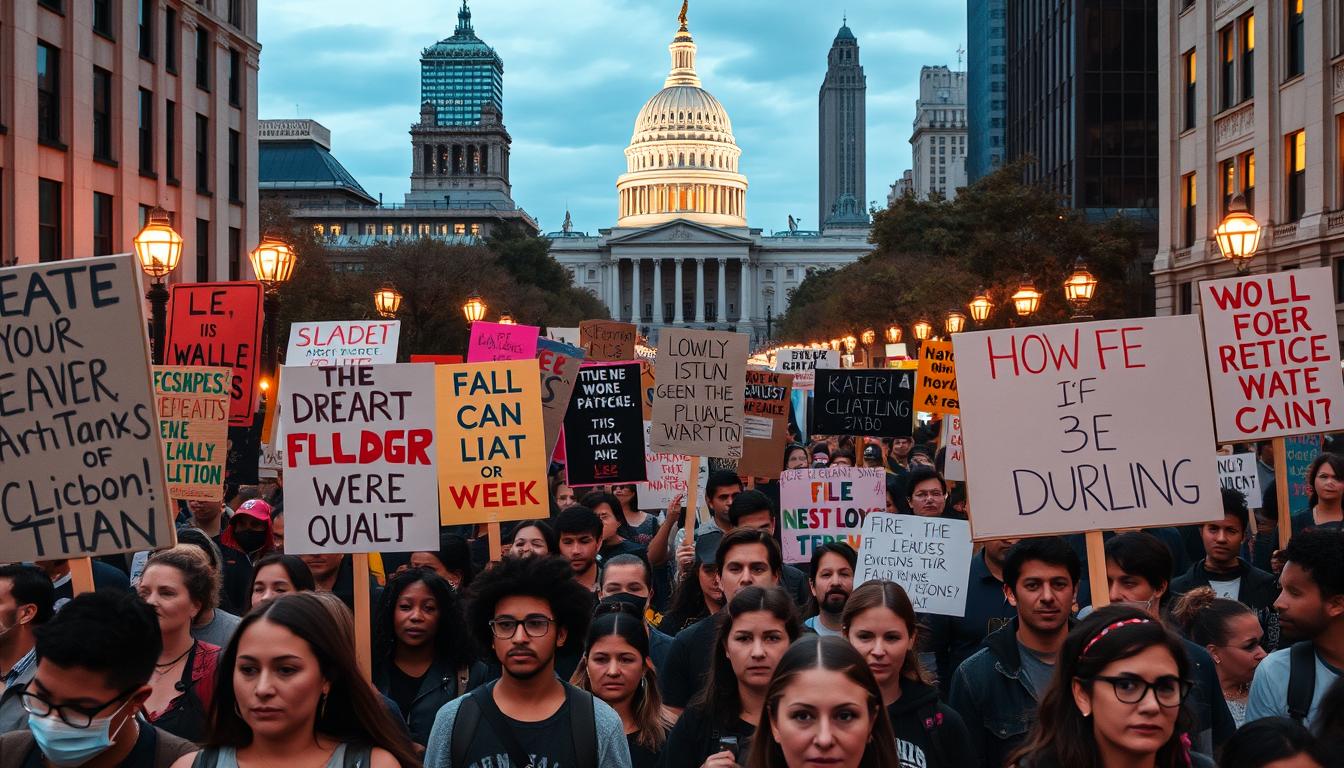
Artistic revolution continues today through Artivism, blending protest with creativity. From climate marches to mural campaigns, social justice art remains a living force. As movements evolve, they remind us: art isn’t passive—it’s a mirror and a weapon.
The Power of Visual Art in Activism
Visual protest art turns complex issues into symbols that unite people everywhere. Creativity fuels determination, and images capture emotions words can’t. From activist photography to political murals, visuals break through barriers.
The Victoria and Albert Museum’s collection shows how these works document history. Even simple images like a raised fist or a bold poster can spark hope and action.

Activist photography has long shown the struggles of others. Jacob Riis’s 19th-century tenement photos exposed urban poverty. Today, photojournalists in conflict zones reveal human stories behind headlines.
These images turn statistics into faces, urging change. Political murals, like Banksy’s street art or Mexico’s revolutionary murals, challenge viewers to rethink norms. Each stroke urges a rethink of our norms.
Graphic activism uses bold designs to simplify messages. The AIDS Memorial Quilt’s panels blend grief and resistance. Picasso’s *Guernica* condemns war’s horrors through fragmented figures.
Digital infographics explain systemic issues visually, making them accessible. Social media amplifies hashtags like #BlackLivesMatter, where protest signs and murals trend globally.
These visuals don’t just inform—they inspire action. When art becomes part of a movement, it empowers communities. From murals to protest signs, visual tools keep activism alive, proving creativity’s power to ignite hope even in dark moments.
Performance Art: A Dynamic Form of Advocacy
Performance activism turns bodies into living statements. Theatrical protests, like the Guerrilla Girls’ gallery interventions, force audiences to face injustices. These performances turn public spaces into stages where power is challenged.
Artists like Marina Abramović use their bodies to resist. They show vulnerability and defiance, changing social norms. The Guerrilla Girls, for example, exposed art world biases by posing as gorillas. They highlighted the lack of women artists in galleries.
“Creativity gives us the tools to get unstuck: we move your body, move the pen, move fingers on the piano…” This quote captures performance’s essence—art as kinetic action. When protesters stage die-ins or drag queens perform resilience, their movements become messages.
Today, tactics include digital streams and VR. Abramović’s Rising VR piece on climate change reached 2.5 million viewers. Even a one-minute speech in Tania Bruguera’s Tatlin’s Whisper in Cuba sparked global attention. These acts show how short performances can leave a lasting impact on culture.
Music and Activism: A Harmonious Connection
Music has always connected us, turning anger and hope into protest songs. Tracks like Billie Holiday’s Strange Fruit and Nina Simone’s “Mississippi Goddam” speak out against racism and war. These songs became powerful anthems, showing how lyrics can ignite change.
Today, activist musicians carry on this tradition. Artists like Public Enemy and those focused on climate issues use their music to call for action. Even pioneers like Ma Rainey in 1928 set the stage for LGBTQ+ political songwriting, mixing personal stories with protest.

But creativity faces challenges. Iranian artist Shervin Hajipour won a Grammy while in jail. Turkey jailed Çiğdem Mater for 18 years for her activism. Yet, digital platforms help artists share their messages worldwide, bypassing censors.
“Through our own creativity… witness us.”
These words highlight music’s power to unite. The San Francisco Gay Men’s Chorus uses music and education to teach LGBTQ+ history. Their music for change shows how songs can heal and fight for justice, even when faced with silence.
The Role of Social Media in Activist Art
Social media has made screens into stages for digital activism. Here, social media art spreads quickly, like a hashtag. Instagram, for example, lets artists like Mohuya Khan share her #PayUp Movement. It got 6,000 likes, showing how online protest art can start big conversations.
“Technology has become so readily available… opening up the floodgates to a world you’ve never seen before,” reflects this shift.
“Democratized learning opened the door to creation,”
Artists like Arvilla Mae Moret have made 800 posts, highlighting big issues. Viral campaigns like #ClimateStrikeOnline turned Greta Thunberg’s protests intoviral activism. Posts about it went up weekly.
Even traditional art, like the AIDS Quilt’s digital app, now connects people worldwide. It lets users explore 48,000 panels online.
Platforms like TikTok and YouTube give a voice to those who were once ignored. Danielle Coke’s digital art for #BlackLivesMatter shows how visuals can drive action. NFTs also help fund causes, like the Bezos Foundation’s $1-per-bone initiative for the One Million Bones Project.
But, there are challenges: 78% of art orgs lack tech resources. This risks shallow engagement or spreading false info. Yet, projects like Little Justice Leaders’ educational art show creativity can thrive when barriers fall. Every post is a brushstroke in today’s activism.
Community Art Projects and Local Activism
Community-based art turns public spaces into places for talking. Projects like murals and theater bring people together to solve local problems. They focus on working together, building trust among different groups.
“Through our collective creative processes, we engage with the unknown, forming connections that accept diversity and listen to shared needs.”

In Chicago, a course called “Mending Our Communities” brings students together to paint murals. They focus on environmental justice and racial equity. Students work on a “Mural of Voices” while learning from activists, mixing art with stories.
This idea is seen worldwide, like in Argentina’s Ni Una Menos movement. It uses art to highlight the voices of those often ignored.
The Laughing Warrior Brigade is a great example of working together for change. They created “Life is Beautiful” with 40 statues, encouraging people to think about social justice. During the pandemic, they made posters to spread health messages. These efforts show how art can turn streets and parks into places for learning and action.
These projects are all about being inclusive. The brigade’s work during the pandemic and their murals on justice show art can make a big difference. By focusing on community needs, they create lasting networks and inspire change through creativity.
The Challenges of Merging Art with Activism
“I suggest several causes of inaction: bias, ego, fear, lack of imagination, and poor problem solving skills. But beyond that, down at the root, is a lack of understanding for the creative process.”
When art meets activism, challenges arise. Critics say activist art can be too obvious, losing its beauty. At the same time, some argue that activist art is too vague or hard to understand.
Finding the right balance is key. It’s about creating art that speaks to both the heart and the mind. This balance is essential for effective activism through art.
Funding and visibility are not always easy to come by for grassroots projects. These projects often face hurdles in getting grants or attention. Ai Weiwei’s “Sunflower Seeds” at the Tate Modern in 2010 sparked big debates about art’s role in facing power.
His later work, like “Citizens’ Investigation” on the Sichuan earthquake, faced censorship but helped raise awareness worldwide. This shows the importance of standing strong against criticism in art activism.
A 2018 study showed that artivism can really engage people. But, it’s all about making tough choices. Artists must deal with bias and work together to make a difference.
As movements like Black Lives Matter show, learning from past struggles is the way forward. It’s not about avoiding challenges, but about facing them head-on.
Future of Art and Activism: A Vision for Change
Evolving activism art is leading the way for future protests. New tools like virtual reality and AI let artists show us climate crises and human rights issues in fresh ways. Young people are already using these tools to create change.
For example, Ai Weiwei’s documentary Human Flow tells stories of refugees from 23 countries. It shows how art can turn personal struggles into global movements. This work shows how art can bring people together and spark empathy.
Technologies like blockchain are changing how artists work together. Street artists in Gaza use murals and digital platforms to demand justice. They stay connected to their community while fighting for change.
These efforts match the Student Leader Activist Identity Continuum. They move from learners to activists, tackling issues like economic inequality. Leadership programs teach these methods, helping communities turn ideas into action.
The future of creative protest will be where art and science come together. Artists and scientists working together can solve big problems like climate change. Creativity’s power to imagine better worlds is at the heart of this change.
As Shields said, transformative leadership starts with art that empowers everyone. Whether through murals, digital campaigns, or workshops, the fight for justice continues. Next-generation artistic change keeps the fight for justice alive.