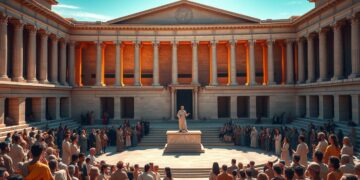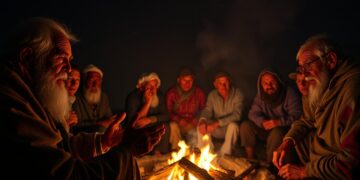







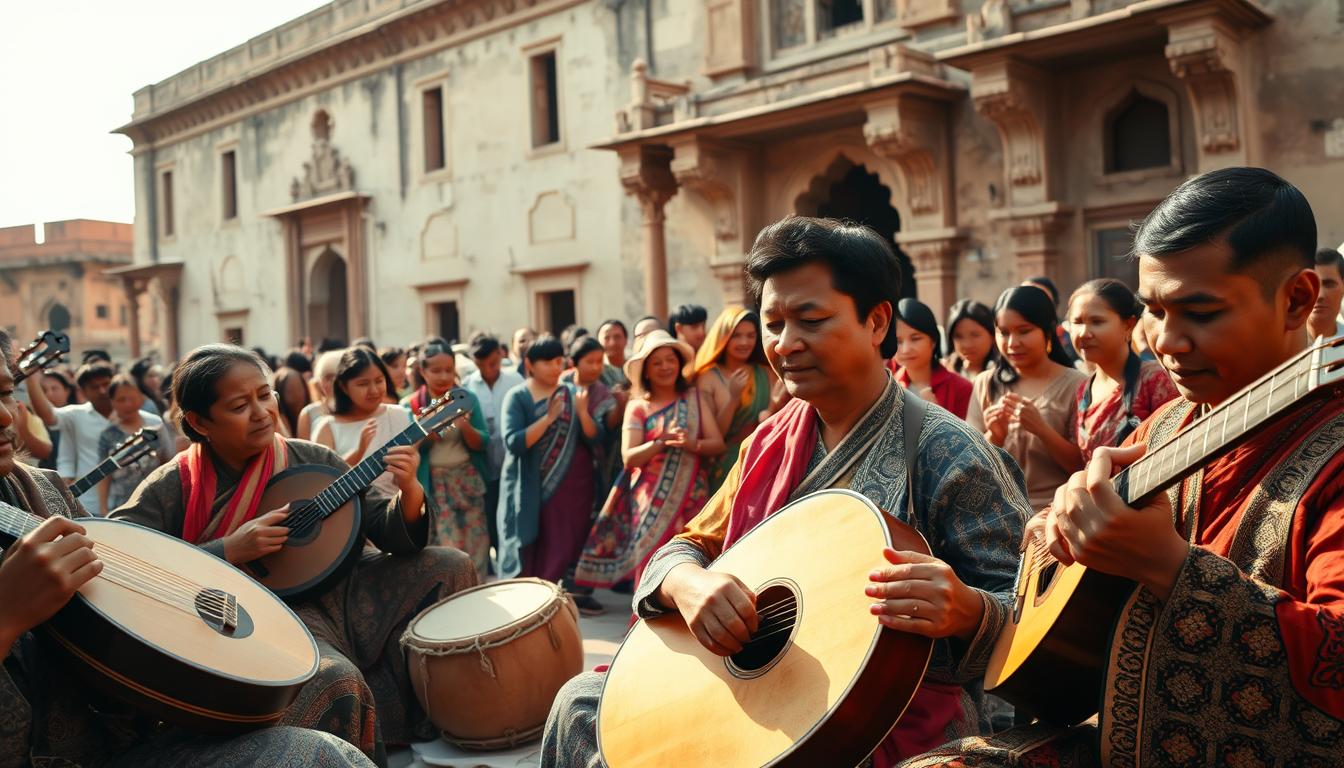
Traditional music is more than just sound; it’s a living library. In West Africa, griots sing histories, while in China, the guqin echoes Confucian values. Folk songs are key to preserving identity.
Songs tell stories of struggles, beliefs, and traditions through melodies. Research shows music mimics stories, using plot and emotion. This way, cultural memory is passed down.
In different cultures, folk songs hold great importance. Irish jigs recall Celtic roots, and Jamaican reggae shares Rastafarian resilience. Music keeps these stories alive.
Even today, 90% of people remember song lyrics in unfamiliar languages. This shows music’s unique role in keeping heritage alive. With global streaming growing, these traditions face both challenges and new opportunities to connect generations.
The Role of Traditional Music in Cultural Identity
Traditional music is at the heart of music and cultural identity. It helps communities understand who they are. Songs like Indigenous drumming circles or Appalachian fiddle tunes teach important lessons. They show respect for nature or the strength to keep going.
When young people learn these songs, they get a piece of their heritage. Studies show that Indigenous youth who take part in these traditions feel more connected to their community. This shows how music can help people feel a sense of belonging.
Traditional songs cultural significance goes beyond just fun. They tell stories of rituals, migrations, and struggles that aren’t found in books. In African societies, griots use music to share histories and teach moral lessons.
This way, music keeps the stories of marginalized communities alive. Hispanic communities see a 35% increase in cultural pride at festivals celebrating their folk music.
“Music is a key tool for keeping cultural traditions alive. It captures important values and history, helping to keep cultural identity strong across generations.”
Today, efforts to preserve music mix old and new. Digital platforms share Navajo chants worldwide, and workshops teach Hawaiian hula to the young. Hip-hop artists also play a role, using music to talk about today’s issues while honoring their roots.
Despite funding challenges, music remains a powerful force. It connects past and present, showing its enduring importance in preserving cultural traditions.
Historical Roots of Traditional Music
The term “folk music” first showed up in 1846, marking a key moment in folk music history. This genre came from mixing European, African, and Indigenous music styles. It shaped the regional music traditions we see today.
Early American folk music told stories of migration, labor, and community. These stories were passed down through generations. Musical heritage development grew from this tradition, with songs changing to reflect new social times.

“Folk music is the living memory of a culture,” noted ethnomusicologists studying how ballads and melodies encode history.
Regional differences led to unique styles like Appalachian ballads, Delta blues, and Cajun zydeco. These regional music traditions thrived in isolated areas, keeping cultural stories alive. The traditional music evolution got a boost in the 19th century with collectors like Cecil Sharp.
Sharp worked with the English Folk Dance and Song Society to save English folk songs. Krisjanis Barons also documented over 200,000 Latvian folk songs. These efforts show how people worldwide work to protect musical legacies.
Today, we have UNESCO’s Intangible Cultural Heritage program and digital archives to keep musical heritage development alive. From 19th-century ballads to today’s festivals, these traditions remind us of our shared human experiences through music.
Storytelling through Music
Traditional ballads and tales have long used music to carry stories across generations. Narrative songs blend lyrics with rhythm, turning histories and moral lessons into memorable melodies. From ancient ballads to folk hymns, these musical storytelling techniques turn complex events into something listeners can sing, remember, and share.
Many cultures rely on oral traditions to preserve heritage. West African griots, for instance, use call-and-response patterns to recount community histories. Their performances mix music with storytelling, creating emotional impact of folk music that resonates deeply. Irish seanchaí traveled to recite lore through song, blending fact and myth into communal memory.
The emotional impact of folk music arises from its ability to evoke shared experiences. A haunting melody paired with lyrics about migration or resistance can stir pride or sorrow, embedding stories into collective memory. Hawaiian mele, for example, weave genealogies and land histories into chants, teaching listeners about ancestry through music.
Modern preservation efforts like the Library of Congress’s cylinder recordings ensure these stories endure. These archives hold thousands of traditional songs, including Native American oral histories, safeguarding narratives that might be lost. By combining cultural narratives with melody, music keeps traditional ballads and tales alive—ready to inspire new generations.
Traditional Music Genres in the United States
American folk music genres like bluegrass, gospel, and blues have deep roots. They trace back centuries, from Appalachian ballads to Cajun reels. The oldest known Anglo-American folk tune, Springfield Mountain, dates to 1761.
Traditional blues heritage echoes through Delta rhythms, tracing African roots reshaped by US experiences. Country music stories, like Merle Travis’s “Sixteen Tons,” use detailed lyrics to paint vivid pictures of miner struggles. This reflects its narrative focus.
Indigenous American music preserves languages and rituals often lost elsewhere. Songs from Native communities like the Suyá use unique vocables to honor ancestral practices. This keeps endangered tongues alive. The National Recording Registry includes over 600 entries, yet genres like folk and blues remain underrepresented despite their cultural depth.
Even today, instruments like the fiddle and banjo bridge old and new. They prove these sounds are living links to shared heritage.

From coal mining ballads to ceremonial drumming, these traditions shape America’s identity. Programs like A Prairie Home Companion keep them vibrant. They ensure stories of resilience and community outlive their creators.
Every note and lyric becomes a bridge between past and present. This proves music’s power to unite.
Preservation Methods for Traditional Music
Keeping traditional music alive is a mix of old and new ways. The oral tradition in music is key, where elders pass down songs. But, it’s at risk of disappearing. Early recordings started over 110 years ago, with Jesse Walter Fewkes in 1890.
Today, places like the Library of Congress’s American Folklife Center have 1.5 million hours of music. This helps keep our cultural heritage alive.
Now, we use digital ways to save folk songs from damage. The Grateful Dead’s 2,400 live shows were saved from old tapes. Machines like Sony CDW-900E help fix these tapes, keeping history safe.
The Endangered Music Project also works to save rare songs. They make these songs available online, so more people can hear them.
Music is a big part of keeping cultures and languages alive, like in African societies during rituals.
Projects like Singing Wells go to far-off places to record songs. They record Maasai lullabies and other songs that might disappear. The Tanzania Heritage Project also works to save old recordings.
These efforts show how technology helps keep music alive. It connects the past with today.
Preserving music is more than just saving it. It’s about making it new again. Projects like Oxhala mix old dances with modern beats. This shows how tradition can grow and change.
With streaming, folk music can reach people all over the world. This helps keep cultures alive online. By using both old and new ways, music can connect people across time and space.
The Influence of Migration on Traditional Music
Migration changes the sound of cultures, mixing old traditions with new ones. The migration impact on folk music is huge. Communities carry their music to new places, blending with local sounds.
Jazz is a great example. It combines African rhythms with European tunes. This mix came from slavery and the Great Migration of 6 million African Americans. Chicago and New York became jazz centers, blending city sounds with country blues.

Musical diaspora traditions keep growing even when communities move apart. The Cherokee Nation kept their songs alive, even after the Trail of Tears. Jewish immigrants in New York turned Yiddish tunes into early pop.
In the 1970s, salsa emerged in NYC from Puerto Rican and Cuban migrants. They mixed bomba, son, and jazz. These stories show how moving can make cultures stronger.
Today, cross-cultural musical influences follow old paths. The Silk Road spread instruments like the sitar; now, the internet connects diaspora music worldwide. Festivals like NYC’s “Migrations: The Making of America” celebrate these blends, bringing together 75 groups.
But migration also brings challenges. Traditions may fade in their homeland but grow elsewhere. Music acts as a bridge, connecting past and present, and different places.
Music Education: Teaching Heritage
Teaching traditional music in schools and communities helps keep cultural stories alive. UNESCO’s heritage music programs, like the Kodály method, mix performance and history. This connects students with their roots.
Folk music education makes lessons bridges between past and present. It teaches rhythm and meaning. This way, students learn more than just notes.
Intergenerational music learning happens when elders and youth share skills. Workshops and festivals let students play claves or djembes. They learn cultural values along with music.
A 2017 study found music literacy scores rose 73% with weekly practice. This shows hands-on learning is effective.
Classrooms use music to teach more than just rhythm. Math counts beats in claves; history lives in jazz’s origins. Apps and digital tools, like eDia, let students explore Hindustani ragas or zydeco beats. This makes learning global.
“Music’s power shapes how we view the world. It teaches history through sound.” – UNESCO’s 2023 Cultural Heritage Report
Heritage music programs do well when schools work with elders. In New Orleans, students explore jazz and zydeco. This connects them to local history.
These efforts show music education builds unity and pride. It keeps traditions alive through shared song.
The Modern Relevance of Traditional Music
Traditional music is alive today thanks to folk revival movements. Artists like Burna Boy and The Hu mix old rhythms with new sounds. Their hits show that heritage music can reach people all over the world.

“We Shall Overcome” became a protest anthem, its legacy echoing in today’s social justice songs.
Folk influence on popular music is everywhere. Hip-hop, K-pop, and Afrobeat all draw from ancient traditions. Festivals like WOMAD and global tours are attracting more young fans, showing a 50% increase in a decade.
Artists like Nicolás Jaar and Angelique Kidjo blend traditional elements into modern music. UNESCO’s heritage list shows how these sounds bring communities together. Traditional music is more than just history; it’s a living, evolving part of our culture.
Challenges Faced by Traditional Music
Modern threats to traditional music grow as global trends reshape cultural sounds. The commercialization of folk music often pushes artists to blend old melodies with pop styles. This risks losing the original meanings. Communities worldwide struggle to keep endangered musical traditions alive as younger generations turn to digital platforms.
“Music connects us to our roots; losing it means losing part of our identity.” – UNESCO cultural preservation report
Folk music schools face challenges. Many rely on grants to teach instruments like the guzheng or Hindustani ragas. Some schools mix traditional lessons with online classes, but funding gaps remain.
When schools struggle, preserving authentic folk music becomes harder. For example, Appalachian ballads or Delta blues risk fading without active teaching.
Globalization mixes cultures but also blurs unique sounds. A commercialization of folk music can erase regional accents in melodies. Yet, hope exists: schools in Appalachia and New Orleans use digital archives and festivals to engage youth.
These efforts balance innovation with heritage. They prove that cultural survival needs both tradition and adaptation.
The Future of Traditional Music Preservation
Keeping folk music alive for the future needs new ideas and respect. Places like the Global Music Vault in Norway’s Svalbard archipelago store music on silica glass platters. They can keep songs safe for over 1,000 years. This effort, backed by Microsoft and UNESCO, protects music from Indigenous cultures to Appalachian ballads.
It lets communities decide how their music is shared around the world.
When locals lead in preserving heritage, it works best. Events like the National Folk Festival in the U.S. teach young people about traditions. UNESCO’s programs help Indigenous groups record their stories. This shows that keeping folk music alive needs efforts from the ground up.
Schools teaching fiddle tunes or drumming mix old and new. This keeps traditions alive.
Technology is important, but so is passion. The Global Music Vault uses 150GB capsules that can grow to terabytes. They work with hands-on teaching. When elders teach children or online platforms share Navajo chants, heritage stays alive.
Projects like these keep music growing, not just saved. They make sure songs are sung, not just stored.
Music stories last longer than empires. From Appalachian ballads to Zulu praise songs, every note shows strength. By using digital tools and connecting with people, we honor the past and inspire new voices.
The future is about singing songs, not just saving them. It’s about making sure every generation finds its voice in the songs of their ancestors.