







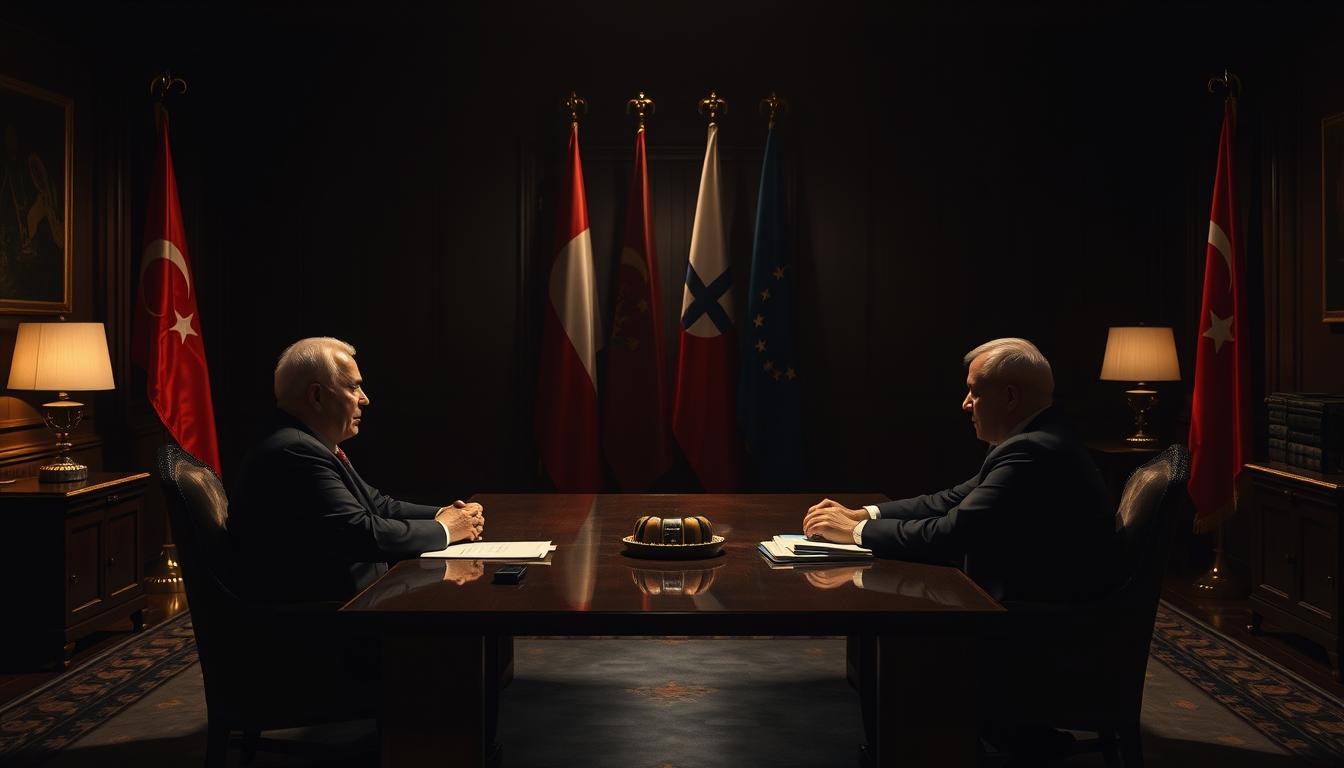
Jackie Robinson surprised everyone by endorsing Richard Nixon in 1960. Pat Moynihan and Nixon, despite their differences, also formed an unlikely alliance. These moments show that history is full of surprising partnerships.
For example, Chevron teamed up with Argentina in the Vaca Muerta oil project. This move bridged a long-standing environmental dispute. Nixon, known for his tough image, found allies like Moynihan, showing that sometimes, practical choices win over.
Democratic governor Mario Cuomo and Republican Rudy Giuliani worked together, as did Native nations and white communities against oil pipelines. The book Unlikely Alliances dives into these partnerships, showing how enemies became allies from the 1970s to the 2010s.
Why did teacher unions support the Tea Party against Common Core? How did George W. Bush and Ted Kennedy find common ground on education? This series explores these questions, revealing how shared threats can bring even the most divided groups together.
Unlikely Partnerships in World War II
World War II saw unexpected alliances that changed global politics. The Soviet-American partnership during WWII brought together two former enemies against Nazi Germany. Despite their differences, they worked together through Lend-Lease aid and joint military plans.
Trucks, planes, and supplies from U.S. factories helped the Soviet lines. This showed that survival could overcome their ideological differences.
The Nazi-Soviet Pact of 1939 split Poland but ended when Germany invaded the USSR in 1941. This strange alliance showed how quickly agreements can turn violent. At the same time, the U.S. and China worked together against Japan, despite concerns about Chiang Kai-shek’s rule.
This cooperation delayed the Communist takeover until after the war. These partnerships show how war can make enemies work together. From Lend-Lease shipments to battles like Stalingrad, they held together until they won.
Even the Nazi-Soviet Pact, though short-lived, showed that mutual gain can ignore ethics. These fragile alliances were key in defeating the Axis powers.
Vietnam War: The U.S. and South Vietnam
The US-South Vietnam alliance was a key part of the Cold War. American support for Diem was a big factor in the early days. But, despite spending $168 billion and sending 543,000 troops, the partnership had major problems.
South Vietnam’s unstable government and the U.S. military’s focus on fighting, not politics, hurt the Vietnam War partnerships.

Diem’s fall in 1963 showed deep issues. By 1968, the Tet Offensive made it clear the failed military alliance Vietnam. The U.S. lost over 58,000 soldiers, and 1.1 million Vietnamese died.
“Victory requires more than weapons,” concluded post-war analyses.
In the end, the Cold War alliances often ignored what was happening on the ground. The alliance’s collapse in 1975 taught a valuable lesson. It showed the importance of building trust with local people, not just relying on power.
The Cold War: Uniting Against a Common Enemy
The Cold War brought Cold War strange alliances that changed global politics. Nations put aside their past to fight against the Soviet Union. NATO was formed in 1949, including NATO former enemies like West Germany and Italy, who were once on the other side.
This move was practical, as they all feared communism more than their past differences. The alliance’s success depended on forgetting old conflicts to face the new threat together.
In the Cold War, the U.S. often chose to fight communism over supporting democracy. The U.S. supported dictators like Marcos in the Philippines and the Shah of Iran. This was done to keep them from falling to the Soviets.
Officials even admitted to backing US support for dictatorships to stop Soviet expansion. These deals traded long-term instability for short-term security.
Henry Kissinger and Nixon’s 1972 visit to China was a big surprise. The Nixon China policy made Beijing a possible ally, using their shared distrust of the USSR. This anti-Soviet partnerships showed that old enemies could become uneasy allies.
These choices showed the Cold War’s moral trade-offs. From making wartime foes allies to supporting dictators, alliances were about survival, not friendship. The era’s legacy shows how fear of one enemy could unite the strangest bedfellows.
Middle Eastern Alliances: Strange Bedfellows
In recent years, the Middle East unexpected alliances have changed the region. The Abraham Accords brought a big change, making Israel-Arab cooperation real. Israel, UAE, and Bahrain now work together, sharing secrets on threats like Iran.
These new partnerships show that survival is more important than old rivalries.

The US-Saudi strategic partnership is key to keeping things stable, even though they disagree on many things. Deals like the $10.8 billion missile sale show they share security goals. But, human rights and oil politics cause problems, showing how these alliances are driven by need.
Iranian alliance shifts have brought even more unexpected alliances. Iran, once a U.S. ally, now works with Russia and China to fight Western pressure. It supports Syrian forces and Hezbollah, making things more complicated. Iran also made secret deals with groups like al Qaeda in the 1990s, showing how practical needs can win over ideology.
Even extremist groups are making unlikely alliances. Hezbollah trained Somali fighters in Lebanon’s 2006 war, sending 720 militants. Only 80 returned. Al Qaeda operatives also learned bomb-making at Hezbollah camps in the 1990s. These strange diplomatic bedfellows show how shared threats can overcome old differences.
These alliances, made under pressure, show a region where survival is more important than history. From secret deals to public agreements, the Middle East’s partnerships are surprising. They prove that diplomacy can happen even between former enemies.
The Unification of Germany and the U.S.
From former enemies to allies, the German-American alliance history is a story of transformation. After World War II, the U.S. changed its mind about Germany’s economy. Instead, they chose the Marshall Plan to help rebuild post-WWII reconciliation. This move was the start of the
The Berlin Wall’s fall in 1989 marked a big moment. The U.S. pushed for quick reunification, even when others were unsure. Chancellor Helmut Kohl got the Soviets on board with a deal that included $5 billion in credits and a smaller German military. By July 1990, East and West Germany were one economically, with the Deutsche Mark as their currency.
Just months later, on October 3, 1990, a unified Germany was born. The U.S. played a key role in making this happen.
This alliance has faced challenges, like a drop in U.S. popularity in Germany after 2000. But, their shared values have kept them together. Today, the German-American alliance history shows that even old enemies can become strong allies. From the Marshall Plan to standing together against Ukraine, their partnership is a key to global peace.
The United States and North Korea: An Odd Couple
US-North Korea talks were a surprise when Trump and Kim met. They went from threats to historic handshakes. This was a rare moment in nuclear diplomacy history.
These talks started in 2018 in Singapore and Hanoi. North Korea wanted sanctions lifted and recognition. The US wanted to stop its nuclear program.

Despite progress, real results were hard to find. North Korea kept testing missiles, and the US had trouble checking if they were really giving up their nukes.
The talks showed both risks and chances. North Korea has a lot of military power, including chemical agents and nuclear weapons. But, South Korea’s people were hopeful, with most trusting the US to protect them.
Pyongyang wanted sanctions eased, but Washington wanted nukes gone. This showed the limits of personal diplomacy. Trust issues were big.
As the summits ended, questions remained. Can enemies become friends? Or will old problems come back? This story shows that even the biggest enemies can talk and maybe even become allies.
Unexpected Alliances in the Age of Technology
Technology has made old rivals into partners. The international space cooperation between the U.S. and Russia is a great example. Despite political differences, they work together on the International Space Station. Astronauts from both sides show that unexpected tech alliances can grow even in conflict.
This competing nations scientific collaboration shows that space goals can be more important than Earthly disputes.
Cybersecurity threats have also brought together unlikely partners. The international cyber security coalitions now include nations that don’t always agree. Even rivals like China and the U.S. have talked about ransomware, showing tech’s power to unite.
A 2022 GMF report found that over half of global cybersecurity partnerships involve nations with strained relations. This is because they all need to survive together.
Climate crises and pandemics have also tested global unity. During the pandemic, even rivals like India and Pakistan shared medical data. This shows that science can overcome politics.
These alliances are like the ISS model—temporary, focused on a specific issue, but very important. As one expert said in GMF’s findings: “In tech-driven crises, survival trumps ideology.”
Yet, there are challenges. Trust is hard to build. But the unexpected tech alliances of today suggest a future where tech challenges might change diplomacy.
Humanitarian Efforts: Collaborating Beyond Borders
In times of crisis, disaster diplomacy can lead to humanitarian cooperation between enemies. When earthquakes hit Iran in 2017, the U.S. quickly sent aid to Tehran. This act eased tensions, despite years of strained relations. Japan and China also joined forces after typhoons, showing that shared crises can bridge political gaps.

NGO bridging hostile nations like Cuba’s medical teams have worked with U.S. personnel in disaster zones. They save lives, ignoring diplomatic clashes. Even small groups, like the International Red Cross, work across borders, creating neutral zones in conflict areas. Zahra, an Afghan aid worker, built trust between displaced communities and U.S. agencies, showing the power of local leaders.
“When children’s lives are at risk, we forget borders,” said Zahra, whose team distributed aid in war-torn regions despite government disputes.
Yet, challenges remain: 1 in 3 countries face landmine contamination, slowing recovery. Despite U.S. funding cuts to HIV programs, NGOs like Doctors Without Borders keep working across borders. These partnerships show that even in hostility, emergency aid from unexpected sources can save lives and sometimes lead to lasting peace.
The Military and Business Partnerships
History shows military industrial cooperation enemies often clash yet collaborate. During the Cold War, Western firms secretly sold tech to Soviet-aligned nations, blending profit with espionage. Even today, strategic economic partnerships thrive where politics falter. Take the trading with adversaries history between the U.S. and China: tech giants partner on AI despite trade wars. European firms also engage in defense contractors international deals with Russia for energy infrastructure, navigating sanctions with dual-use tech.
Businesses act as unofficial diplomats, bridging divides governments can’t. When the U.S. sanctioned Iran, private firms found loopholes to trade, proving business transcending political divides. In 2023, Japanese firms invested in North Korean ports despite regional tensions. Such deals highlight how profit drives innovation, even between rivals.
“The market has no enemies—only opportunities.” – Former Lockheed Martin executive, 2021
These partnerships risk security leaks but fuel global stability. From Cold War tech swaps to modern AI ventures, companies prove economic ties can outlast political storms. The result? A world where profit and patriotism dance in a fragile waltz.
Conclusion: Lessons from History’s Unlikely Alliances
History shows us that ideology versus pragmatism shapes geopolitical partnership patterns. France helped the American colonies with 1.3 billion livres and treaties in 1778. This shows how temporary strategic alliances often focus on survival over shared values.
Just like the Soviet and U.S. alliance ended after 1945, today’s leaders face similar challenges. The 2003 Iraq invasion, driven by fear after 9/11, was a lesson in historical alliances lessons.
France won a key naval battle in 1781, and 12,000 Hessian troops fought for Britain. The Iraq troop surge also had short-term successes but hid deeper issues. These examples show that alliances formed under pressure rarely last.
Today’s leaders must understand this. The 75% conflict rate in power transitions, as Graham Allison noted, warns against assuming history repeats. The U.S. must balance power with China, not follow Cold War tactics.
The Malaya and Philippines examples for Iraq ignored local contexts, leading to failure. Yet, the Treaty of Alliance’s pragmatism, where France supported the revolution, offers a lesson in adaptability.
These stories teach us to be humble. The British success in Malaya was due to minority insurgent demographics, a detail Iraq planners missed. The Thucydides Trap shows fear drives choices more than ideals.
By studying temporary strategic alliances, leaders can learn from past mistakes. History’s alliances show that stability comes from recognizing when to bend to necessity, not from permanence.