







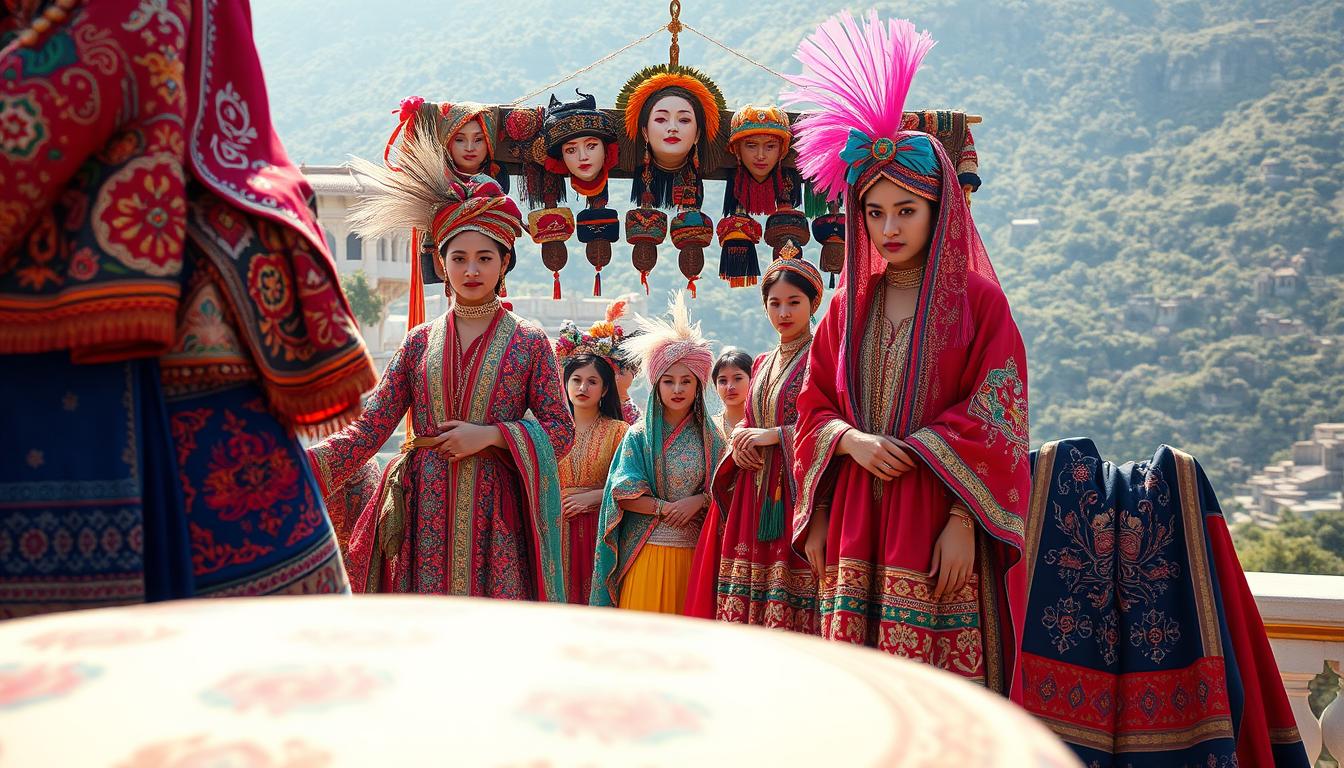
Every time you pick what to wear, you tell a silent story. Fashion isn’t just about style; it reflects who we are. It’s influenced by social media for 85% of consumers and shows our cultural heritage for 55%.
Clothing connects us to traditions like the Japanese kimono and the Scottish kilt. These items carry centuries of history. They’re not just fabric; they’re bridges to our cultural pride and personal expression.
Clothing choices are very important. Sixty percent of people say their outfits boost their self-esteem. Yet, 70% feel pressured to follow trends, creating a tension between self-expression and societal norms.
Even 40% of consumers have faced cultural appropriation in fashion. This has sparked calls for brands to respect origins. Thirty percent of LGBTQ+ individuals use style to express gender identity, showing fashion’s power.
Today, fashion combines tradition and modernity. Designers like Issey Miyake and Maison Margiela blend old and new. Fifty percent of brands now adopt sustainable practices, honoring ethics and history.
Your closet is more than a wardrobe; it’s a canvas. It shows our cultural pride, personal values, and global trends. What stories do your choices tell?
The Significance of Fashion in Culture
Cultural fashion is more than just clothes. It’s a living history book. Traditional clothes like the Japanese kimono or the Indian saree share stories of heritage. They do this through patterns, fabrics, and craftsmanship.
These symbolic garments carry generations of meaning. For example, the kilt’s clan emblems and the vibrant Ankara prints symbolize African pride. Fashion anthropology explores how these clothes connect communities to their past. It helps preserve rituals and values.
The kimono, once a common garment, is now less popular in Japan. This shows the challenges in keeping heritage alive. On the other hand, the Palestinian keffiyeh, a symbol of resistance, has been adopted by brands like Louis Vuitton. This raises questions about cultural appreciation versus appropriation.
These examples highlight how traditional clothing connects the past and present. Even as global fashion trends change, these clothes remain important.
“Clothing is a silent teacher of identity,” says Dr. Lena Torres, a cultural preservation advocate. “Every stitch holds lessons about a community’s struggles and triumphs.”
Fashion anthropology shows the importance of everyday items like the durag or West African Agbada. They are not just clothes but also vessels of history. They remind us to respect their origins and embrace their evolving roles in global fashion.
Protecting these traditions is key. It ensures that future generations can learn from and appreciate their stories.
Fashion as a Form of Self-Expression
Every stitch and pattern in our wardrobes whispers a story.  , shows how clothes shape our self-image and how others see us. Studies show that personal style development boosts fashion confidence. This lets people show their true values through their outfits.
Historically, Romans used togas to show their rank, and 17th-century Baroque silks showed wealth. Today, teens wear band T-shirts or simple outfits to share their beliefs. A survey at UTM found 70% of students think their clothes show who they are. But 65% said they feel pressured to follow trends, which can limit their creativity.
Science supports this: wearing a tailored blazer can improve focus, and mismatched accessories can bring joy. A Harvard study found that clothes can change our mood and how well we do things. Accessories, like bold necklaces or shoes, add to our personal story.
“Clothing is a silent autobiography,” noted the Fashion and Law journal, showing how fabrics and colors reflect our inner selves. Designers like Stella McCartney and Virgil Abloh use runways to explore identity.
Creating a personal style is a journey, not just following trends. Start with small steps: add a favorite scarf to a simple sweater, or pick colors that make you feel alive. Let each piece tell a part of your story. Your clothes are more than fabric; they’re a daily statement of who you are.
Historical Context: Fashion Through the Ages
Fashion history shows how clothes reflect society’s changes. The early 1900s were full of big changes. In the 1910s, Paul Poiret’s hobble skirt made it hard to move, but World War I brought practical clothes. Soldiers’ trench coats from Burberry and Aquascutum became popular streetwear.
By the 1920s, flapper dresses with low waists showed a rebellion against old ways.
After World War II, Christian Dior’s 1947 New Look brought back luxury. His full skirts were a big contrast to the earlier need to save fabric. The 1950s saw Balenciaga’s Sack dress and poodle skirts, mixing formality with young trends.
Even kids’ clothes changed—girls’ dresses got shorter, and boys started wearing casual denim.
The 1980s brought power suits, seen on Margaret Thatcher and designers. These suits were both professional and fashionable. By the 1990s, supermodels like Naomi Campbell became style leaders. Fast fashion in the 2000s made runway styles available to everyone.
In the 2010s, athleisure combined activewear with everyday clothes. The 2020s pandemic made comfort clothes popular again.
Today, designers like the kimono or corsets for inspiration. The history of fashion shows how styles change with culture. From Dior’s designs to today’s eco-friendly fabrics, old fashion ideas keep coming back. Each era’s fashion choices tell a story of human creativity and change.
Global Influences on American Fashion
American style is shaped by cultural fashion exchange. Japanese kimonos inspire minimalist designs, while Indian draping techniques are modernized. Global fashion trends influence U.S. design, making it diverse.

Cultural fashion fusion occurs when old meets new. Denim, born in America, is now a global favorite. African Ankara prints, once local, are now in handbags and streetwear.
Social media speeds up this exchange. TikTok makes Nigerian geles popular, and Parisian designers use Japanese obi sashes. But, there are challenges. Ethnocentrism can turn sacred symbols into trends.
Today, designers work together globally. Brands like Patagonia and Tommy Hilfiger partner with artisans from Ghana and India. This ensures traditional techniques are respected and innovative.
As American style evolves, it shows our world’s connection. A New York runway might feature a mix of Mexican embroidery and Parisian tailoring.
Sustainable Fashion and Cultural Identity
The sustainable fashion movement is learning from cultures that valued lasting things over fleeting trends. Ethical clothing today takes cues from Japan’s wabi-sabi—seeing beauty in the imperfect. This matches the values of eco-conscious fashion. Traditional crafts, like Navajo weaving or Andean dyeing, keep ancient wisdom alive in today’s clothes.
Helping traditional craft preservation helps communities like India’s handloom weavers. Their work keeps both livelihoods and cultural heritage alive. The Maasai of East Africa are bringing back their shuka fabric, showing how cultural sustainability strengthens identity and nature.
Brands working with Indigenous artisans, like Native American Navajo designers, show ethical choices honor heritage. They also reduce fast fashion’s waste.
Buying vintage or fixing clothes makes them last longer, like in old times. Groups like SEWA in India help poor women by mixing traditional embroidery with modern markets. This makes sustainable fashion a link between the past and future, keeping cultural stories in every piece of clothing.
Fashion and Community Identity

From punk leather jackets to y2k crop tops, subcultural style is like a visual language. Community fashion brings people together through shared looks. It turns clothes into silent talks about what we value.
Fashion tribes like hip-hop’s bold athleisure or goth’s velvet chokers help members recognize each other. These dress codes are more than just trends. They’re a shield against feeling lost in a crowd.
The RISD Museum’s collections highlight how clothes show group identity across time. Traditional Diné weavers used wool patterns to tell stories, while today’s TikTok users mix those patterns into streetwear. But, this exchange can be tricky: brands using sacred symbols without understanding them sparks debates about cultural rights.
Online, community fashion becomes a global language. Fans of K-pop share fashion tips in Discord, while eco-conscious teens swap thrifting advice on Instagram. Even workplace dress codes, like Silicon Valley’s casual style, show who belongs to a certain group. Clothes are a way to find your tribe, whether at Renaissance faires or anime conventions.
As virtual fashion grows in the metaverse, these ideas stay true. Digital avatars wear subcultural style to show their real-world tribe. Fashion, whether in the real world or online, is our most colorful way to say, “I’m here, and this is me.”
Gender Identity and Fashion
Gender-fluid fashion is changing how we see style. It lets people wear what feels right, without labels. Brands like Telfar and Tommy Hilfiger offer inclusive fashion lines. They show that clothes don’t have to be labeled as “men’s” or “women’s.”
Research shows 56% of Gen Z prefer shopping outside their assigned gender section. Designers like Harris Reed, who made a splash at Paris Fashion Week in 2023, are leading this change. Even classic items like pinstripe suits are now seen as gender identity fashion friendly, selling more to women in 2024.
“Clothing should be about confidence, not chromosomes.” — Council of Fashion Designers of America, 2024
Oversized tees and baggy jeans are now popular across genders, with sales up 17% to 37%. Stores like ASOS have “neutral” sections, matching 41% of Gen Z who don’t identify as just male or female. This isn’t just about clothes—it’s about freedom to be ourselves.
The Language of Fashion: Symbols and Meanings
Fashion tells stories silently through itsvisual language of style. Every detail, from the fabric to the colors, sends messages. These messages talk about who we are, where we come from, and what we believe in. Clothing, from traditional outfits to modern streetwear, is a way for everyone to communicate.

Think aboutfashion symbolismin color. A white wedding dress in the West means purity. But in some Asian cultures, white is for mourning. This shows howclothing color meaningchanges with culture. For example, Scottish tartans show family ties, and Indianlehengasdisplay local embroidery skills.
Today, designers mix old and new styles. Think of Gucci’s tartan updates or Sabyasachi’s mix of Indian patterns. Fashion communicationalso sends social messages. A protest badge, a green coat, or a hijab can share personal views. About 65% of people use clothes to show their values, like caring for the planet.
Fashion’s language keeps changing, but its core stays the same. Knowing its symbols helps us understand the world. A red dress might mean love or danger, while a kente cloth tells a story from Ghana. Fashion turns clothes into a way to share our stories, making every outfit a conversation.
Fashion Trends in the Digital Age
Social media has made everyone a trendsetter. Sites like TikTok and Instagram let users share their style instantly. This sparks trends, like the Y2K revival.
Online fashion communities connect creators worldwide. They shape digital trends. From vintage swaps on Depop to virtual runways, the internet mixes local and global styles.
Technology is changing how we see fashion. Brands like Zara offer virtual try-ons with augmented reality. Blockchain tracks the origins of traditional textiles.
Virtual fashion includes digital-only outfits, like NFTs in gaming avatars. These innovations let people try new looks without limits.
Fashion tech also focuses on sustainability. Apps like ThredUp connect thrifters, reducing waste. But fast fashion, fueled by social media, leads to overconsumption.
The challenge is balancing tech’s creativity with eco-friendly choices. Gen Z wants sustainable and inclusive fashion. The future of style is both digital and human.
The Future of Fashion as a Cultural Statement
Future fashion trends will mix old traditions with new tech. This change will show how clothes can really show who we are. Imagine clothes that change with the weather or are made with 3D printing, inspired by ancient designs. These advancements make fashion both advanced and deeply personal.
Cultural fashion is evolving fast. Young people want real, authentic fashion. This is why brands are working with local artists to keep traditions alive. Today, over 60% of designers mix cultural heritage with their designs, showing that global and local can go together.
By 2024, 75% of shoppers will choose brands that care about the planet. The green fashion market is expected to grow to $8.25 billion by 2025. Companies like Patagonia and Reformation are leading the way, using eco-friendly materials and telling stories that matter.
Digital platforms like TikTok and AI apps are changing how we see fashion. They let everyone help shape the future of style. But, being open and fair is just as important. Today, 80% of shoppers want to know where their clothes come from.
The future of fashion is clear: it must grow in a way that respects our planet and cultures. It’s about using tech, culture, and ethics together. Your choices, like buying secondhand or supporting fair-trade brands, help shape this future. The runway is more than a show; it’s a reflection of who we are and who we want to be.