







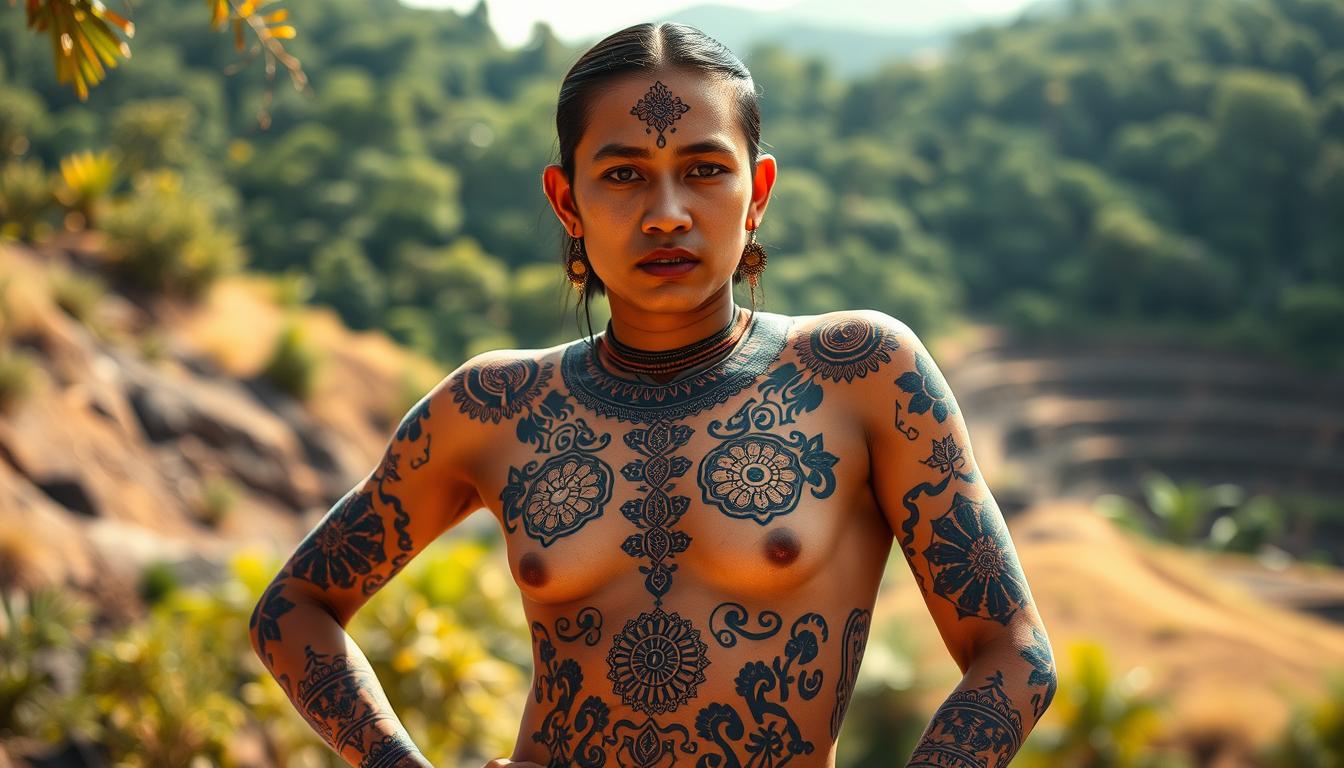
Traditional tattooing is more than just skin-deep. It’s a universal language of cultural symbols. From ancient sailors to today’s fans, these designs tell stories in ink.
American traditional tattoos, born from maritime adventures, marked sailors with anchors and swallows. Now, 80% of people choose tattoos that mean something personal or cultural to them.
Every tattoo has a secret message. An anchor might mean stability, a wolf loyalty, or an Egyptian rose love. These tattoos have lasted through time, like Ötzi the Iceman’s 5,000-year-old tattoos or Maori moko patterns that tell family stories.
Traditional tattoos mean different things around the world. For example, Polynesian sharks show strength, and Japanese koi fish symbolize perseverance. This art is not just for looks; it’s a living history of human experiences.
Understanding Cultural Symbolism in Tattoos
Tattoos are more than just skin art—they’re a way to express tattoo identity expression and symbolic tattoo designs. In ancient times, tattoos told stories of family, beliefs, and social rank. For example, Maori ancient tattoo traditions showed ancestry through detailed patterns.
In Egypt, the Eye of Horus meant protection. Each tattoo line and shape carried deep meaning, like fighting evil or celebrating courage.
Symbol meanings change with cultures. Dragons, seen as scary in Europe, are wise in Asia. The lotus flower, key in Buddhism for enlightenment, is seen differently in the West.
Colors also have deep meanings. In Japanese tattoos, red means courage, while black in Polynesian art shows strength. These symbolic tattoo designs show how culture shapes art.
Today, tattoos blend old and new. Tribal patterns like the Maori koru, symbolizing growth, meet modern twists. Each tattoo connects personal stories to cultural heritage. Whether it’s a small anchor for stability or a bold phoenix, each tattoo tells a story of history.
Tattoos as Expressions of Identity
Body art history shows tattoos as a way to express oneself. From tribal tattoo meanings in Polynesian cultures to today’s symbols, each tattoo has a story. The Maori of New Zealand used facial tattoos to show family ties and status, linking past and present.
Today, 47% of people with tattoos say their designs mean a lot to them. They might honor their heritage or mark important life events.

Modern trends see 25% choosing traditional designs, mixing old and new. Tattoos help people express their identity in many ways. They can remember loved ones or celebrate overcoming challenges.
Over 30% of Americans have tattoos, showing a shift from taboo to mainstream self-expression. Even 60% say their tattoos show their values, proving they’re more than just skin art.
“A tattoo is a silent declaration of who we are,” says cultural anthropologist Dr. Lena Torres.
Some choose traditional symbols like Maori tribal tattoo meanings. Others use tattoos to challenge the status quo. As society changes, so do the stories we tell through our tattoos, a dialogue between heritage and individuality.
Popular Symbols and Their Meanings
Tattoo symbols tell stories from all over the world. Wolves stand for loyalty and strength. Snakes represent change, a big theme in spiritual tattoos. Anchors once guided sailors but now symbolize hope.
Flowers have deep meanings too. The lotus in Eastern cultures means enlightenment. Japanese cherry blossoms show the beauty and fleeting nature of life. Eagles and lions symbolize freedom and bravery.
Modern tattoos also carry ancient meanings. Butterflies stand for growth, and suns for positivity. These symbols have changed but their core meanings stay the same. Tattoos today mix old traditions with personal touches, showing the lasting power of symbols.
Every tattoo has a story behind it. From the anchor’s history to the phoenix’s rebirth, these symbols connect us. They’re not just art but bridges between our stories and the shared language of symbols.
The Role of Tattoos in Different Cultures
From ancient mummies to today’s designs, cultural tattoo practices have shaped history. The oldest tattoos were found on Ötzi the Iceman, dating back to 3400 BCE. The Pazyryk princess of Siberia (500 BCE) had detailed animal designs. These early tattoos showed spiritual, social, and protective roles worldwide.

Traditional global tattoo traditions are diverse. In Japan, tattoos show mythical creatures to honor Shinto beliefs. Māori tā moko carvings tell family stories on facial skin. Samoan pe’a tattoos show courage and community.
In India, Apatani women wore facial tattoos to avoid abduction. Konyak warriors got facial marks for combat wins. Today, tattoos face threats and revivals. Japan’s 19th-century ban linked tattoos to crime, but now artists see them as heritage.
Hawaiian kākau practitioners are bringing back ancient techniques. This helps preserve Polynesian identity. It’s important to appreciate tattoos with respect, understanding their cultural significance.
These traditions are living histories, blending old wisdom with new expression. Whether it’s a Buddhist mandala or warrior’s marks, each tattoo shares a story from its culture’s heart.
The Psychology of Tattoo Choices
Tattoos are more than just skin art—they reveal our inner thoughts. Many pick designs like dagger motifs to show courage or protection. Skulls, with their spiritual tattoo meanings, remind us of life’s short time, urging us to live mindfully. These choices show our personal journeys.
Studies show 47% of tattooed people choose designs that reflect their personality. And 59% value the meaning over how it looks. For some, tattoos act as a silent counselor. A 2020 study found they helped trauma survivors replace self-harm with symbols of strength. The pain of getting a tattoo gives control over our bodies and identities.
Younger people (18-29) often get tattoos as a coming-of-age ritual. Semicolon tattoos, for example, mark mental health victories. About 25% use tattoos to challenge norms, and 15% seek spiritual connections through mystical symbols. Tattoos mark life’s big moments, making abstract feelings real.
Getting a tattoo is a thoughtful decision. It’s why 70% of people link their tattoos to their core values. Whether to honor a loved one or to show strength, these tattoos are a part of who we are. As society changes, tattoos now often show pride in our stories.
Gender and Cultural Symbolism in Tattoos
Traditional cultural tattoo practices often divided designs by gender. In Samoan culture, men get the Pe’a, a full-body tattoo showing strength. Women get the Malu, covering thighs and lower bodies, showing modesty. These designs show how cultural body art symbolism supported societal roles.
Sailors and soldiers wore bold anchors or eagles, seen as masculine. Women’s tattoos were often small and delicate, like floral motifs or butterflies.

Today, tattoo cultural significance goes beyond old rules. Women now choose big, bold tattoos like tribal patterns, once for men. Men are picking delicate or floral designs. The “Sailor Jerry Girl” pin-up, once seen as masculine, now adorns wrists or ankles of all.
This change shows a move towards personal expression over strict norms.
Modern tattoos also break old taboos. Women choose Samoan Pe’a-style tattoos, and men pick Maori koru spirals, once seen as feminine. But, it’s important to respect the origins of these designs to avoid cultural misinterpretation.
From sailors’ tattoos to Samoan rites, gender’s role in tattoo history is clear. But today, tattoos celebrate individuality. They honor heritage or break norms, focusing on identity beyond old divides.
Tattoos as Markers of Transition
Tattoos have long been symbols of life’s big moments. In ancient tattoo traditions, designs like the Maori ta moko and Ainu lip markings meant a lot. They showed status or marked important life events. These tattoos were more than art; they were ceremonies that marked a person’s identity.
Today, tattoos are seen as a way to mark important life events. People choose designs that mean a lot to them, like swallow motifs for nautical journeys or tattoos to celebrate achievements. Over 70% of people with tattoos see them as milestones in their personal growth.
Getting a tattoo can be a powerful experience. Many feel a deep release during the process. It’s a way to express emotions and celebrate life’s changes.
Indigenous Alaskan women are bringing back traditional tattoos like tavluġun and iri. These tattoos are more than just heritage; they connect people to their ancestors and inspire future generations. Women who got tattoos between 2017-2019 felt empowered. They saw their tattoos as symbols of resilience and cultural pride.
Modern Trends in Tattoo Symbolism
Today, symbolic tattoo designs mix old with new. Artists use minimalist shapes and watercolor styles to update classic images. This change shows a world where cultures blend, making tattoo identity expression more personal.

Social media plays a big role in this change. Sites like Instagram show tattoos that combine old and new, like QR codes with ancient symbols. A big number of tattooed people say their tattoos tell their personal stories. Even old symbols like anchors and roses are now seen in new, abstract ways.
“A tattoo isn’t just skin—it’s a conversation between past and present.” — Modern tattoo artist Lina Marquez
Neo-Traditional tattoos, made famous by Chris Garver, mix old-school lines with new colors. Geometric tattoos, which are getting more popular, use shapes to express identity. Even ancient tattoos, like Maori moko, are getting a modern twist that respects tradition and individuality.
The tattoo market is growing fast, reaching $3 billion. These trends show that tattoos are a living language of self-expression and connection.
The Controversial Side of Tattoo Symbolism
Global tattoo traditions often clash with modern trends. Many U.S. tattoos use Japanese and Chinese characters without knowing their true meanings. A study by Hanzi Smatter reveals common mistakes.
For example, someone might get “warrior” inked, only to discover it translates to “waterfall.” Worse, “beautiful” could mean “disaster.” These errors turn cultural symbols into “cultural gibberish.”
Tattoo cultural significance fades when symbols are divorced from their origins. Traditional Japanese Tebori tattoos, done by hand, require 150+ hours of work. Yet, outsiders often copy these designs without understanding their ties to Japan’s criminal underworld.
Indigenous practices like Kanahus Manuel’s Secwepemc Nation work show healing power. Her chin tattoos symbolize reclaiming language and voice—meanings lost when non-Natives adopt them.
“Tattoos can’t be divorced from their histories,” says Kanahus Manuel. “They’re living stories.”
Cultural tattoo practices demand respect. Coil machines, not traditional tools, strip some designs of their significance. Experts urge: research deeply.
Avoid Indigenous symbols unless directly connected to your heritage. Instead, support artists like Nahaan, whose work ties to Tlingit culture. Tattoos are more than art—they’re bridges to history. Approach them with care to honor their tattoo cultural significance.
Care and Maintenance of Tattoo Symbolism
Proper aftercare is key for keeping traditional tattoo meanings alive. If you don’t take care of your tattoo, the lines can fade. This makes the stories in the art less clear.
Styles like American Traditional have bold lines and bright colors. These help keep symbols sharp for years. This way, their cultural importance stays strong.
Studies indicate that nearly 50% of tattooed individuals seek touch-ups within a year to maintain design integrity.
In many cultures, touch-ups are important for cultural body art symbolism. For example, in Polynesian traditions, touching up a tattoo honors ancestors. Japanese irezumi artists also suggest regular touch-ups to keep mythical images clear.
Even today, taking care of your tattoo is important. Clean bandages and sun protection help keep the meaning of nature or geometric patterns. This way, the tattoo stays meaningful.
Ignoring care can lead to losing the body art history behind tattoos. For instance, Maori moko tattoos need upkeep to keep facial lines sharp. This preserves family stories.
A skilled artist can do a touch-up to keep symbols like koi fish or cherry blossoms meaningful. Showing respect for these traditions keeps tattoo heritage alive worldwide.
The Future of Cultural Symbolism in Tattoos
Tattoo symbolism is changing fast, thanks to technology and a renewed interest in culture. Practices like Māori tā moko and Japanese irezumi are being brought back as ways to keep heritage alive. Now, tattoos from around the world are shared online, letting artists and fans connect.
Young people are mixing old traditions with new styles. They create tattoos that respect their roots but also show off their creativity.
Technology is changing tattoos. Apps and digital tools help artists work together from anywhere. Even 3D printing could change how tattoos are made. Social media has made tattoos more popular, with 30% of U.S. adults having one.
But, there are also problems. People worry about cultural mistakes and tattoos losing their unique touch.
“Tattoos act as silent conversations,” says researcher Dr. Lena Chen, noting how body art bridges personal identity and collective history. “Each design tells a story that spans generations.”
New materials like electronic inks could change tattoos forever. Yet, 60% of artists say knowing their culture makes their tattoos more real. As tattoos become more global, finding a balance between tradition and innovation will be key. Tattoos are a way to connect with the past while telling new stories.
Conclusion: Tattoos as a Reflection of Culture
Tattoos connect ancient traditions with today’s self-expression. The oldest tattoos, like Ötzi’s 61 marks from 5,300 years ago, show early body art’s role. They linked personal and cultural identity.
Today, traditional tattoo meanings live on. Polynesian tā and Japanese irezumi feature dragons for strength and cherry blossoms for life’s beauty. These designs tell stories.
Modern trends like minimalist styles or realism show tattoos’ versatility. In the U.S., 36% of 18–29-year-olds have tattoos. They mix global symbols with personal stories. For Maori, 70% use ta moko to map family history, showing tattoos’ enduring cultural value.
Even ancient methods, like Native American hand-poked patterns, inspire today’s artists. Tattoo cultural significance grows as societies reconnect with their heritage. Japan’s Meiji era turned irezumi from taboo to art, and Polynesian designs are now worldwide favorites.
Yet, tattoos face challenges, like workplace bias affecting 50% of tattooed people. Despite this, tattoos continue to unite people with their past and future. From Ötzi’s healing marks to modern minimalist cherry blossoms, tattoos are a universal language. They celebrate heritage, challenge norms, and make skin a canvas of living history.