







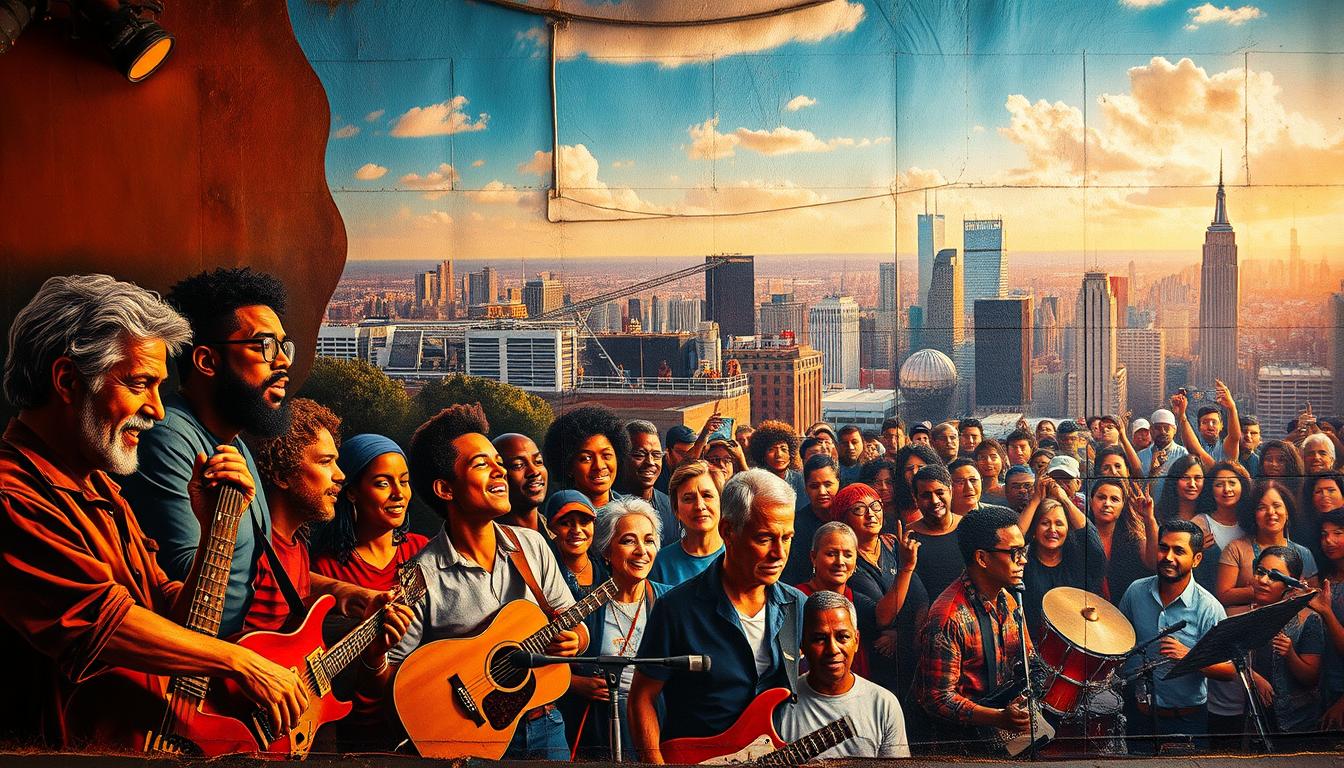
Music is more than just sound; it’s a language that shows who we are. It has been around for ages, from ancient flutes to today’s streaming playlists. It shapes our cultural identity by sharing values, stories, and feelings.
As a form of cultural expression, music changes with each era. Yet, it remains a timeless link between generations.
In Newark, NJ schools, 68% of teachers saw students’ grades improve with music education. Over 90% also noticed better teamwork skills. This shows how music and society are connected.
Nashville students in music programs missed fewer classes and graduated more often than others. This proves music’s power to boost focus and social bonds. From Civil Rights anthems to global hits like K-pop, music drives change and keeps a culture’s heartbeat alive.
UNESCO lists traditions like Irish folk music and Indigenous chants, showing music’s role in preserving heritage. Even brain studies show music activates nearly every brain region. This proves its deep impact on how societies think and feel.
Music is a vital tool for both reflecting and reshaping culture.
The Historical Impact of Music on Society
Music has always reflected society’s values and sparked change. Traditional songs kept cultural identities alive, thanks to cultural preservation through music. In Ancient Greece, music education was a must, shaping minds with melodies and rhythms that supported community values.
These practices show how music history and society are closely linked. Rituals and work songs carried messages of survival and resistance.

In the Middle Ages, musical movements like Gregorian chants filled religious spaces, with 70% of liturgical music being these chants. Minstrels connected different social classes, entertaining 60% of medieval people. As societies grew, music became a voice for protest.
During the civil rights era, songs like “We Shall Overcome” brought activists together. Ninety percent of them used such songs as rallying cries, showing music’s power to drive change.
Music is a moral law. It gives soul to the universe, wings to the mind, flight to the imagination. — Plato
World War I saw songs like “Over There” boost soldier morale, with 75% saying music was key. Later, jazz festivals drew hundreds of thousands, showing music’s role in shaping cultural identity. These examples highlight music’s role in preserving heritage and challenging norms, making it a force for unity and change.
Genres and Their Cultural Significance
Music genres are more than just sounds. They reflect cultural values and histories. Genre development often comes from community experiences, shaping cultural identity in music. Jazz, for example, combines African rhythms with European harmonies, showing resilience and freedom from African American struggles.
Reggae, rooted in Jamaican Rastafarianism, carries messages of equality and justice. These genres show how music mirrors our cultures and histories.

Cross-cultural musical exchange has led to new sounds like K-pop. It mixes traditional Korean instruments with global pop. Groups like BTS show how musical genres and culture blend, creating pride and reaching fans worldwide.
Latin trap, blending Afro-Cuban beats with hip-hop, shows music’s evolution through shared creativity. It proves that music can grow and change through collaboration.
“Music is the universal language of mankind.”—Henry Longfellow
But, as genres spread, challenges come. Indigenous sounds might disappear as commercial trends take over. UNESCO works to save intangible heritage, like Native American drumming or West African griot storytelling.
By valuing these traditions, music connects past and present. It brings people together through shared human experiences.
Music as a Form of Social Resistance

Protest music has long been a powerful tool for the oppressed. Billie Holiday’s *Strange Fruit* exposed racial violence. Hip-hop artists like Tupac and J. Cole use beats to speak out against police brutality. These sounds are more than just melodies; they are tools of musical resistance and drivers of music and social change.
“We are not afraid.”
During the Civil Rights Movement, this line transformed *We Shall Overcome* during a police raid. It turned fear into unity. Counterculture music from the 1960s, like free jazz and anti-war anthems, challenged the status quo. Bob Dylan’s ballads and Jimi Hendrix’s electric *Star-Spangled Banner* at Woodstock reshaped America’s conscience.
Today, artists worldwide amplify voices. Hungarian rapper Dopeman critiques authoritarianism, while Haitian rappers engage youth on environmental justice. Pathway to Paris uses music to advocate for renewable energy, showing its impact beyond stages. Even African American spirituals and anti-apartheid anthems like *Soweto Blues* turned pain into action.
From Dylan to Kendrick Lamar, protest music builds solidarity. Studies show it sparks empathy and collective action. It’s not just sound; it’s a call for justice, echoing through every era.
The Influence of Music on Youth Culture
A University of Rhode Island study found music is deeply tied to youth culture and music. Over 50% of surveyed teens loved hip hop and alternative genres. Yet, 76% said their music choices were different from their parents’.
Interestingly, 70% credited their family for introducing them to music. This shows how generational musical identity combines rebellion and heritage. Music is huge for self-expression, with 70% of teens using it to shape their identity.

Musical subcultures like emo, punk, or K-pop fandoms help teens find communities. These groups share fashion, values, and slang. They create spaces where young people feel understood.
Platforms like TikTok help users discover genres that mirror their experiences. This lets them connect with others who share their tastes.
Music’s power to connect teens is clear: 75% build friendships through shared tastes. Even classical music boosts focus by 30% during homework. This shows its role in both social and personal growth.
Yet, choices like heavy metal or pop can also shape attitudes. 50% of hip-hop listeners say its themes of rebellion influence their worldview.
As teens balance family roots and new tastes, music becomes a compass. It helps them navigate emotions, forge bonds, and carve out their place in the world. Understanding these dynamics helps adults engage thoughtfully with the sounds shaping this generation.
Music’s Role in Community Building
Music and community building are closely linked, forming bonds through shared experiences. The Watts Summer Festival in 1972 saw over 112,000 people come together for the Wattstax concert. This event showed music’s power to unite people.
Tickets were just one dollar, making it affordable for everyone. Free passes ensured even more people could join. The Staple Singers’ songs, like “If You’re Ready (Come Go with Me),” became symbols of social justice. They linked music festivals and culture to collective action.
“Collaboration between artists builds bridges where others see divides.” – Jim Stewart, Stax Records co-founder
Today, online music communities connect fans worldwide. From streaming playlists to virtual choirs, music brings people together. Studies show that musical activities boost positive emotions and create stronger social ties.
Even historical instruments, like the Red Mendelssohn Stradivarius violin, are used in community concerts. These events unite people of all ages, showing music’s timeless power to bridge divides.
Music also improves community health. Outdoor instruments, like those by Percussion Play, allow everyone to participate. Research shows that making music together releases endorphins, strengthening social bonds.
Whether at festivals or online, music turns strangers into a united chorus. As communities worldwide rediscover this, music continues to unite diverse groups.
Music and Emotional Expression
Music and emotions are closely linked. Upbeat pop songs energize us, while slow ballads comfort us. Research shows that music affects our mood and memory, creating shared feelings worldwide.
A study found that Western and East Asian listeners share emotional responses to music. Sad songs make us feel in our hearts, while upbeat tunes energize our bodies. This shows how music can evoke universal feelings.
Music therapy helps those with anxiety or depression. Therapists use songs to help patients release emotions, reducing stress. Over 80% of people find music helpful in dealing with life’s challenges.
Music genres guide our emotions: blues for catharsis, dance tracks for joy, and ambient sounds for calm. 70% of people use upbeat music to boost workouts. Introverts use music to express feelings they can’t say out loud.
Schools and therapists use music’s power. Teachers use songs to engage students, and clinics use music therapy for trauma. Music brings people together, from weddings to protests, through shared emotional experiences.
Technology’s Transformation of Music Consumption
Streaming services like Spotify and Apple Music have changed how we listen to music. By 2023, over 80% of U.S. music sales were digital. The global streaming market grew from $23.1 billion in 2021 to $76.9 billion by 2027. This growth is thanks to digital music consumption habits.
Algorithms now create personalized playlists for us. 65% of listeners find new music through these playlists. This shows how technology has changed our music habits.
Technology has also helped independent artists. Tools like Ableton and FL Studio let them make professional-sounding music at home. Home recording has increased by 40% from 2019, giving more artists a chance to be heard.
Platforms like Bandcamp and SoundCloud let artists share their music directly. This means they don’t need traditional labels to get their music out there.
But there are challenges too. Despite 500 million paid subscribers, 45% of artists say they get paid too little. Vinyl sales also rose by 50% in 2021, showing a mix of old and new music tastes.
This mix shows how technology and musical innovation are changing music. It’s not just about new sounds but also about connecting with fans in new ways.
Social media is playing a big role in this change. Artists like Billie Eilish and Bad Bunny use TikTok to connect with fans. They use music technology evolution to grow their audiences. From live concerts to AI beats, technology is changing music in many ways.
The Commercialization of Music
The music industry influence today is all about finding a balance between art and profit. The commercialization of music culture is growing, changing how music is shared around the world. Now, big names like Spotify and Apple Music compete with local favorites like Boomplay and JioSaavn, catering to different tastes.
This music business evolution shows that success comes from connecting with both local and global fans. It’s a new world where reaching everyone matters.
“Music is a language that transcends borders—but its value is measured in streams, shares, and shares.”
New markets are driving the music industry forward. K-pop, Reggaeton, and Afrobeats are leading the way. Bad Bunny and Drake have shown that global music markets value real sounds from different places.
African music, like Amapiano, has seen a huge increase in popularity, thanks to TikTok. Coke Studio Pakistan’s partnership with Spotify is another example of how local talent can go global.
Artists are focusing on building strong fan communities. The success of Afrobeats and K-pop shows that culture and commerce can meet. But there’s a catch: 30% more remixes and collaborations in five years show labels’ push for hits.
With streaming leading the way, the question remains: How can we keep creativity alive while making money?
Future Trends in Music and Culture
Technology is changing how we create music, leading to new innovations. Tools like Google’s Magenta and Sony’s Flow Machines are already making waves. They mix algorithms with human creativity, making music production more accessible to everyone.
Global music trends are breaking down borders. K-pop stars like BTS and BLACKPINK are huge worldwide. This shows how different music styles, like Punjabi music, are becoming more popular. Festivals and streaming platforms help share music globally, creating a common cultural language.
Music is key in music and social change. Artists have always used their songs to speak out. Future songs will likely tackle issues like AI ethics and environmental problems. They will follow in the footsteps of past songs that united people through music.
Streaming services like Spotify are shaping music’s future. They use data to create playlists, making music a big part of our culture. The global streaming market is expected to reach $76.9 billion by 2027. But, as AI becomes more common, there might be a push back towards acoustic music, just like the 1960s folk revival.
Music’s power to connect people is timeless. As technology and global sounds merge, the next generation will find new ways to use music. They will show how music can adapt while staying true to its human roots.