







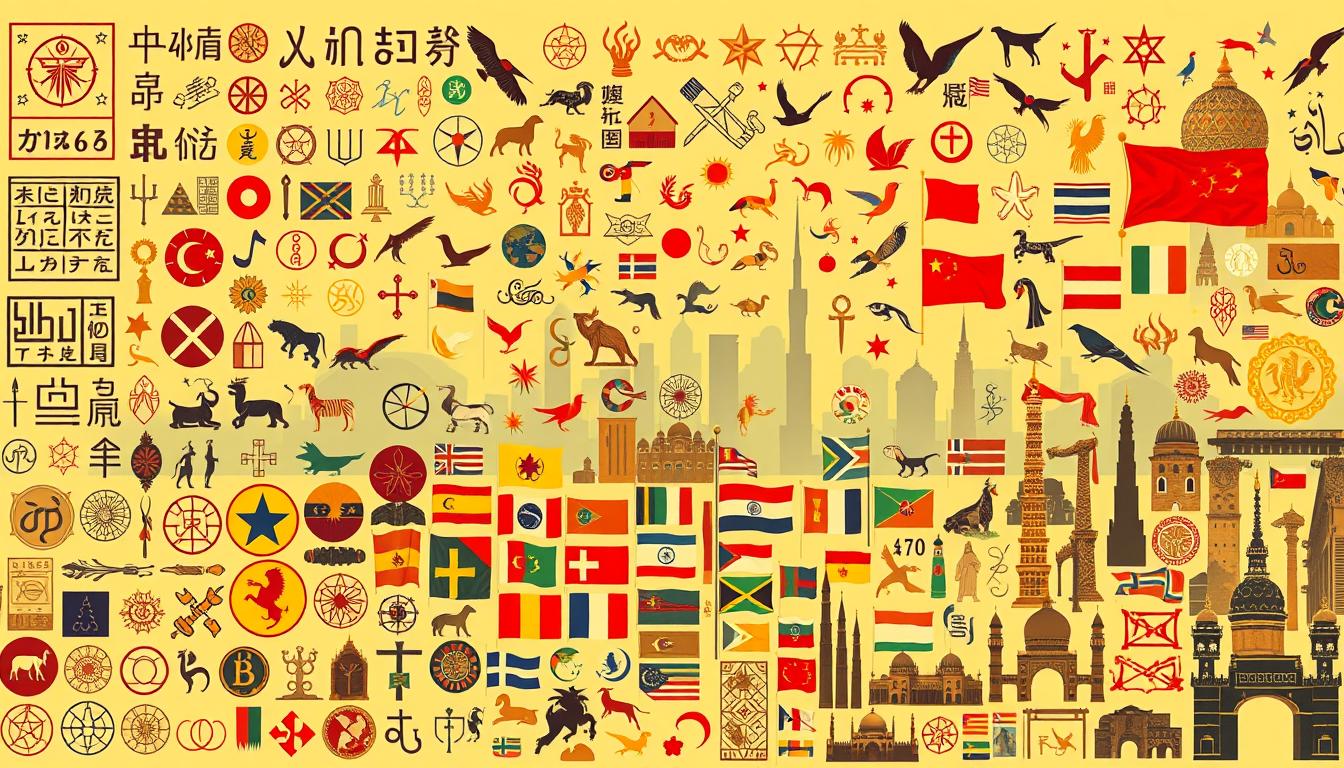
Symbols have a rich history, from logos to emojis. Each symbol has hidden meanings in cultural symbols that link the past to today. These designs are not just visuals; they unlock human creativity and global symbol meanings.
Early symbols like Sumerian cuneiform (3000 BC) and Roman alphabets (AD 100) show their evolution. The heart, once a plant symbol in ancient Cyrene (7th century BCE), now represents love. Today, brands use these ancient ideas to build trust and recognition.
Medieval heraldry and Coca-Cola’s logo show how symbols blend simplicity with depth. By looking into their origins, we see how symbols turn complex ideas into something instantly recognizable. This journey through symbol history reveals the power of a single mark.
The Significance of Cultural Symbols
Everyday symbols like a red octagon at a crosswalk carry symbol significance that goes beyond words. A stop sign grabs everyone’s attention, showing how cultural symbol meanings guide us all. Symbols like the lotus in Buddhism or the American flag hold deep values and stories in simple forms.
These symbols act as symbolic communication, spreading messages like unity or danger fast across different groups.

The swastika, once a symbol of good fortune in Hinduism, now symbolizes evil from the 20th century. This change shows how symbols can change with society. In the U.S., statues of Confederate leaders like Robert E. Lee spark heated debates, as seen in Charlottesville’s 2017 protests.
Flags can bring pride to one group but pain to another. Symbols carry strong emotions.
Language is a symbol system too. In the U.S., over 13.8% of households speak a language other than English every day. Yet, symbols like traffic signs or emojis help bridge language gaps. But, there are also misunderstandings.
A study at Johns Hopkins found bilingual education helps learning. Yet, 30 U.S. states have laws that only allow English, showing a divide. Symbols like democracy or freedom can unite, but their meanings vary.
Communities change how they see symbols over time. Denver’s 2016 swastika graffiti scandal and Gainesville’s move of a Confederate statue show how symbols shape identity. Anthropologists say symbols evolve as societies change their values. Symbols are powerful for both bringing people together and causing conflict, showing their lasting symbol significance in our lives.
Common Symbols and Their Origins
The heart symbol, once tied to love, started in symbol origin stories with the Silphium plant in 7th-century BCE Egypt. This plant’s seedpod inspired a shape used by cultures everywhere. By the 13th century, it became a symbol for all, seen in religions and modern designs.
The peace sign, created by Gerald Holtom in 1958, shows how symbols change. It was first for nuclear disarmament but now stands for peace worldwide. The swastika, once a symbol of luck in India and Greece, took a dark turn in the 20th century.
The crescent moon in Islam represents lunar cycles and divine guidance. The Triskele, with its three spirals, symbolizes nature’s cycles in Celtic artifacts. The @ symbol started as 16th-century accounting shorthand and is now a key in emails.
Some symbols keep their original meanings, like the dove for peace and the lotus for enlightenment in Buddhism. But others, like the heart, have evolved. Learning about these symbols connects us to our past and shows how they carry human experiences across cultures.
Animals as Symbols in Different Cultures
Animals play a big role in shaping cultural beliefs through animal symbolism. The Democratic donkey and Republican elephant, created by Thomas Nast, show how cultural animal meanings define us. These symbolic creatures represent values like courage and wisdom.

In ancient Egypt, cats were seen as gods. Native American tribes view the buffalo as an animal totem of sacred power. Today, thanks to conservation efforts, there are 400,000 bison, reminding us of their strength.
Irish lore connects bulls to power, linking them to gods like Zeus. This shows how animals reflect human ideals.
Owls, saved by groups like China’s BRRC (2,431 owls saved, 1,315 released), symbolize wisdom worldwide. Yet, they also carry a sense of mystery. Doves represent peace in Judeo-Christian texts, while crows symbolize magic and death. Foxes in Japan are seen as symbols of wealth, but they also have trickster roles elsewhere.
These examples show how cultural animal meanings vary based on history and tradition. Animals connect us to nature, serving as timeless animal symbolism across cultures.
Colors and Their Cultural Meanings
Colors have cultural color meanings that shape traditions and beliefs. In China, red is a symbol of joy at weddings. In parts of Asia, white is a sign of mourning. These differences show how symbolic colors vary around the world.
Green is sacred in Islam for paradise, but in Western settings, it might signal illness. This highlights the importance of understanding color psychology.

Purple dye was once rare, making it a royal symbol of wealth. In China, the Yellow Emperor reserved bright yellow for his dynasty, making it sacred. Today, color psychology helps brands choose colors wisely. For example, a paint shade named “ancient silk” doubled sales.
Color psychology reveals how hues unconsciously shape choices and emotions.
In global markets, colors have different meanings. East Asia sees red as a sign of rising stocks, while the West sees it as decline. Marketers must understand these color symbolism differences to avoid cultural mistakes.
Knowing these layers helps bridge cultural divides and honor heritage through visual language.
Religious Symbols and Their Significance
Religious iconography connects people across cultures, sharing sacred symbols. Symbols like the Christian cross, Islamic crescent, and Hindu Om represent key beliefs. Symbols from ancient times, such as the Egyptian Ankh and the Buddhist Dharma wheel, show spiritual ideas last forever.

The early Christians used the fish as a secret sacred symbol. Later, others adopted it. The Star and Crescent, now tied to Islam, was first used by the Ottoman Empire in 1844. Symbols like the swastika, once a Hindu sign of prosperity, change meaning over time.
Today, we see symbols like the Baháʼí nine-pointed star and the Jain emblem’s teachings on non-violence. These symbols help us understand complex ideas simply.
Studies show symbols are like “meaning pictures” that need context. The U.S. Veterans Affairs has 57 symbols, including non-religious ones. Symbols like the Papal Tiara or St. Benedict Medal show personal and communal devotion. They guide meditation or prayer.
From the Zoroastrian Faravahar to the Taoist Taijitu, these symbols connect past and present. They remind us that sacred symbols are a living language, changing yet rooted in eternal truths.
Nature and Its Symbolism in Various Cultures
Nature symbolism has shaped human expression for millennia. The sun, a universal natural symbol, represents life and divinity in ancient Egypt, Greece, and Hinduism. Trees like the Tree of Life in Mesopotamia or Yggdrasil in Norse myths connect earth, sky, and underworld, blending environmental icons with spiritual beliefs.
Buddhism uses the lotus flower to symbolize enlightenment—rising from muddy waters to bloom pure. In literature, Shakespeare’s forests in A Midsummer Night’s Dream embody mystery, while Emily Brontë’s moors in Wuthering Heights mirror wild emotions. These natural symbols reflect cultural values and human experiences.
Modern environmental icons like the recycling sign or polar bears for climate action show how nature in cultural symbols adapts. Indigenous practices, such as Native American reverence for eagles as sky messengers, highlight deep ecological connections. Even plants like the aspen tree, which forms vast interconnected groves, symbolize resilience across North America’s landscapes.
From the apple tree’s role in U.S. agriculture to Vedic sun worship, nature’s imagery bridges ancient traditions and today’s environmental movements. Such symbols remind us that nature isn’t just backdrop—it’s a language that unites humanity’s past, present, and future.
The Meaning Behind Ancient Symbols
Ancient symbols tell us about the earliest thoughts of humans. They were found on cave walls and temple stones. These symbols were not just art but also guides for survival, worship, and identity.
The ankh symbol from Egypt means life. The torii gate marks sacred places in Shinto shrines. These symbols connect the past to the present, showing how early humans expressed their beliefs through shapes and patterns.
Objects like the Celtic knot and the Chinese dragon hold deep meanings. The Celtic knot’s endless loops symbolize eternity. The Chinese dragon represents imperial power.
Today, symbols like the Om in Hinduism and the Eye of Horus in Egypt carry ancient meanings. Scholars study these symbols to understand rituals, social structures, and spiritual beliefs. For example, the sarimanok of the Philippines, with its feathers and jewels, is a symbol of prosperity in festivals.
Many ancient symbols, like the Zulu shield and the Maori koru, share common themes. They represent life cycles, protection, and unity. Modern archaeologists use AI and carbon dating to study how these symbols evolved.
The ankh is found in tombs, while the swastika, once a symbol of good fortune, shows how meanings can change. These symbols are more than old relics. They are keys to understanding ancient views of existence.
Modern Symbols in Today’s Society
Smartphones and social media have changed how we connect worldwide. Brands like Toyota use brand symbols to share their stories. Their logo’s three ovals spell out “TOYOTA” when split.
Bluetooth’s intertwining runes honor King Harald Bluetooth. They mix ancient history with modern tech. These contemporary symbols create instant recognition by blending old and new.
Digital icons like emojis and app buttons are a universal language. A ❤️ or 🚀 emoji can quickly share emotions. This shows digital icons can cross language barriers.
Companies like Nike and Apple use simple brand symbols to evoke feelings. Apple’s bite mark and Nike’s swoosh are examples. These designs use psychology to guide feelings without words.
Social movements use symbols too. Pride flags and political emblems bring people together. Even office layouts use symbols: circles for teamwork, grids for order.
Colors and shapes shape our culture, just like ancient cave art. Today’s modern symbolism keeps evolving but never forgets its roots. Symbols connect us, linking past wisdom to digital futures.
How Symbols Evolve Over Time
From ancient rituals to modern protests, symbols change to show new values. The swastika, once a sign of luck, now symbolizes darkness due to Nazi use. The OK hand gesture, once a thumbs-up, is now questioned for hate group ties. These changes show how symbol evolution can change meanings completely.
The rainbow flag, first used in 1978, began as a protest but now stands for LGBTQ+ pride worldwide. This is a clear example of changing symbol meanings.
New symbol development often comes from urgent needs. The recycling logo, created in 1970, became a symbol for environmental action. Hashtags like #BlackLivesMatter or #MeToo became protest symbols, showing symbol adaptation can be both natural and planned.
Brands like Benetton and Google use cultural images to connect people, blending old and new meanings in global campaigns.
Understanding these changes helps us understand today’s world. The “I AM A MAN” signs from 1968 inspire justice movements. Shepard Fairey’s “Hope” poster is a symbol of unity. Symbols are dynamic parts of culture, showing our past and shaping our future.
As society evolves, so do the stories symbols tell. Their strength comes from how we interpret and change them.