







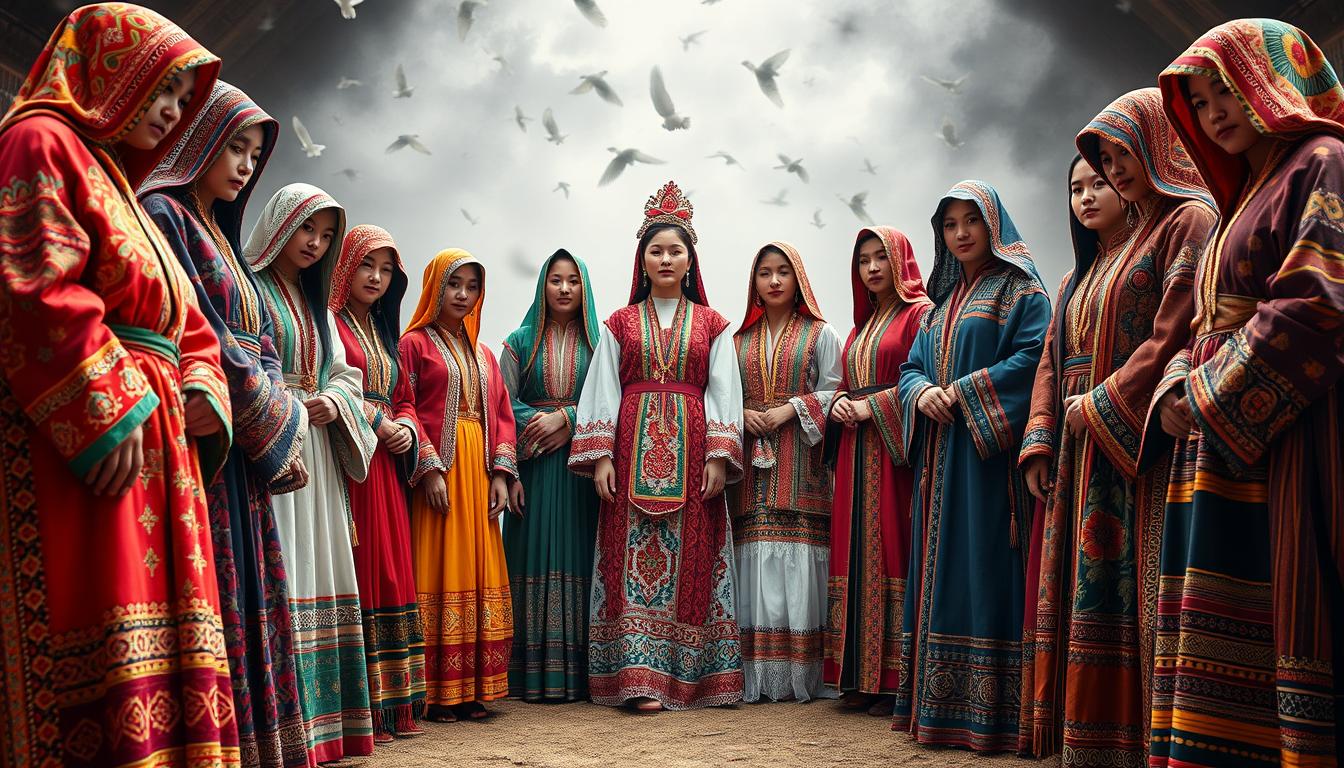
Traditional clothing is more than just fabric. It’s a way to show heritage, like the Japanese kimono and the West African agbada. The Scottish kilt, worn for centuries, shows pride in ancestry. The saree, worn in South Asia, connects Islam and Hinduism.
These clothes tell stories. They are not just things we wear.
Cultural identity is shown through our clothes. The agbada’s colors and patterns tell stories of wealth and tradition. Modern styles, like kimono-inspired beach wraps, show how fashion changes.
Naomi Campbell’s 2023 Met Gala saree look showed how fashion honors roots while being new.
Traditional clothes also show our values. Muslim women mix hijabs with modern styles, showing modesty and self-expression. Brands like Issey Miyake bring Japan’s heritage into today’s fashion, showing tradition and trend can meet.
This section looks at how every stitch and pattern connects us to history and ourselves.
The Historical Significance of Traditional Clothing
Traditional clothing is more than just fabric and thread. It’s a living record of traditional dress history. It shows how societies adapted to their environments and values. For example, the hand-woven kente cloth of Ghana and Japan’s kimono evolved with cultures.
The cultural clothing evolution often started with practical needs. Like the layered ao dai in Vietnam, which began as everyday wear. It later became a symbol of elegance.

Every stitch and pattern tells a story. The kente’s interlocking strips share proverbs and historical events. The kimono’s designs in the Edo period marked social roles, now symbolizing longevity.
Even political changes shaped traditions. Scotland’s tartan kilts faced a ban in the 1700s but later became a traditional attire heritage symbolizing pride. In India, the sari’s evolution from draped cotton to silk shows how materials and symbolism changed.
These garments are more than fashion—they’re bridges to ancestors. As Dr. Emily Hanna says, they let wearers “wear their history” daily. From Ethiopia’s habesha kemis to Peru’s embroidered ponchos, each piece tells a story of survival and adaptation.
By preserving these, communities keep alive the stories of their ancestors. This shows that tradition and change can coexist.
Understanding Cultural Identity Through Fashion
Clothing is more than just fabric; it’s a way to express cultural identity connection. Traditional outfits like India’s sari or Scotland’s kilt show heritage. A red sari at a wedding is not just a color; it’s a symbol of joy and tradition.
In Nagaland’s Hornbill Festival, Naga shawls tell of tribal roots. They are made with boar tusks and dyed furs. This is a form of traditional clothing communication.

Xhosa beaded jewelry in South Africa shows marital status or age through patterns. Japanese kimonos with cranes mean longevity. The Maasai’s red shúkà shows cultural pride.
These clothes are not just worn; they evolve. A Yoruba woman might mix aso-oke with modern styles. A Mayan weaver might blend old designs with new materials. This shows how cultural self-expression lives on.
Every stitch and bead has a story. From Guatemala’s traje to Scottish tartans, these choices are meaningful. They connect us to our ancestors, showing fashion is a dialogue between past and present.
Next time you see someone in traditional wear, look closer. Their clothes are a silent cultural attire symbolism map of their identity and heritage.
Key Elements of Traditional Attire
Traditional clothes have deep meanings. The Palestinian thobe’s patterns once showed a woman’s hometown. This shows how fabric can tell stories.
A Maasai bride’s beads tell her marital status. Her colors and designs are traditional dress symbols of her identity. Each pattern, like the Herero’s skirts or the Sámi’s gákti, shows pride and history.

Materials are important too. The Navajo’s wool weavings started after 1680, mixing old and new. The Aymara’s hats, from 1920s Europe, became part of their culture. These changes show how materials shape who we are.
Patterns also hold deep meanings. The Sámi’s colors show clan ties, and the kilt’s tartans tell of Scottish roots. These patterns connect us to our past.
Even small details are significant. The Breton coiffe’s height and the kilt’s pleats hold memories. The Japanese kimono’s silk shows respect, and the Palestinian keffiyeh’s colors symbolize protest. These details show that every thread in traditional clothes tells a story.
The Role of Traditional Clothing in Modern Society
Modern traditional dress is not just for museums or festivals anymore. In Bhutan, the government makes sure everyone wears gho and kira in public. This mix of culture and daily life is a topic of debate. Some see it as keeping heritage alive, while others think it’s too strict.
In many places, cultural clothing today changes on its own. For example, the kebaya, once for royalty, is now a symbol of identity for many.
Young people around the world are making traditional fashion adaptation their own. In Nigeria, designers make the dashiki cool with new prints. In Palestine, artists turn the keffiyah into a statement of protest. In Mexico, people wear huipiles with jeans, showing that contemporary traditional attire can be both stylish and meaningful.
In Japan, young people wear kimonos at music festivals. This shows how tradition and modern culture can come together.
This change shows a big debate worldwide. In India, 75% of women wear saris, showing strong roots. Yet, many mix saris with sneakers. In Scotland, kilts, once banned, now show pride at events.
As the world gets smaller, traditional clothes adapt to stay important. They can be political statements, fashion trends, or cultural links.
Traditional Attire in Specific Cultures
In many parts of the world, regional traditional clothing shares stories of heritage and pride. The sari from India is a great example. It’s a 5-to-6-yard fabric that changes style across places like Gujarat, Bengal, and Kerala. Each style shows off local traditions, from Banarasi silk saris to cotton traditional garments worldwide found in rural areas.
“Eat what you please but wear what pleases others.”—An Egyptian proverb underscoring the societal role of dress.

In Japan, kimonos are a big deal. They’re made by hand for special events like weddings and tea ceremonies. You’ll see colorful yukatas for summer and formal furisodes for unmarried women. In West Africa, the dashiki is a symbol of unity and identity, seen at festivals like Ghana’s Panafest.
The Korean hanbok is worn for Lunar New Year and weddings. It’s made from natural fibers like silk and linen. It shows elegance and harmony over two millennia.
Even as the world gets smaller, these clothes stay strong. The Chinese cheongsam, for example, has changed over time but is now seen in modern fashion shows in Shanghai. But, there are challenges. Younger people mix old and new styles to keep traditions alive. From Egypt’s galabiyas to Maasai beadwork, these clothes are more than just fabric. They connect us to our past.
The Importance of Preservation
Keeping traditional garments safe is key to protecting our cultural identity. Preserving traditional dress lets future generations connect with the stories in every stitch. Museums and community groups team up to save skills like dyeing and embroidery.
Valentino’s work with Maasai artisans is a great example. It shows how cultural clothes can be saved and shared. This partnership brings in money for communities and shows off their heritage worldwide. Today, many people want to buy from brands that respect cultural values.
Traditional fashion is always changing, but its roots must stay strong. By 2024, more people will want clothes with cultural stories. Projects in Kenya and China show how saving traditional clothes can boost pride and the economy. Workshops teach young people to value these crafts, keeping skills alive.
It’s important to buy clothes ethically and know where they come from. When brands work fairly with artisans, everyone wins. This way, cultural clothing conservation can grow without hurting anyone. Saving traditions is about keeping them alive to inspire new ideas.
Traditional Clothing and Globalization
Globalization changes how traditional clothes evolve, mixing old with new. The global impact on traditional dress is clear as fast fashion turns cultural symbols into fleeting trends. But, this cultural clothing exchange can also lead to innovation when done right, like when brands work with artisans to respect traditions.
Fast fashion’s quick move to make patterns or accessories into products often leads to cultural appropriation of traditional clothing. For example, African wax prints or Indigenous textiles lose their cultural value when mass-produced without proper credit. This hurts communities whose histories are in every piece of clothing.
“Fashion’s power lies in its stories—not just its styles.”
Yet, traditional fashion globalization can succeed with education. Social media platforms like Instagram help small designers reach more people. Brands like Patagonia focus on ethical sourcing. Diaspora communities use social media to share their traditions, keeping them alive even when they’re far apart.
To keep traditions meaningful while sharing their beauty, we need balance. When consumers and designers engage with cultural styles thoughtfully, they create connections, not walls, to understanding heritage.
Fashion Events Celebrating Cultural Heritage
Cultural fashion events like traditional clothing shows and cultural dress exhibitions bring heritage fashion celebrations to life. These events are more than just displays—they’re bridges connecting past and present.
“Fashion is a language that speaks without words, celebrating our shared humanity.”
Lagos Fashion Week spotlights brands like Kílèntár and Pepper Row, blending West African motifs with modern cuts. Tokyo’s runway showcases Issey Miyake’s reinterpretations of kimonos. These heritage fashion celebrations empower designers like Anita Dongre, whose saris highlight “zardozi” embroidery.
Indigenous creators like Lesley Hampton merge Coast Salish patterns with contemporary styles. This shows tradition can thrive in new forms.
Platforms like New York Fashion Week now feature cultural dress exhibitions, showing global designs. Yet, challenges remain: respecting cultural origins while avoiding appropriation. Initiatives like TAARACH® partner with artisans, ensuring fair pay for heritage techniques.
Virtual shows now make cultural fashion events accessible worldwide. Supporting these designers means investing in artisans and preserving centuries-old crafts. As Dr. Turner-Bowker noted, traditional attire isn’t just clothing—it’s a dialogue between culture and community.
Conclusion: What We Learn from Traditional Clothing
Traditional clothing teaches us about cultural identity and history. Garments like the Japanese kimono or Indian saree connect us to our heritage. They show how tradition evolves while staying true to its roots.
In India, weddings celebrate tradition with lehengas and sarees. These outfits blend cultural importance with personal style. Women around the world, from Mexico to Japan, wear these with pride. This keeps traditional dress alive.
Brands like Safaa mix old crafts with new designs. This shows that heritage can evolve while honoring history. Heritage clothing value comes from its ability to adapt. It teaches us that tradition is a living thing, connecting us through stories and creativity.