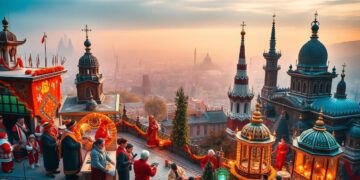






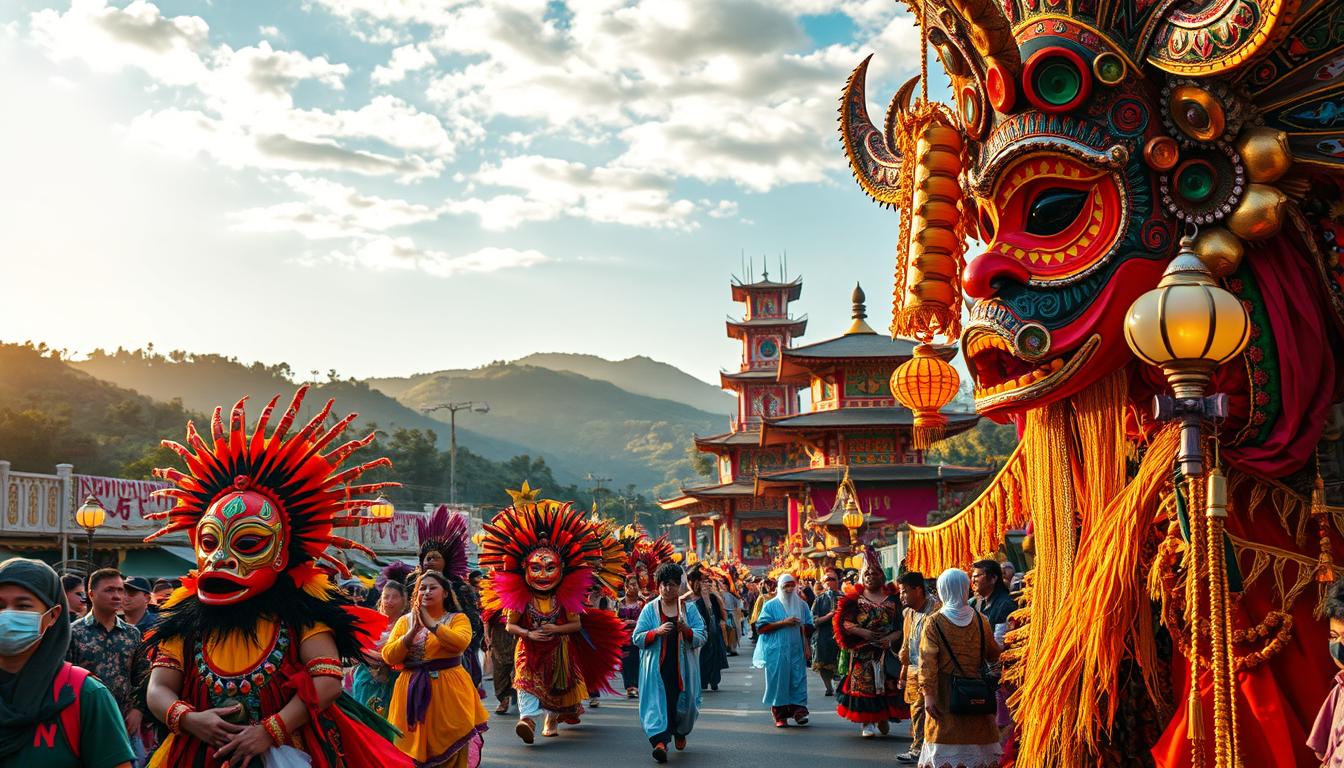
From frozen coffin races in Colorado to flaming fireball battles in El Salvador, the world is full of unique festivals around the world. These events are unlike anything you’d expect. While many look for famous festivals, unusual cultural celebrations like Nederland’s Frozen Dead Guy Days show the true depth of culture.
These strange festivals include duct tape fashion shows in Ohio and Viking ship burnings in Scotland. They show how communities come together, remember, and connect through the extraordinary.
The Bigfoot Festival in West Virginia grew from 1,500 to 20,000 attendees in just three years. The 17th-century El Salto del Colacho in Spain, where “Satan” leaps over babies, is another example. These aren’t just cultural travel experiences—they’re living pieces of history.
Whether it’s mud-covered revelers in Italy or radish-carving contests in Mexico, these events offer a chance to see the world in a new way. Let’s dive into 10 of the most bizarre yet meaningful traditions that are changing how we view global heritage.
1. La Tomatina: The Ultimate Tomato Throwing Festival
Imagine a day where chaos turns into celebration. The tomato throwing festival in Buñol, Spain, makes streets a red battlefield. It happens every year on the last Wednesday of August. Over 23,000 people from 51 countries join in, both new and seasoned.
The festival started in 1945 with locals throwing tomatoes during a parade. It was banned in the 1950s but came back after a tomato burial. This showed its lasting appeal.
Each year, 145,000 kg of tomatoes fall for just one hour. Only 20,000 tickets are sold to control the crowds. The fight begins when a ham is raised on a greasy pole.
When the first cannon goes off, everyone dives in. A second cannon signals the end. Anyone throwing late will be fined.
Cleaning up is just as well-organized as the mess. Fire trucks and water from a Roman aqueduct help. Safety rules are strict: no shoes, no hard objects, and goggles are recommended.
The Buñol festival has inspired others in Colombia and China. But nothing beats the original. Declared a Fiesta of International Tourist Interest in 2002, it’s a must-see. Just be ready for red-stained clothes.
2. Holi: The Festival of Colors in India
Every year, the Holi festival India brings vibrant colors to the subcontinent. It happens on the full moon of Phalguna, usually in March, like March 18, 2023. This festival of colors welcomes spring and celebrates good over evil.
Families and friends use gulal powders to show love, fertility, and purity. They also mimic Krishna’s blue skin. This breaks down social barriers and fills the day with joy.

“Holi’s colors don’t just stain clothes—they dissolve barriers,” says traveler Anika Patel, describing the Indian cultural celebrations she witnessed in Mathura.
Holi tells the story of Prahlad and Holika in Hindu traditions. It’s based on ancient texts like the Narada Purana. In Barsana, women playfully chase men with sticks, while in South India, people enjoy sweets like malpua and phirni.
Travelers should wear old white clothes and protect their skin. They join millions worldwide in celebrating this spring festival. From Surat’s Rang Panchami to events in London or New York, Holi brings people together.
Holi is more than a festival in India. It’s a chance for people to mend relationships and laugh together. As winter ends, this celebration shows that color is a universal language of joy.
3. Harbin Ice Festival: A Winter Wonderland in China
Every winter, the Harbin Ice Festival transforms northeast China into a stunning ice and light spectacle. This Chinese winter celebration covers 600,000+ square meters. It features massive ice castles, LED-lit sculptures, and frozen landmarks.
Started in 1963, it’s now the world’s largest ice sculpture festival. It attracts 18 million visitors each year. Artists carve 110,000 cubic meters of ice from the Songhua River, creating dragons and famous buildings.
Three main sites showcase the snow and ice festivals magic. Sun Island has large art installations. Zhaolin Park features student-made sculptures. The iconic Ice and Snow World hosts global competitions.
By night, the city glows with colorful lights. It turns into a shimmering winter playground.
Visitors can ice bike, slide down ramps, or enjoy an ice café. Temperatures average -13°C, so wear warm clothes! The festival runs from December 20 to February 26, peaking mid-January.
Tickets cost $8–38, depending on zones. Avoid late February evenings to dodge melting ice—a sign of spring’s approach.
Whether exploring free zones like Zhaolin Park or paying for premium areas, this winter travel China highlight blends art and endurance. With 200,000 cubic meters of ice and 15,000 workers each year, it’s a testament to creativity in the cold. Don’t miss the 150-foot-tall ice pagodas or the annual record-breaking sculptures. Pack thermal gear, and embrace the icy wonder of Harbin.
4. The Running of the Bulls: A Spanish Tradition
Every July, the San Fermin festival shines a light on Pamplona Spain. At its core is the Running of the Bulls, a tradition from the 13th century. People run 875 meters with bulls, a dangerous but thrilling event.
This dangerous festival lasts only 2.5 minutes but attracts over a million visitors each year. Participants wear white with red scarves, showing purity and martyrdom. Rockets signal the start at 8 a.m.

The event is steeped in Spanish traditions but also sparks debate. Bulls can run up to 15 mph, and 15 runners have died in it. In 2013, 50+ injuries happened, but now 200 medical staff are on hand.
The festival’s fame grew after Ernest Hemingway wrote about it in The Sun Also Rises. This boosted its fame worldwide, despite ethical questions. Rules ban alcohol, and runners must be 18+.
Today, there are stricter safety rules, but protests continue. Critics argue about animal welfare and the event’s morality. Supporters see it as a cherished cultural tradition. From its medieval start to today’s global fame, the Running of the Bulls is a mix of tradition and controversy.
5. Carnival of Venice: Masks and Mystique
Every year, Venice Carnival turns the city into a magical world of Italian festivals. In 2025, it will run from February 22 to March 4. It mixes historical European celebrations with today’s style.
Walking through canals, you see people in colorful costumes. It’s like stepping back in time. Masks let everyone be whoever they want, just like in Venice’s past.
Venetian masks are the heart of the carnival. Artisans make them by hand, from the medico della peste to the bauta. There’s even a contest for the best mask.
At masked balls Venice in big palazzos, you can dance and watch shows. Don’t miss the Flight of the Angel and the Water Parade.
Venice’s carnival is more about beauty than big crowds. Families love the parades, and history fans enjoy tours. Book early, as spots fill up quickly. Masks are pricey but worth it for their beauty.
Exploring masked streets or enjoying wine by the canal, the carnival’s charm is timeless. It beautifully blends art and history.
6. Obon: Honoring Ancestors in Japan
Every August, the Obon festival Japan turns towns into lively scenes of Japanese ancestor worship. It’s a three-day tradition rooted in Buddhist festivals. Families come together to honor their ancestors, believed to visit during this time.
Homes are cleaned, and altars are set with offerings. Paper lanterns float on rivers to guide the spirits. The Bon Odori dance is at the festival’s heart. It’s a circle dance done to music and drums.
Each region has its own twist on the dance. Tokushima’s Awa Odori is full of energy. Gifu’s Gujō Odori draws crowds every night for weeks.

Today, the festival has modern touches. Electric lanterns replace candles, and cities like St. Louis host events with taiko drums. Even in Brazil, São Paulo’s Japanese community dances together, showing the festival’s global reach.
The festival’s core remains the same. It’s about honoring roots through dance, light, and shared memories.
7. Day of the Dead: A Colorful Tribute in Mexico
Day of the Dead Mexico, or Dia de los Muertos, turns mourning into joy with ofrendas and lively rituals. Families in Mexico create altars with marigolds, photos, and sugar skulls. They believe the spirits of loved ones come back on November 1–2.
This tradition is recognized by UNESCO. It combines ancient Aztec beliefs with Catholic influences. Cemeteries and parades become acts of love and memory.
“To die is to be reborn in color and light,” a phrase echoing through Mexico’s cemeteries and streets during this sacred time.
In Oaxaca, artists create towering radishes into art that lasts only a short time. Markets sell sugar skulls and papel picado. Michoacán’s Janitzio island has families staying overnight at gravesites, lighting candles for spirits.
Mexico City’s parades feature giant skeleton floats, blending tradition with modern touches. Thousands gather to see these parades. Each ofrenda tells personal stories, showing Mexican cultural traditions at their most touching.
From small village altars to UNESCO-protected rituals, Dia de los Muertos shows life’s beauty in connection. The festival’s mix of sadness and joy is seen in every candle and skull. It keeps ancient practices alive for generations to come.
8. Up Helly Aa: A Fire Festival in Scotland
Every last Tuesday of January, the Shetland Islands light up with the Up Helly Aa Scotland festival. In Lerwick, 1,000 guizers carry torches through the dark. They end with a fiery Viking ship, blending old traditions with new.

The first torch-lit parades started in 1876. They grew into the Viking festivals we see today. By 1889, the first full-scale longship was burned, showing the Norse legacy.
Guizers wear Norse costumes, led by the Guizer Jarl. It marks the end of Yule, welcoming longer days with fire and celebration.
Now, all genders can join squads, and anyone can be the Jarl. After the torch procession, people gather until dawn. They perform skits and songs. But, Lerwick’s lodging fills up a year early, and events need local invites.
Up Helly Aa Scotland is more than just fire—it’s a 24-hour journey through history. The burning ship’s flames show the strength of a culture that kept its Viking roots alive. For those brave enough to face the cold, this festival offers a unique look into Scotland’s past.
9. Kumbh Mela: The World’s Largest Pilgrimage
Every 12 years, the Kumbh Mela India is the world’s largest gathering. It draws over 200 million people to the Ganges River. This Hindu pilgrimage is a mix of faith and timing, happening when Jupiter enters Aries or Leo. The festival moves between four sacred sites—Prayagraj, Haridwar, Nashik, and Ujjain—each hosting it every 3 to 144 years.
At dawn on Shahi Snan dates, millions dive into the Ganges during the Ganges bathing ritual. They believe this religious festivals India tradition cleanses souls and breaks karma. Holy men like Naga Sadhus, who live in forests, join the crowds. Their ash-covered bodies show their renunciation.
Organizers create a temporary city with 30,000 toilets and 10,000 healthcare tents to handle the crowd. The 2019 Maha Kumbh Mela alone saw 50 million on a single day. This required 30,000 security staff. UNESCO honored this tradition in 2017 as a cultural treasure.
Next events include the Haridwar Ardh Kumbh in 2027. For visitors, it’s important to respect rituals like bathing order and modest dress. This ancient rite shows the power of Hindu pilgrimage traditions.
10. Diwali: Festival of Lights and Joy
Diwali, the Hindu festival of lights, brightens homes and streets. It’s a symbol of hope and renewal. This five-day event is filled with tradition and joy.
Families clean their homes and light diyas. They also create rangoli patterns to welcome Lakshmi, the goddess of wealth. Each region has its own story: North India celebrates Rama’s return, while South India honors Krishna’s victory.
Diwali’s light shines worldwide, from Mumbai to Manhattan. In 2024, the Bay Area Diwali Festival in Cupertino will have fireworks and music. New York’s events will draw thousands. Even the White House celebrates this festival, showing its global reach.
In Malaysia and Singapore, the lights twinkle with temple ceremonies. This shows Diwali’s deep roots in diverse communities.
Diwali has ancient roots, dating back to 7th-century Sanskrit texts. It connects people through rituals like Lakshmi worship and exchanging sweets. Its message of light overcoming darkness is cherished worldwide.
Travelers can feel its magic in India or at local events. The sound of firecrackers and laughter echo across continents.