







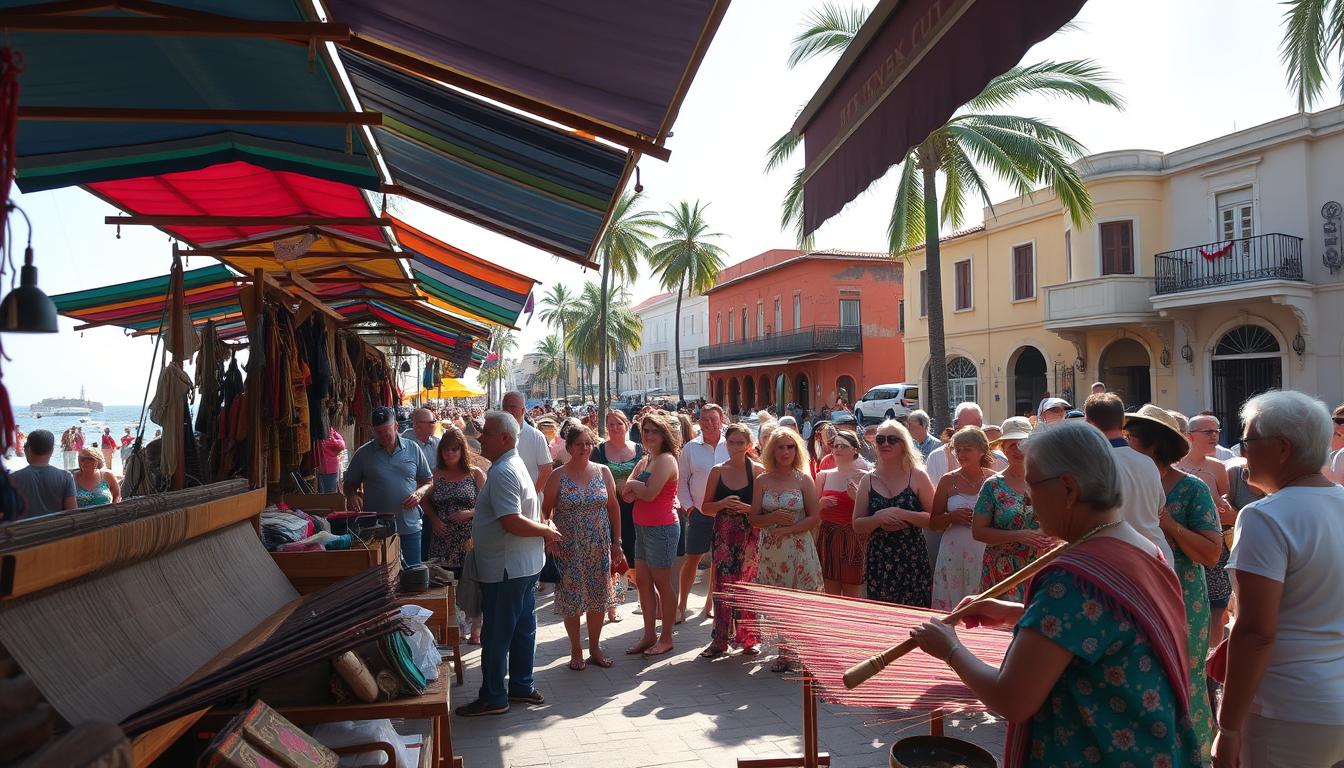
Global tourism has exploded, with travelers increasing from 25 million in 1950 to 1.442 billion by 2018. The World Tourism Organization reports this growth. This boom in cultural tourism impact has boosted economies but raises questions about keeping traditions alive. Destinations face a big challenge: balancing economic growth with preserving culture.
In 2019, travelers spent $1.45 trillion worldwide, creating jobs and boosting sectors like dining. But this growth also brings challenges. While efforts to preserve culture through tourism are underway, too many tourists can strain communities. This can drive up living costs and change daily life.
Places like Venice and Spain have seen the effects of too many tourists. The tourism effects on traditions are a global issue. Communities now wonder how to enjoy tourism’s benefits without losing their cultural identity.
This article looks at the fine line between welcoming visitors and protecting traditions. It shares stories of how communities adapt and stay strong in the face of change.
Understanding the Relationship Between Tourism and Culture
Cultural exchange in tourism helps societies connect across borders. Travelers who join local traditions, like festivals or crafts, learn a lot. These tourist-local interactions can help keep cultures alive or make them too simple for tourists.
Bali, for example, welcomed 5.2 million visitors in 2023. This shows how cultural experiences boost economies but can also harm local life. Overcrowding is a big problem.
Cultural tourism has changed a lot. It’s now more accessible thanks to budget flights and social media. Places like Machu Picchu became famous on Instagram, but now it’s too crowded. In Sicily, communities turned heritage into sustainable projects, like schools and eco-lodges.
Local communities, businesses, and governments try to balance making money from culture with keeping it real. In Kyoto, historic areas face challenges from too many tourists. But in Vietnam’s Ly Son Island, community-led tours help locals make money while preserving their heritage.
Tourism’s growth shows how cultural tourism evolves. Every traveler’s choice can either respect or harm traditions. By choosing to engage ethically, we can help cultures thrive.
Positive Impacts of Tourism on Local Traditions
Travelers visiting cultural sites bring attention and resources to communities. This leads to a cultural revival through tourism as locals share their traditions with new audiences. Traditional crafts like Pueblo pottery in New Mexico and Balinese dance performances gain popularity. Artisans earn income from sales and demonstrations.
This economic benefits of traditions creates jobs. It also funds workshops to teach younger generations skills that might fade away.

“Cultural preservation isn’t just about museums—it’s keeping living traditions alive,” noted a UNESCO report on heritage safeguarding.
Revenue from tourism supports cultural preservation by funding repairs of historic sites. It also helps digitize oral histories. In Peru, Quechua weavers market textiles internationally, turning ancient patterns into sustainable income.
Irish music sessions in Dublin pubs draw visitors. This helps sustain local folklore.
By sharing customs, communities rediscover pride in their heritage. Festivals like Dia de los Muertos in Mexico see more participation. Outsiders’ interest sparks local enthusiasm.
Tourism becomes a bridge—not a barrier—to continuity. When managed thoughtfully, it fosters mutual learning. This ensures traditions remain vibrant for both residents and guests.
Challenges Facing Local Cultures Due to Tourism
Overtourism is changing communities all over the world. At Machu Picchu, too many visitors are damaging the Incan ruins. Venice is facing problems with 30 million tourists every year, making life hard for locals.
Cultural traditions are being turned into tourist attractions. In Australia’s Northern Territory, Indigenous ceremonies are becoming shows for tourists. Places like Uluru are now in debate over tourism and respect.
Tourism is changing traditions by making them simpler for tourists. Food, crafts, and festivals are losing their true meaning. Places like Barcelona and Kyoto are seeing rising costs and losing their cultural identity.
“Heritage tourism can boost local economies, but exceeding carrying capacities harms both culture and environment,” warns the Italian National Recovery and Resilience Plan.
Now, communities are asking for solutions. A study in Italy shows that too many tourists can cause problems like pollution. Without careful planning, the cultures tourists want to see might disappear.
Sustainable Tourism Practices

Sustainable cultural tourism aims to balance visitor experiences with community needs. Programs like the GSTC training help professionals adopt responsible travel practices. These courses, starting at $395, teach how to lessen environmental harm and boost local economies.
Participants learn to manage tourism’s social, economic, and cultural impacts. They focus on four key areas: sustainable management, socioeconomics, culture, and environment.
Community-based tourism lets locals decide how their traditions are shared. In places like Indigenous Australia and Māori New Zealand, locals are in charge. In North America, projects like Janette Roush’s NYC initiatives highlight local neighborhoods, keeping economic benefits local.
Dr. Freya Higgins-Desbiolles says building connections between tourists and locals is key. It helps build mutual respect.
Eco-friendly practices are becoming more common. This includes reducing plastics, using energy-efficient hotels, and limiting visitors at heritage sites. Cultural heritage tourism now focuses on real interactions, like learning traditional crafts.
The Halal in Travel 2023 summit showed how these efforts grow responsibly. They also help preserve traditions.
Travelers can support sustainable tourism by choosing certified operators and respecting local customs. Education campaigns teach visitors how to behave, like dressing modestly at sacred sites or asking before taking photos of ceremonies.
Collaborations between governments and local groups create policies. These policies protect resources while inviting visitors to explore respectfully.
The Role of Cultural Festivals and Events
Cultural festivals tourism is where tradition meets travel. Events like India’s Holi or Japan’s cherry blossom celebrations attract people from all over. These cultural festivals tourism opportunities show how festivals connect communities and travelers.
Traditional events boost local economies through spending. Oktoberfest in Munich increases hotel bookings by 40% each year. Rio Carnival’s parades bring in $1 billion, creating jobs and income.
Festivals like Coachella Valley Music and Arts Festival add over $100 million to California’s economy. This shows traditional events impact goes beyond culture to economic benefits.
Effective festival tourism management is key. Cities like Edinburgh avoid overcrowding with staggered events. Mexico’s Day of the Dead guides visitors to respect traditions.
UNESCO’s Creative Cities Network supports 246 cities, showing festivals can drive sustainability and pride. Yet, challenges like pollution and overtourism exist. Solutions like timed entry tickets or eco-friendly vendors help.
Festivals also build community identity. 80% of locals in Barcelona’s La Mercè event feel prouder of their heritage after it. By focusing on authenticity and care, festivals keep traditions alive and welcome the world.
Case Studies of Successful Cultural Preservation
Case Studies of Successful Cultural Preservation show how communities protect their traditions while welcoming visitors. UNESCO World Heritage Sites like Peru’s Choquequirao and Cambodia’s Angkor Wat are great examples. They balance tourism with heritage care.
By guiding travelers away from crowded sites like Machu Picchu, these places ensure indigenous tourism success. They do this without harming fragile ecosystems.

In northern Scandinavia, the Sámi people run traditional community tourism projects. They offer reindeer herding tours and cultural exchanges. In Australia’s Northern Territory, Aboriginal communities host visitors through guided walks and art workshops.
These efforts keep ancestral knowledge alive. When locals control the storytelling, heritage stays true to its roots.
UNESCO’s Silk Road program helps Central Asian nations manage heritage sites well. Workshops in Kyrgyzstan and Tajikistan teach how to limit visitors and use eco-friendly infrastructure. In Estonia, TExTOUR’s pilot turned a historic factory into a cultural hub.
This blend of history and modern tourism kept the site’s original character. These efforts match the UN’s Sustainable Development Goals. They show that cultural tourism can grow with community leadership.
With 39% of global travel now focused on cultural sites, these cultural heritage preservation examples are inspiring. They prove that heritage and progress can go hand in hand.
The Influence of Social Media on Tourism Culture
Social media changes how we discover cultures. Sites like Instagram make landmarks famous overnight, starting Instagram cultural tourism trends. Places like ancient temples and hidden villages get worldwide attention through filters and hashtags.
This new trend brings both benefits and challenges. For instance, a 200% increase in tourists after viral posts can overwhelm local areas. Santorini’s streets are a prime example of this.
Now, communities share real stories online through digital tourism storytelling. Indigenous groups in New Mexico’s pueblos post videos of traditional dances. They invite visitors to respect their culture.
Influencers also play a big role. 70% of millennials plan trips based on social media posts. Yet, 45% worry it might lead to cultural disconnection. High-quality user-generated content, like @WanderlustJournal, shows that visuals can teach and entertain.
Trust is also important. A 2022 study showed that travelers trust influencer recommendations as much as friends. But when a sacred site becomes a photo spot, its cultural value can be lost. Google’s Travel Stories help share accurate information, balancing fame with respect.
Local Communities as Stakeholders in Tourism
Communities at the heart of tourism must lead decisions shaping their heritage and futures. In Spain’s Granada High Plains, community tourism stakeholders transformed medieval irrigation systems into cultural routes managed by local farmers. These projects, part of the EU-backed INCULTUM initiative, show how local tourism governance can protect traditions while creating jobs. Farmers now guide tours along 700-year-old channels, proving heritage can thrive when locals control access and profits.

Equitable tourism benefit distribution requires sharing profits and power. In Ghana, communities saw a 40% economic boost when included in planning, per studies from Accra. Training programs like INCULTUM’s portal teach residents to run tours, host eco-lodges, or market crafts directly. José Maria Martín Civantos, the project’s lead, notes: “Empowerment through heritage protection creates lasting value.”
“When communities set rules—like visitor caps or cultural codes—they protect what makes their place unique.”
Effective local tourism governance balances visitor needs with community values. Spain’s model shows how local boards can negotiate with governments to fund preservation. By owning businesses and policies, communities ensure tourism supports—not overshadows—their way of life.
The Need for Education in Tourism
Effective tourist cultural education programs are changing how travelers connect with global communities. In Indonesia, the “Wonderful and Pesona Indonesia” initiative has linked tourism scholarships to cultural sensitivity training. This has empowered both locals and visitors. Over 49 studies show that tourism professional training helps SMEs grow economically, with 60% of Indonesia’s workforce seeing job growth.
“Educators returning from travel report a 70% improvement in classroom practices,” says a 2022 study. This shows how cross-cultural learning benefits both hosts and guests.
Training in cultural sensitivity training helps manage the effects of too many tourists. For example, waste in busy areas has increased by 15%. In Bali, programs teach visitors to respect sacred sites, cutting down privacy complaints from 25% to 12% in two years. Schools near heritage sites are now teaching tourist cultural education to prepare youth to protect their heritage.
With educational tourism growing at 14% each year, tourism professional training ensures guides share cultural insights deeply. These efforts match UN sustainable development goals, showing education makes visitors respectful. As travelers look for deeper experiences, knowing the culture is key to preserving it.
Future Trends in Cultural Tourism
The world is changing, and future cultural tourism will mix new ideas with old traditions. Virtual reality and augmented reality are already giving us virtual cultural experiences. We can now explore ancient ruins or art galleries from our homes.
Platforms like Google’s cultural features and TUI’s expanded tours are making this possible. They connect the physical and digital worlds. This helps keep fragile sites safe while making them more accessible.
Sustainable tourism trends will also shape the future. Places like Bruges show that it’s possible to protect heritage while welcoming visitors. Its high satisfaction rate proves that eco-friendly policies can work.
Mexico City’s economic growth from restoring historic zones is another example. Travelers are now looking for authentic, community-led tours. This shows that 60% of them are willing to pay more for tours that respect local traditions.
But there are challenges like climate change and overtourism. Rising seas threaten coastal sites, and overcrowding harms 30% of heritage spots. Yet, “slow tourism” is becoming popular. It involves longer stays in less crowded areas, boosting local economies.
Google, Expedia, and Airbnb are also moving towards curated cultural bookings. This shift towards meaningful travel is growing. By 2030, the cultural tourism market could reach $45 billion, growing 16.5% each year.
This growth will create more jobs in guiding and the arts. It will also focus on educating travelers. The future aims to protect heritage while inviting the world to explore it.