




From ancient times to today, people have found ways to have fun. Evidence shows that even 42,000 years ago, in Germany, people made bone flutes. And 15,300 years ago, in France, cave paintings of animals in motion were found.
These early forms of entertainment were more than just fun. They were a way for people to come together and celebrate. For example, in ancient Egypt, wrestling was a big deal. And in Mesoamerica, losing a ball game could be very serious.
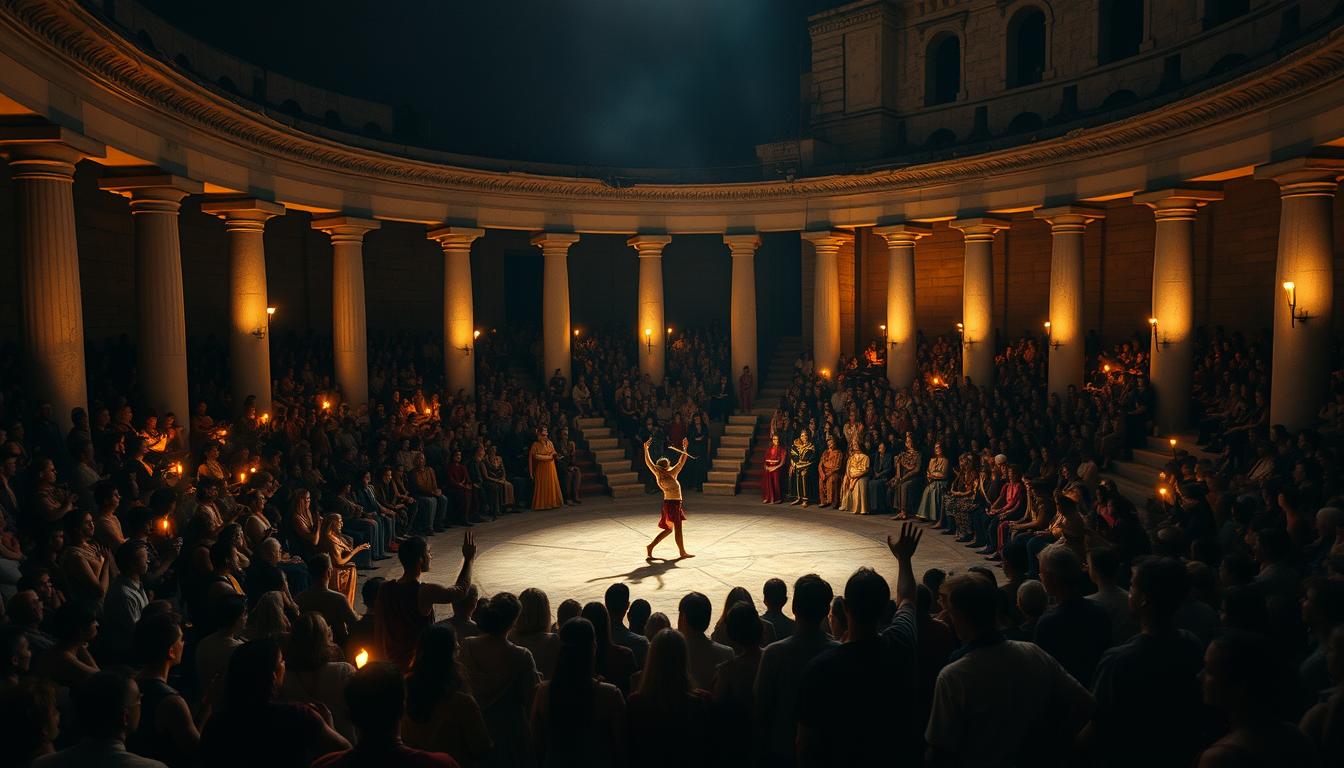
The first Olympic Games were held in 776 BCE. They started with simple events like running and throwing a discus. In Athens, theaters could hold up to 17,000 people, showing how big sports and entertainment were.
Even ancient cultures like Aboriginal Australians knew how to have fun. They used stories, dance, and fighting to balance work and play. This shows that leisure activities are not a new thing.
Games like the Mesoamerican ballgame and Egyptian archery were more than just fun. They helped build community and celebrate skill. From ancient stones to rock art, every culture left its mark on history through entertainment.
The Significance of Ancient Sports and Games
Primitive sports were more than just fun for early communities. Events like the ancient Olympics, lasting over 1,100 years, show how they shaped societies. The first champion, Coroebus of Elis, won a footrace in 776 BCE, starting a tradition that ended in 393 CE.
These competitions helped communities grow stronger by teaching teamwork and discipline. These skills were essential for survival in tough environments.
Cultural games were not just about physical challenges. Ceremonial games, like the Panathenaia in Athens, honored gods with olive oil prizes. These events helped keep social hierarchies and religious beliefs strong.
Even in ancient times, cave art suggests organized contests were part of daily life. The Olympic truce, which stopped wars during events, shows their role in uniting cultures.
Athletes like Gaius Appuleius Diocles, a famous charioteer, show the high value of victory. These early games laid the groundwork for modern sports. They show how physical strength and tradition were key to human progress.
The Origins of Sports in Ancient Civilizations
Sports have been a big part of human culture for a long time. Primitive athletic events started as ways to survive or train for war. They slowly turned into early competitive games.
In Mesopotamia, first organized sports like wrestling and boxing showed up by 3000 BCE. They were found in Sumerian tablets and artifacts. These games tested how strong and agile people were, starting the idea of competition.

In Egypt, tomb paintings from 2000 BCE showed rowing races and javelin throws. This showed sports were a big part of everyday life. The ancient Olympic origins go back to Greece, where the Olympics started in 776 BCE.
At the Olympics, athletes ran, threw the discus, and fought in pankration, a mix of boxing and wrestling. These events were a big deal, showing off strength and skill.
“Pole vaulting may have originated in the Netherlands as a practical method to cross canals, later becoming a sport.”
These early games were about more than just winning. They were tied to religion and honor. The Olympics, for example, were part of big religious festivals. They brought city-states together.
As time went on, rules and set events became more common. This change showed how sports reflect human creativity and the need to challenge ourselves.
The Evolution of Athletic Competitions
Early village races grew into organized events, thanks to ancient Olympic history. By 776 BCE, the first Olympics had a 200-meter stadion race. These events, like boxing and chariot races, were held every four years at Olympia.
Rules became standardized, and grand venues like the Olympic stadium were built. This showed how important athletic traditions were growing.
Historical sports development was different around the world. China had martial arts, Mesoamerica had ritual ball games, and Rome had chariot races. These sports showed what each culture valued.
The Colosseum in Rome was famous for its big sports events. These events inspired the modern Olympics, which started in 1896.
“The Games united Greeks in peace and honor.” – Pausanias
Today, athletes keep alive the spirit of these ancient games. They show how sports can inspire and bring people together, no matter where they come from or when.
Popular Ancient Sports and Games
Ancient ball games like the Mesoamerican tlachtli and Greek episkyros drew huge crowds. Teams competed using balls made from rubber or stitched hides, with rules varying by culture. These early games laid the groundwork for modern soccer and rugby.
Historical combat sports such as Roman caestus boxing and Greek pankration blended wrestling and strikes, often with few rules. Roman boxers fought without weight classes until one competitor surrendered or collapsed.

Chariot racing dominated Roman calendars, with sixty days annually dedicated to races at the Circus Maximus. Races reached speeds of 30 mph, and drivers faced perilous turns in seven-lap races. Traditional athletic competitions like the Olympic Stadion sprint—192 meters—also thrived, while prehistoric sports like archery evolved from hunting into precision contests.
Pankration, combining boxing and grappling, remained an Olympic event until 393 AD, when Emperor Theodosius banned pagan games.
Team sports like harpastum, a precursor to rugby, involved teams of twelve using a small ball. Though played privately, its chaotic tactics inspired later team-based games. Chariot racing declined after Rome’s fall due to high costs, yet its legacy lives in modern motorsports. These ancient traditions show how play and competition shaped human culture, blending survival skills with communal spectacle.
The Social Aspects of Ancient Sports
Ancient athletic culture was more than just physical contests. It shaped societies and identities. In Greece, Olympic winners like those from Croton were seen as symbols of civic pride. Their victories were celebrated far beyond the arena.
Events like the Panathenaea drew 40,000 spectators, uniting city-states. But, sports often reflected societal divides. In Athens, elite athletes got lifetime privileges, while poorer ones struggled to fund their training.
Class and sports history were closely tied. In Byzantium, women watched court events from separate areas, showing strict social order. Women’s competitions, like the Heraean Games, were limited to the aristocracy.
Most Olympic champions came from wealthy families, solidifying their status. Aeschines, born to a craftsman, used sports to rise into elite circles. He was a rare exception to strict class barriers.
“The athlete’s triumph was a family’s honor,” noted historians studying Greek inscriptions. “Victory laurels were displayed in city squares, reminding all of a lineage’s prestige.”
Sports also showed communal values. Winners of the Panathenaea got olive oil prizes worth $50,000 today. This showed a society’s investment in unity. Yet, events like chariot races at Olympia were for the wealthy who could afford horses.
Ancient games balanced communal joy with power structures. They embedded social norms into every race and ritual.
Rituals and Ceremonies in Sports
Ancient athletic events mixed sacred traditions with community celebrations. The Olympic Games started as a way to honor Zeus. Competitors made oaths at altars, and the first day included sacrifices and prayers.
The site of Olympia was divided into a stadium and the Altis. This was a sacred grove for daily rituals.

Ritual games like Korea’s masked dance-dramas began as shamanic ceremonies. They later became public shows. The Goryeo dynasty’s Narye festival also evolved, adding secular parts to its original purpose.
Winners of the Olympics received olive wreaths, a sign of Zeus’s favor. This shows how ancient victory customs tied success to divine approval. Some athletes were even seen as heroes after death, blending sport with religious respect.
Today’s Olympics keep these traditions alive. Events like the flame lighting at Sydney 2000 or the Olympic oath recall ancient vows. Though we don’t have blood sacrifices anymore, opening ceremonies keep the spirit alive. This mix of ritual and sport is a thread in athletic history worldwide.
Training and Preparation for Athletes
In ancient Greece, athletes combined hard exercise with mental toughness. They trained for months, using the tetrad system. This included intense sprints, races, rest days, and moderate drills.
Gymnasiums in Athens had tracks, wrestling pits, and more. Athletes practiced discus throws and foot races here. It was all part of ancient sports preparation.
Traditional athletic gear changed over time. Boxers used leather straps called himantes, and charioteers had lightweight chariots. Even back then, athletes swam in armor, as Philostratus noted.
They also balanced on stilts, a skill seen in circuses today. This helped them stay steady.
“Training must strengthen both body and mind,” wrote Philostratus. He said athletes swam in armor or chased wild animals to build endurance.
Early athlete diets focused on keeping energy up. Wrestlers ate barley bread and cheese. Champions like Milo of Croton ate 8 kg of meat daily.
Diets balanced the four humors—blood, bile, and phlegm. They used figs, olive oil, and dried fruits. Training tools like sand-filled bags were like modern resistance exercises.
Training wasn’t just about the body. Gymnasiums taught philosophy and music. This showed the Greek ideal of kalokagathia: beauty and virtue together.
Athletes avoided distractions. Some champions didn’t get involved in romance to stay focused. Ancient methods, though old, shape modern sports science today.
The Legacy of Ancient Sports
Modern Olympics have roots in ancient Greek traditions. They show the ancient sports influence we see today. The 1896 revival in Athens mirrors Olympia’s historical games, with events like wrestling and running.
The marathon, inspired by Pheidippides’ legendary run, now covers 26.2 miles. It’s a symbol of the historical game legacy kept alive in global marathons, like Boston’s 1897 race.

Traditional sports like Greco-Roman wrestling are preserved in martial arts. These disciplines, unchanged for millennia, honor ancient customs. Sports archaeology uncovers clues, like the Panathenaic Stadium’s marble grandstands and artifacts.
These finds show how ancient facilities influenced modern stadiums. They highlight the blend of old and new in games evolution.
Today, UFC’s mixed martial arts reflect Pankration’s no-holds-barred combat from 648 BCE. Films like Chariots of Fire and the Olympic fanfare’s 1984 debut in Los Angeles keep these stories alive. The Olympic flame’s relay also connects past and present.
“The important thing in life is not the triumph but the struggle.” — Pierre de Coubertin, founder of the modern Olympics
From ancient Mesoamerican ball games to modern sports science, our love for competition is timeless. These traditions, reshaped yet preserved, ignite global passion. Archaeology’s discoveries and athletes’ feats keep the legacy of ancient sports alive in every medal and rule.
The Role of Sports in Education
Today, kids often spend too much time staring at screens. But, ancient societies knew better. They mixed ancient physical education into learning. In Greece, schools like the gymnasium taught math, music, and sports together. This way, they shaped both minds and bodies.
This sports in classical education view saw fitness as key for being a good citizen. Even Plato’s Academy had students train before class. This showed that athletic philosophy was always important.
In Athens, boys started training young in historical athletic training. They learned discus, running, and combat. These skills helped them become disciplined leaders.
Spartan girls also trained, but in different ways. They built strength for their future roles in society. Roman schools also taught students to be good at rhetoric, wrestling, and swimming.
Now, schools often separate learning from physical activities. But, ancient physical culture history shows they can go together. Aristotle believed that exercise helped grow a strong mind. This contrasts with today’s debates over cutting recess or funding PE programs.
The ancient approach teaches us that education needs both books and basketballs. It reminds us that learning isn’t complete without movement.
The Decline of Ancient Sports
Religious changes were key in the ancient games prohibition. In 393 CE, Emperor Theodosius I banned the Olympic Games. This ended 1,169 years of competition. Christianity saw sports as tied to idolatry, pushing many traditions into the shadows.
Political and economic changes also played a part. As Rome’s empire fell, funding for sports events dropped. Chariot races and gladiatorial combat declined as priorities shifted.
Yet, some sports evolved. Roman ball games turned into medieval football. Wrestling, dating back to 3000 BCE, became martial arts in new societies.
Though ancient stadiums crumbled, their legacy remains. Modern marathons and archery societies revive old traditions. These changes show ancient sports didn’t disappear but evolved with human history.
Exploring Ancient Sports Through Archaeology
Sports archaeology uncovers secrets of ancient sports through artifacts and sites. Excavations at Olympia, led by the German Archaeological Institute, have found stadiums and training areas. They also found ancient athletic artifacts like discus weights and chariot parts.
These finds, along with historical game reconstruction, help scholars understand ancient competitions. Events like the diaulos or pankration are now clearer thanks to these discoveries.
Artwork from ancient times shows athletes in action. Stephen G. Miller’s book Ancient Greek Athletics explores how these images reveal women’s roles in sports. The book uses 221 illustrations and 71 color images to show how sports evidence changes our view of gender.
Today, we see echoes of ancient traditions in modern sports. Archaeologists keep studying sites like Nemea. Miller’s team finds clues about training and truce agreements that allowed safe travel.
Every discovery, from bronze medals to inscriptions, adds to the story of sports in ancient societies. These stories inspire us today.