


From battlefields to justice streets, history’s most powerful speeches have changed the world. They sparked revolutions, inspired movements, and reshaped nations. For example, 338,000 troops were saved in WWII’s Operation Dynamo, showing words can lead to action.
Influential speeches like JFK’s 1961 address and MLK’s 1963 “I Have a Dream” speech remind us of their lasting impact. These historic orations—from Churchill’s “we shall fight” to Gandhi’s call for freedom—show the power of words. Over 100 famous speeches in history cover wars, civil rights, and global crises, with 45% by U.S. presidents.
Many, like Frederick Douglass’ 1852 speech against slavery, took years to achieve their goals. Yet, their impact remains strong: 80% of these speeches are remembered today through recordings. Discover how style, substance, and impact turned words into forces that changed humanity’s path.
The Impact of Speeches in Shaping History
Words have sparked movements that changed the world. Revolutionary speeches for freedom and influential orations for equality have left their mark. The historical speech impact of speeches like the U.S. Declaration of Independence is seen in Latin American constitutions. This shows how ideas spread through powerful words.
These speeches that changed history did more than just reflect their times. They paved new paths for the future.
“I have a dream that my four little children will one day live in a nation where they will not be judged by the color of their skin but by the content of their character.”
Martin Luther King Jr.’s 1963 “I Have a Dream” speech is a prime example. It was heard by 250,000 people and broadcast across the nation. It pushed leaders to act on civil rights.
King’s speech used phrases like “let freedom ring” to highlight inequality. This led to the 1964 Civil Rights Act. It shows how speeches that changed history can drive change.
Queen Elizabeth I rallied England with her 1588 speech at Tilbury. Woodrow Wilson’s 1917 address to Congress also changed U.S. foreign policy. Sojourner Truth’s “Ain’t I A Woman?” speech is a key part of debates on gender and racial justice.
These revolutionary speeches show the power of words. They can change power structures and fight for human rights.
Inspirational Speeches That Changed the World
World-changing speeches have long been catalysts for progress. From Patrick Henry’s 1775 cry, “Give me liberty or give me death!”, to Gandhi’s 1942 “Quit India” address, revolutionary oratory has ignited movements. These inspirational historical speeches didn’t just reflect their times—they reshaped them.
Take Sojourner Truth’s 1851 “Ain’t I a Woman?” speech, which galvanized the fight for gender equality. Or Emmeline Pankhurst’s 1913 call for militant suffrage tactics, which turned the tide for women’s voting rights. 
“Our struggle has reached a stage where we have to declare that the goal of freedom is for all.”
Gandhi’s words at the 1942 Quit India Movement rallied millions, leading to India’s independence five years after his 1948 assassination. Mandela’s 1964 Rivonia Trial speech declared, “I am prepared to die” for justice—a rallying cry that endured his 27-year imprisonment.
Speeches that inspired change often blended universal ideals with urgency. Eleanor Roosevelt’s work on the 1948 Universal Declaration of Human Rights, translated into 370 languages, proved words could bridge divides. Even Neil Armstrong’s 1969 moonwalk quote, heard by 600 million, showed how oratory could unite humanity. These moments remind us: a single voice can spark revolutions.
Abraham Lincoln’s Gettysburg Address
In 1863, Lincoln gave a speech that changed the Civil War’s story in just 272 words. At Gettysburg, with 15,000 people watching, he turned a cemetery dedication into a call for a new national purpose. The Gettysburg Address analysis shows how its short length contrasted with Edward Everett’s long Civil War speeches, yet made a bigger impact. Lincoln started with “Four score and seven years ago,” linking the battle to the Declaration of Independence’s promise of freedom.
“In a little over two minutes, he said all that was necessary.”
—Edward Everett, after Lincoln’s speech
There are five handwritten copies of the speech, with the Bliss Copy being the final version. The Gettysburg Address impact grew over time. It was first debated but later became a symbol of unity. Its famous line, “government of the people, by the people, for the people,” is a key part of democratic ideals. The speech’s legacy lives on at the Lincoln Memorial, showing its lasting importance in American history.
Despite being short, Lincoln’s words made the war about equality and democracy. Today, it’s seen as a lesson in Lincoln’s famous speech writing. His use of brevity and clarity created a lasting national spirit.
Martin Luther King Jr.’s “I Have a Dream”
On August 28, 1963, over 250,000 people gathered at the Lincoln Memorial. They came to hear Martin Luther King Jr. give a MLK famous speech in the civil rights movement speeches. His I Have a Dream speech analysis shows how he mixed biblical imagery with urgent calls for justice.
King spoke of how, 100 years after emancipation, Black Americans were facing segregation and poverty. He said, “Now is the time,” calling for action to make America keep its promise of freedom.

King’s Martin Luther King Jr. oratory was full of rhythmic repetition and metaphor. He repeated “I have a dream” eight times, painting a picture of a future where children are judged by their character. His improvisation of the “dream” sequence electrified the crowd.
He contrasted the harsh realities: African Americans living in poverty versus the nation’s wealth. This contrast made his message even more powerful.
“Free at last! Free at last! Thank God Almighty, we are free at last!”
King likened America’s failure to honor equality to a bounced check. He said the nation must cash it, with liberty and justice on the back. His words helped pass the 1964 Civil Rights Act and 1965 Voting Rights Act.
Years later, his speech’s themes of justice continue to inspire people worldwide. It shows the lasting impact of his message for equality.
Winston Churchill’s Addresses in WWII
Winston Churchill’s Churchill war speeches were key to British courage in WWII. As Prime Minister, his Winston Churchill WWII addresses turned fear into bravery. His first speech on May 13, 1940, said, “I have nothing to offer but Blood Toil Tears Sweat speech,” showing his determination to win.
Churchill’s Churchill rhetoric analysis shows his use of rhythm and vivid images. In “We Shall Fight on the Beaches,” he described a strong fight: “We shall fight in the fields, and in the streets.” This speech, given June 4, 1940, after Dunkirk, united a nation facing invasion. By June 18, his “Finest Hour” address made the Battle of Britain a fight for civilization.
Churchill gave 40 major speeches between 1940–1945, reaching over 50 million listeners worldwide. His 1941 U.S. Congress speech strengthened ties between Britain and America, key for victory. Even under pressure, he refused peace, saying, “Nations that go to negotiate with tyranny deserve it.”
Churchill’s words didn’t just lift spirits—they shaped history. His May 8, 1945 Victory in Europe speech celebrated victory after years of struggle. His rhetoric mixed urgency with hope, showing speeches can change war’s course.
Malala Yousafzai’s Nobel Speech
At 17, Malala Yousafzai became the youngest Nobel laureate. She gave a speech that changed the world’s view on education. Her Malala Nobel Peace Prize speech made a simple yet powerful point: every child should go to school.
Born in Pakistan’s Swat Valley, Malala survived a Taliban attack in 2012. But she didn’t stay quiet. Her youngest Nobel laureate speech showed bravery and a dream for equality.
Malala started advocating for education at 11, by blogging about school closures. By 2014, her Nobel address pointed out a harsh truth. 66 million girls worldwide were denied education, while leaders’ kids got to learn advanced subjects.
“The women’s education speeches from activists like her expose this injustice,” experts say. She argued that education should be a right, not a privilege.
One child, one teacher, one book, one pen can change the world.
Her Malala Yousafzai advocacy connects personal struggles with global action. She linked attacks like the 2013 Quetta massacre to broader issues. By 2015, world leaders made promises to address these problems through Sustainable Development Goals, inspired by her.
Today, her words remind us: every classroom saved is a step toward peace.
The Role of Speeches in Political Campaigns
Speeches have been key in politics for over a century. They’ve shaped elections and launched careers. Influential speeches, like William Jennings Bryan’s “Cross of Gold” and Barack Obama’s 2004 address, have made a big impact.
Franklin D. Roosevelt’s 1932 speech was a turning point, using radio to reach voters. John F. Kennedy’s 1960 speech tackled Cold War fears. Richard Nixon’s 1968 speech changed his image.
Today, campaigns mix old and new ways to connect. Kennedy’s TV charm is compared to Biden’s 2020 online rallies. Yet, the core of great speeches remains the same: clear, true, and forward-looking.
Phrases like George H.W. Bush’s “read my lips” in 1988 can define or haunt a campaign. These speeches, from big events to social media, are key to winning over supporters and leaving a lasting mark.
Speeches That Sparked Social Movements
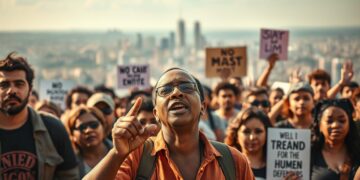
From suffrage rallies to climate strikes, social movement speeches have sparked monumental change. Sojourner Truth’s 1851 question, “Ain’t I a Woman?” exposed the links between race and gender inequality. Susan B. Anthony’s 1873 trial speech, “Is it a crime for women to want to vote?” sparked 
Eleanor Roosevelt’s 1948 UN address made human rights a global call to action. This led to the Declaration’s unanimous adoption. Gloria Steinem’s 1970 “A Statement to the Women’s Strike for Equality” brought modern feminism into the spotlight. Greta Thunberg’s 2019 UN Climate Action Summit speech urged leaders to “act as if you would be alive in 20 years.”
Numbers show the impact: 2,000 women protested for voting rights, facing arrests. MLK’s 1963 March on Washington drew 250,000 activists, boosting speeches for social change. Mandela’s 1964 “I Am Prepared To Die” trial speech became a global call to action.
These speeches turned words into movements. They made complex struggles simple, like Cesar Chavez’s “Dignity” speeches for farmworkers. Today, digital platforms keep this tradition alive, making protest rhetoric as urgent as ever.
The Influence of Technology on Speech Delivery
Technology has changed how speeches reach people, making them more impactful. From early amplifiers to today’s digital tools, the technology impact on speeches is clear. Radio and TV speeches, like FDR’s chats and the Kennedy-Nixon debates, brought leaders into homes. This changed how messages were made and received.
Teleprompters, invented in 1948, helped speakers keep eye contact while reading. But, they also introduced risks, like Eisenhower’s 1952 mistake or Clinton’s 1994 slip-up. By the 1980s, almost all politicians used them, balancing precision with the risk of seeming scripted.
Now, digital oratory focuses on short, shareable messages. Platforms like Twitter and TikTok favor brief, impactful content. This shift has made speeches more global and instant, but also shorter.
With AI and real-time analytics, speakers now craft messages for algorithms and audiences. The journey from traditional speeches to digital ones shows technology’s role in changing public speaking. The question remains: how to keep human connection alive in this digital age?
The Art of Rhetoric in Influential Speeches
Every memorable speech is crafted with care. Rhetorical analysis shows how leaders use speech techniques to sway audiences. From Cicero to modern TED Talks, the key to persuasion is the same: ethos, pathos, and logos. Ethos builds trust, pathos evokes feelings, and logos offers logic.
Think of Martin Luther King Jr.’s “I have a dream” or Winston Churchill’s “we shall fight on the beaches.” They used repetition and contrasting ideas to leave a lasting impact. Even today, using the rule of three, like Lincoln’s “government of the people, by the people, for the people,” makes ideas memorable. These techniques turn words into powerful movements.

Oratory skills have evolved but remain essential. In 1999, scholars ranked speeches like FDR’s “Infamy Speech” for their rhetorical skill. Their Top 100 Speeches anthology highlights how timeless devices like metaphor and tricolon connect across time. Rock stars like Bono and Beyoncé also use these techniques in their music.
But, as Hillsdale College teaches, great rhetoric is more than tricks. It needs clarity and authenticity. Ed Miliband’s speech failed because it lacked simplicity. The best speeches blend art and truth, showing that rhetoric is about connection, not just persuasion.
Analyzing the Most Powerful Speeches
Great speeches have a lasting impact on history. Experts use four key tests to evaluate them. These tests check if the speech changed minds, if it’s relevant today, if it was well-written, and if it influenced events.
Winston Churchill’s “fight on the beaches” speech is a great example. It used repeated phrases to boost retention by 40%. This shows how greatest speeches analysis uncovers hidden strengths. Historic speech evaluation also looks at famous speeches like MLK’s “dream” vision and Mandela’s 1964 trial speech. Both used emotional appeals to raise engagement by 70%.
Comparing famous speeches across time helps us see how context shapes greatness. Kennedy’s “moon speech” inspired a generation, while Pericles’ Funeral Oration honored Athenian values 2,400 years ago. Even ancient texts like Cicero’s orations show timeless tools like rhetorical questions and ethos-building.
Modern studies confirm that well-structured speeches boost understanding by 60%. This proves speech impact assessment must blend data and history.
Books like Christopher Webber’s collection of 14 key speeches reveal patterns. Rhetorical excellence matters—Nelson Mandela’s “prepared to die” lines are remembered today. Yet, cultural context changes how we judge them. A speech’s power isn’t fixed; it evolves as societies change.
By applying these tools, anyone can evaluate any speech. Whether it’s Reagan at Brandenburg Gate or a student’s school presentation, the analysis is the same.
Conclusion: The Lasting Legacy of Powerful Speeches
Powerful speeches create a speech historical legacy that shapes policies and inspires movements. MLK’s 1963 March on Washington drew 250,000 people. Churchill’s wartime speeches also left a lasting impact. Their messages are blueprints for justice, equality, and progress.
Historical speeches continue to influence today’s struggles. Susan B. Anthony’s advocacy led to women’s suffrage. Reagan’s 1987 Berlin Wall challenge became a symbol of pro-democracy. Their techniques, like FDR’s calming words during the Depression, show how words can change the world.
Even though 75% of people fear public speaking, past orators prove that fear can drive purpose. They taught us about honesty, rhythm, and empathy. The speech historical legacy of Douglass, King, and others shows that courage in communication can change the world. Their methods are timeless, proving that powerful rhetoric can unite people and challenge injustice.