





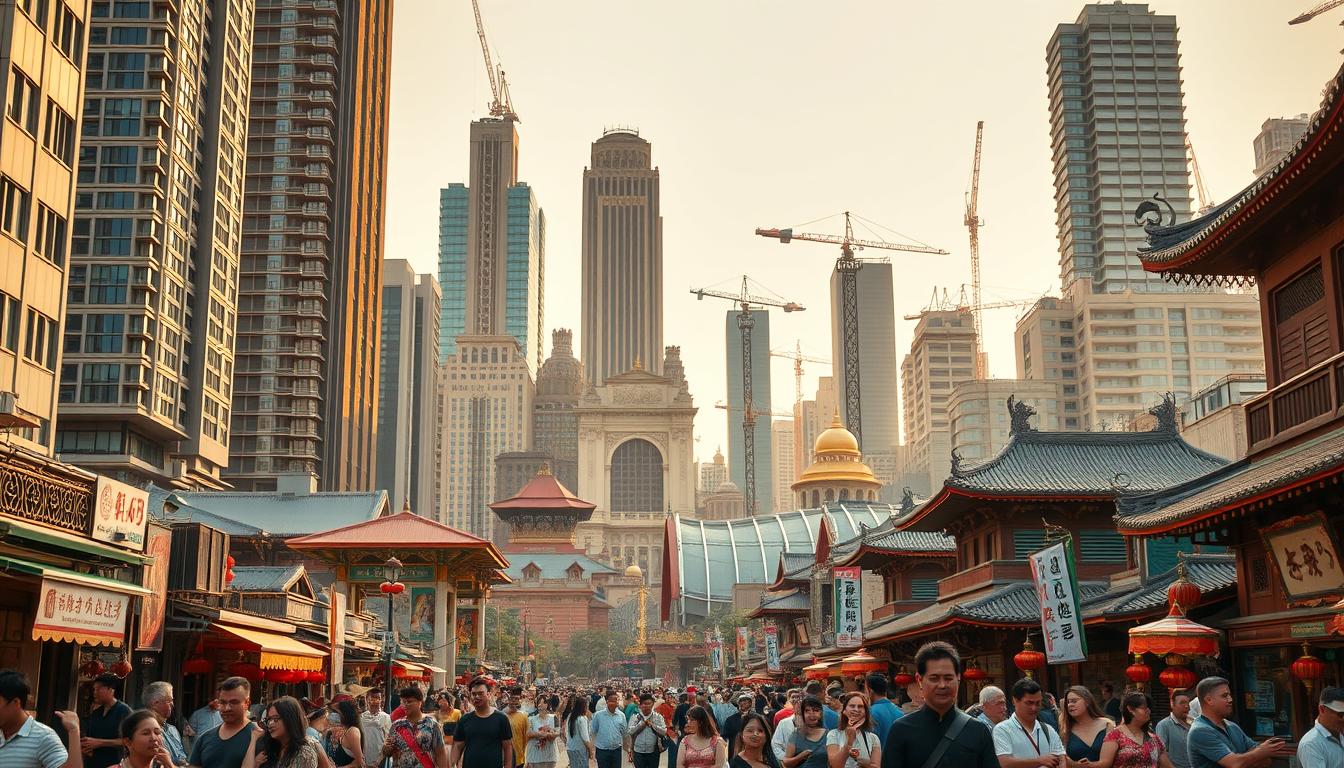
Cities growing means big changes in how we live. In America, cities have changed traditional communities a lot. By the late 1800s, cities like New York grew fast, changing old neighborhoods and ways of life.
Today, cities keep growing, mixing old and new traditions. This cultural shift is ongoing.
Traditional communities try to keep up with modern life while holding onto their heritage. Cities often change values like family roles or religious practices. For example, Indigenous groups and immigrant families adapt, but risk losing customs tied to rural roots.
Urban areas bring both challenges and opportunities. While some traditions fade, others evolve. Young creators use social media to share folk art or music, showing how cultural shift can mix innovation with heritage.
This mix is key to keeping traditions alive in a changing world.
The Rise of Urbanization in America
The industrial revolution changed America’s landscape. By 1930, 60% of Americans lived in cities, up from 10% in the early 1800s. Factories needed workers, drawing families from farms to cities.
Cities like Chicago and New York grew fast. They had tall buildings and new technologies. Electric trolleys, subways, and phones connected people.

But cities faced big challenges. Tenements in Manhattan were overcrowded. Memphis struggled with deadly diseases.
Despite these issues, innovation kept coming. Sewage systems and places like Hull House (1889) helped. By 1900, 1.5 million phones connected people, and electric lights made factories work longer.
These changes led to a big shift. By 2010, 80% of Americans lived in cities. This changed culture and community life forever.
Traditional Cultures: An Overview
Traditional cultures in the U.S. mix cultural heritage preservation with traditional practices. Groups like the Navajo and Cherokee keep ceremonies alive. These are tied to the land and stories passed down.
Immigrant groups from Mexico and Vietnam also hold onto their indigenous traditions. They do this through festivals and crafts. These traditions help communities stay connected to their history, shaping their cultural identity.
In cities, you can find Mexican traditional practices like Day of the Dead altars. Vietnamese mooncake festivals also thrive in urban areas. This shows that heritage can adapt yet stay strong.
Urban areas are full of cultural hubs where cultural heritage preservation happens every day. Chicago’s Pilsen neighborhood is a great example. It combines Mexican mural art with modern street festivals.
Native American language classes in cities keep traditional practices like Ojibwe storytelling alive. These efforts to preserve culture are not static. They evolve as communities blend old and new ways of life.
“Our food isn’t just food—it’s a map of where we’ve been.” —Ana Rodriguez, Houston community chef

From Indigenous land rights movements to Korean drum circles in Queens, these traditions show resilience. Even as cities grow, cultural identity connects generations. Understanding this foundation is key as urbanization speeds up.
Protecting these roots means saving the stories that define us all. It’s about preserving our heritage for future generations.
The Impact of Urbanization on Languages
Urbanization changes how we talk. Over 55% of people live in cities now, and this number could hit 68% by 2050. Cities like New York and Los Angeles are hubs of linguistic diversity. Immigrant neighborhoods thrive with different languages.
But, this change also brings a risk of language extinction. Young people often choose dominant languages like English for work. This means they might forget their mother tongues. In Chicago’s Pilsen district, Spanish is strong, but it’s changing as bilingualism grows.

Urban dialects come from mixing languages. Think of “Spanglish” in Miami or African American Vernacular English (AAVE) in Detroit. These dialects show cultural blending but also mark a shift away from keeping mother tongue preservation alive.
Cities like Houston have cultural centers where grandparents teach their languages to their grandkids. This helps keep traditions alive. Schools, like San Francisco’s Vietnamese language programs, also play a role in preserving languages.
Studies show that 70% urbanization rates lead to fewer languages in rural areas. But cities also host festivals and media that celebrate languages. The fight between linguistic diversity and language extinction depends on community efforts. Without support, languages disappear, but cities also bring new ideas and cultural preservation.
Urban Spaces vs. Rural Traditions
Today’s rural-urban migration changes how we connect with our cultural roots. Families once tied to agricultural traditions now adjust as cities grow. Seasons that once guided planting or harvest now meet urban life’s pace.
Creativity sparks new ways to celebrate. Community gardens bloom in city lots, and seasonal celebrations find new life in public parks. These spots link old and new ways of living.

Economic changes push people to cities: urban workers made $49,515 in 2016, rural $35,171. Yet, 68% of rural folks feel city folks don’t get them. Urban festivals or seed-saving clubs now carry on rural traditions.
City planners and locals work together to keep these rituals alive. They use farmers markets or lighted tree-lighting ceremonies. Even as industrial life rules, community gardens let people grow important crops. This shows traditions evolve, not fade away.
Case Studies: Cities Redefining Cultures
Urbanization turns cities into places where old and new clash. Places like Washington, D.C., New York, and Chicago show how culture changes. In D.C., cultural displacement has changed areas like Shaw, where Black communities face neighborhood gentrification.
Rising costs and new buildings have changed the area. This has pushed long-time residents to the side.
New York’s Lower East Side is a perfect example of cultural fusion. It was once home to Eastern European immigrants. Now, it’s a mix of street art, global food, and tech startups.
But, this change has erased places like La Marqueta market. It was a symbol of Puerto Rican culture. “We mourn what’s lost but celebrate the new energy,” said a local, showing the mixed feelings about change.
“Our neighborhood’s soul is a mix of old and new,” said a Chicago Pilsen resident. They talked about how Mexican ethnic neighborhoods keep their identity despite challenges. This South Side area keeps its murals and festivals alive, even with the pressure.
These stories show cities trying to keep tradition alive while moving forward. Cultural displacement can erase history but also brings new ideas. Leaders need to make sure growth respects the past while welcoming new traditions.
Media and Technology’s Role
Modern technology is both a bridge and a barrier for cultural practices. Social media platforms like TikTok and Instagram are home to global communities. They share folklore dances and holiday customs online.
These virtual communities keep heritage alive through videos, tutorials, and live streams. They make cultural documentation accessible to everyone.
Urban digital archives and online language courses provide tools for cultural documentation. Libraries like the Smithsonian’s virtual exhibits let people explore traditions from home. But, 36% of low-income families lack devices for this access.
Ride-sharing apps and smart city sensors change daily life. But, they don’t always value cultural detail. They focus more on efficiency.
YouTube has tutorials for traditional crafts, but algorithms favor viral content. The 4.65 billion social media users shape cultural stories, mixing old and new. Technology is a choice, not a must.
Families in cities use these tools to keep traditions alive. They show that cultural survival is about growth, not just keeping things the same.
Community Dynamics in Urban Settings
Cultural centers and community organizations are key in cities where old meets new. Places like Chicago’s Hull House, founded by Jane Addams, show how cities can preserve heritage. They offer workshops, language classes, and festivals, keeping traditions alive.
Elders and youth work together, sharing skills like cooking and storytelling. This way, knowledge is passed down through generations.
“Urbanization weakens social ties, but cultural events rebuild them,” notes a 2021 study tracking African cities. Festivals, dance groups, and food markets become stages for preserving identity amid change.
Young people often focus on fast city life, leaving elders behind. But mentorship programs help bridge this gap. In New Orleans, jazz elders teach youth, blending old melodies with hip-hop beats.
Urban cultural events also spark important conversations. For example, LA’s Day of the Dead celebrations evolve while staying true to tradition.
But challenges remain. High rents can split families, making shared spaces hard to find. Yet, community groups find ways to adapt. Boston’s Chinatown uses digital platforms to connect grandparents and teens, keeping stories and customs alive.
As cities grow, these efforts show that culture is not lost. It transforms, thanks to creativity and teamwork.
Globalization and Its Effects
Globalization changes how we see cultures, mixing local traditions with global influences. As cities grow, some worry about cultural homogenization. They fear global brands and media might erase unique practices.
But, this connected world also brings transnational communities together. They keep their heritage alive through digital platforms. For example, the Inga people in Colombia mix old diets with new trends, showing how traditions evolve.
The international cultural exchange through groups like the ICCN helps save intangible heritage. The Bataknese use modern tech to record fading rituals. Young people in India mix TikTok with folk dances, creating a new “identity remix.”
“Overdevelopment risks erasing unique ways of life, yet global connections also empower communities to adapt traditions,” warns the Iqbal Institute.
Trade and technology spread ideas far and wide. But, strong institutions can protect traditions. They help resist harmful customs while embracing progress. This balance ensures cultures grow in a connected world.
Finding Solutions: Preserving Tradition
Urbanization is changing landscapes all over the world. Communities are finding new ways to protect their cultural heritage. In Suzhou, China, researchers used the cumulative impact assessment (CIA) method to study the impact of urban growth on cultural sites like classical gardens. This shows how important it is to act early with laws and zoning to save these sites.
In Vietnam, there are two examples: Lu Cam and Phu Vinh. Lu Cam’s pottery traditions are disappearing because of money issues. But Phu Vinh is doing well by mixing tourism with caring for its culture. Their success comes from working together as a community, sharing knowledge between generations, and celebrating festivals.
It’s all about finding a balance between growth and keeping heritage alive. Cities can use policies like inclusionary zoning to keep traditional communities in place. Programs like documenting culture and teaching young people traditional skills help keep traditions alive. Phu Vinh shows that with the right support, cultural preservation can really make a difference.
Urbanization doesn’t have to mean losing cultural identity. By working together, communities can make sure tradition and modernity go hand in hand. From using old buildings in new ways to celebrating local crafts, we can keep heritage alive in our cities. Every small step helps to make sure our cities remember their past.