






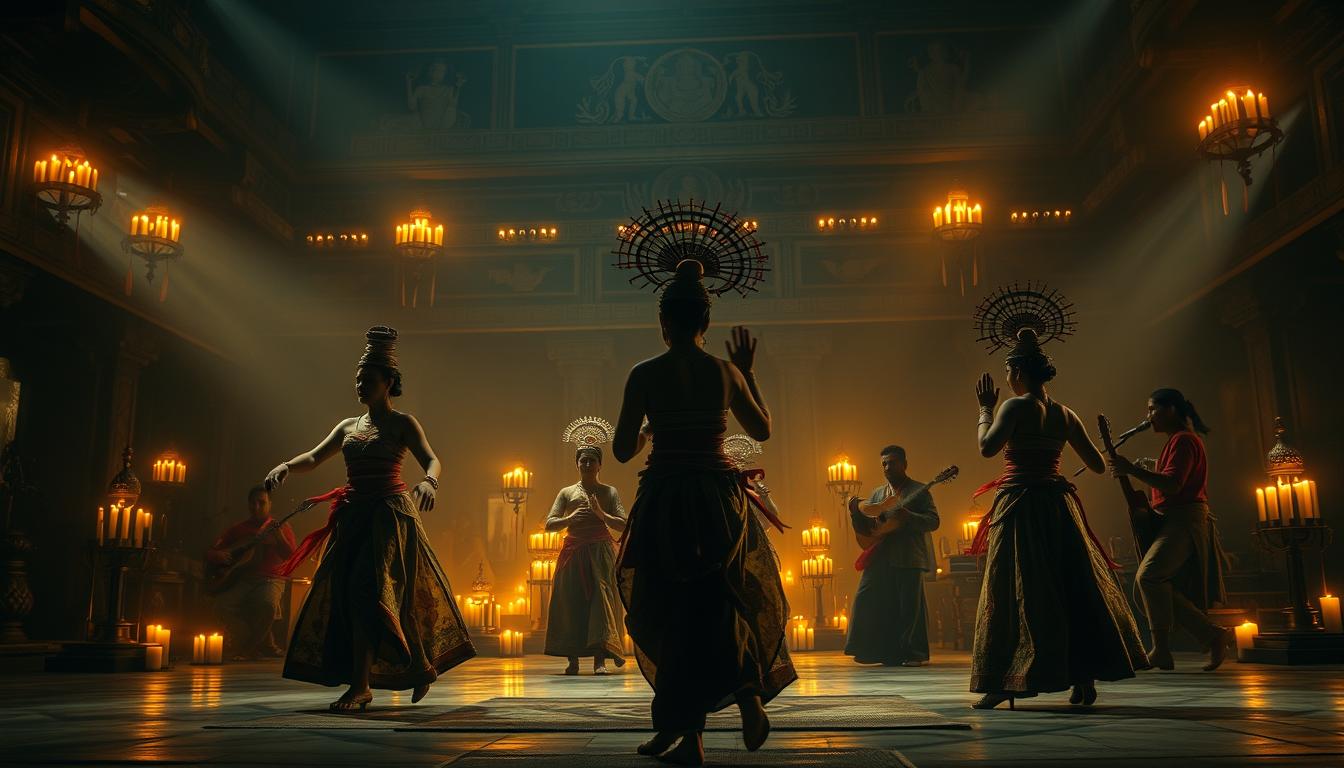
Dance history goes back thousands of years, shaping cultures all over the world. In India, dance has a history of 9,000 years. Egypt’s records from 5,300 years ago show dance as both fun and a religious act. These early dances mixed spirituality with community in places like Greece and China.
In Egypt, dance was used in ceremonies. In India, Bharatanatyam has been around for over 2,000 years. These dances told stories and carried beliefs. Over time, they evolved into styles like ballet and flamenco, keeping their roots while changing with the times.
Dance keeps evolving, connecting old rituals to today’s trends. Whether it’s a ballerina’s spins or tap’s beats, every move shows our need to express. This journey from ancient times to today’s stages proves dance is a living part of human creativity.
How Dance Reflects Cultural Identity
Dance traditions tell stories of heritage and values. They are more than art; they are cultural identity in dance. Passed down through generations, they keep history alive. Every movement and rhythm carries deep meaning, preserving language, spirituality, and social norms.

Storytelling through movement brings myths, migrations, and battles to life without words. The cultural identity in dance is seen in rituals like the Maori Haka, showing strength and unity. Or the Aztec dances that honor agricultural cycles. Over 80% of global dance forms use such narratives, ensuring traditions outlive written records.
“Dance is memory in motion,” said anthropologist Dr. Elena Torres. “It’s how we teach children where we came from.”
Institutions like the Flamenco Biennial in Spain and India’s Kalakshetra Foundation preserve these dance traditions. They train artists to pass down steps, costumes, and music. Even modern forms like hip-hop, rooted in African American and Latino communities, retain elements of resistance and resilience. Through dance as cultural preservation, movements connect past and present, uniting people through shared identity.
The Evolution of Dance Styles
From the European Renaissance to today, dance style evolution shows humanity’s creativity and cultural changes. The 1500s saw a rise in dance form development as art and music grew. Travelers brought steps to new places, shaping social dance traditions in each community.
Theatrical dance, like ballet, started as a royal show but grew into a high art form. Social dance traditions like the 1920s Charleston or 1930s Lindy Hop showed joy and rebellion. Each time, dance left its mark.
The 1950s Twist showed youth’s spirit, while 1980s breakdancing came from New York’s streets. It mixed athleticism with storytelling. Modern tech changed dance—pointe shoes elevated ballet, YouTube spread trends like the Soulja Boy, and TikTok made the Floss Dance worldwide.
Now, fusion styles blend traditions, showing dance is alive. Whether on Broadway or TikTok, these moves show our shared humanity. Dance has evolved from Renaissance courts to digital stages, connecting us across time and space.
The Global Influence of African Dance
African dance traditions have made a big impact worldwide. They spread through migration and cultural exchange. Now, you can see their rhythms and movements in hip-hop, jazz, and Latin dance.
These dances keep the heartbeat of communities alive. They mix African movement with new styles. From New York streets to global stages, their legacy continues.

Hip-hop emerged in the 1970s in Brooklyn and the Bronx, rooted in African traditions. Moves like bone breaking and waving pay tribute to ancestral dances. These dances emphasize isolations and grounded postures, honoring community values.
Dancers in the Bronx turned these moves into a form of rebellious art. They showed how African rhythms can cross borders.
Today, choreographers like South Africa’s Dada Masilo blend African dance with ballet. This creates powerful performances. Even pop stars like Beyoncé use dance rhythms from West Africa, mixing them with modern sounds.
Festivals and workshops around the world celebrate this mix. They ensure traditions evolve while staying connected to their roots.
From breaking to contemporary styles, African movement’s influence is unstoppable. Every step in hip-hop or salsa connects back to dances honoring ancestors. Now, they bring people together across continents through shared rhythm and resilience.
Ballet: A Window to European History
European court dance started in Italy and France during the Renaissance. Nobles used dance to show power and grace. Ballet history began as a royal spectacle, with Louis XIV making it a formal art in 1661.
He founded Paris’ first dance academy. This classical ballet traditions created steps like the five foundational positions. It turned casual gatherings into disciplined performances.

By the 19th century, ballet became about telling stories. The Romantic era brought La Sylphide (1832) and Giselle (1841). These ballets used ethereal costumes and pointe work to show human feelings.
Marie Taglioni’s performances in La Sylphide showed otherworldly beauty. This reflected society’s interest in mysticism. These ballets moved from royal shows to stories of love and tragedy.
Today, classical ballet traditions live on in shows like Swan Lake. But modern choreographers are reimagining these stories. The five positions are key in training, while new ideas like all-male casts show ballet’s flexibility.
Ballet has moved from royal courts to global stages. It shows European values like elegance, discipline, and the dance between art and society.
Latin Dance: Rhythm and Revolution
Latin dances like salsa and rumba have the rhythm of Caribbean traditions. They are more than just steps in ballroom studios. Mambo and bachata are living histories that mix different cultures.

Rumba’s “Cuban motion” comes from Havana’s streets. Danzón’s elegance started in 1879 Cuba. Merengue became a symbol in the Dominican Republic under Trujillo, mixing folk with politics.
Tango became famous in 1920s Paris, making Buenos Aires rhythms known worldwide. Stars like Carlos Gardel helped spread its fame.
Caribbean dances also tell stories of resistance. The danza de los voladores honors ancient cycles with 52 revolutions. Carnival in Brazil and Colombia turns streets into colorful stages.
UNESCO protects dances like Bahian samba de roda, recognizing their cultural value.
Salsa burst into New York in the 1970s, blending Cuban son with Puerto Rican bomba. Mambo’s 1950s heyday at the Palladium Ballroom showed cultural exchanges during the Cold War. Today, these dances are more than steps; they’re stories of struggle and joy.
The Significance of Native American Dance
Native American dance traditions are the heartbeat of Indigenous cultures. These dances are prayers in motion. They connect communities to their ancestors, nature, and spiritual beliefs.
Ritual dance forms like the Grass Dance honor sacred lands. The Hoop Dance tells stories of life’s cycles. Each step and gesture has a purpose, from healing to celebration.
Dance has been key to survival. The Fancy Dance, born from Ponca resilience, blends old and new. It keeps traditions alive.
The Jingle Dress Dance carries healing prayers through 365 metal cones. Powwows and modern choreographers merge tradition with contemporary styles. This ensures these arts thrive.
The Sun Dance, a ritual of renewal, unites tribes after centuries. These dances resist erasure. They are not relics but living expressions of identity.
By preserving them, Indigenous peoples assert their heritage. Every regalia stitch and drumbeat tells a story. This proves that dance is a powerful act of resistance and continuity.
Dance in Asian Cultures: A Diverse Spectrum
Asian dance traditions are a bridge between the old and the new. Classical Indian dance, like Bharatanatyam, uses mudras to tell stories from Hindu epics. These dances, over 2,000 years old, are both art and cultural heritage.
Chinese dance history goes back thousands of years. From the Qin dynasty’s Long Sleeve dance to the Tang era’s court performances. The Lion Dance, rooted in martial arts, brings luck during festivals.
Peking Opera blends acrobatics with drama, showing China’s rich performance legacy. Movements like swirling ribbons and continuous spins reflect beliefs in energy flow and harmony.
Japanese dance forms like Noh and Kabuki mix theater and motion. Noh uses slow, deliberate gestures to evoke emotion, while Kabuki’s vibrant costumes and dramatic acting captivate audiences. Both honor tradition while adapting to contemporary stages.
The Impact of Social Change on Dance
Dance has always reflected the changes in society. In the early 20th century, pioneers like Isadora Duncan and Martha Graham changed dance. They rejected traditional forms to express personal and political freedoms. Their work showed that dance could challenge norms.
In urban spaces like the Bronx, breakdancing emerged in the 1970s. It came from marginalized communities. Cuban artist Danys “La Mora” Pérez Prades preserved Afro-Cuban traditions with Ballet Folklórico Cutumba. He blended heritage with social advocacy.
Today, artists like Ana María Alvarez’s CONTRA-TIEMPO merge Latin dance with themes of justice. They reflect today’s calls for equity. Thirty-one artists supported by the Dance/USA Fellowship, including Vanessa Sanchez, continue this legacy. They use performance to address inequality.
Yet, challenges remain. The pandemic forced closures of 50% of U.S. dance nonprofits. Jacques D’Amboise’s National Dance Institute now offers free programs to youth facing barriers.
Dance is a tool for unity. As Ana María Alvarez says, “Movement becomes a language when words fail.” Dance evolves to meet society’s needs. It proves its role as both mirror and catalyst for change.
Dance in Cinema: Telling Stories Through Film
Movie dance sequences have always connected movement and story. Busby Berkeley’s work and Gene Kelly’sSingin’ in the Rainshowed how dance can turn screens into stages. Directors like Bob Fosse mixed jazz with camera angles, showing dance can tell stories without words.
Today, dance storytelling goes beyond theaters. Thanks to TikTok and YouTube, anyone can share or create viral dance moves. This change has made dance more accessible to everyone.
The 2023 filmWhat’s Bred in the Blood and Boneshows this shift. It combines historical dance with modern film techniques to highlight women’s suffrage struggles. Screenings at festivals like Greensboro’s Dance Film Festival help preserve cultural histories.
The 2024 Manifest Dance-Film Festival in India will feature 40 global entries. This proves screens make diverse movements accessible to all.
Digital platforms let creators share choreography instantly. TikTok challenges let users join global dance trends, making viewers participants. This is similar to howWest Side StoryorBlack Panther’s fight choreography became pop culture icons.
As technology improves, dance storytelling evolves. Filmmakers use VR and motion capture to reimagine classic steps. This shows how dance can be reimagined for new audiences.
Audiences now watch, learn, and even critique dance through phones or laptops. This has created a world where a viral dance can unite strangers. Now, it’s shared globally in seconds.
Dance: A Universal Language
Dance has always been a universal language, from ancient rituals to today’s stages. It connects people through movements like hula and hip-hop. Dance tells stories, celebrates, and protests, using rhythm and emotion that everyone can feel.
The global dance community thrives on cross-cultural movement. Choreographers like Rio June and David Vergara work together, showing that movement doesn’t need words. Traditional dances like Kathak and flamenco mix old and new, creating connections between cultures. The Movement Alphabet system helps dancers worldwide share choreography, turning steps into a visual language.
Today, 20% of U.S. adults dance, and online classes have grown 300% during the pandemic. Studios offer many styles, from tango to breakdance. Even ancient dances like Aboriginal Australian ones tell stories without words. Hip-hop, starting in the Bronx, now echoes in cities like Seoul and São Paulo.
Dance is powerful, whether for fitness or fun. You don’t need formal training; your body already knows how to move. Dance is for everyone, from ballrooms to TikTok. It’s a feeling we can all share. So, let’s dance and let our bodies speak the universal language.