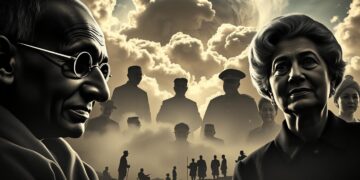





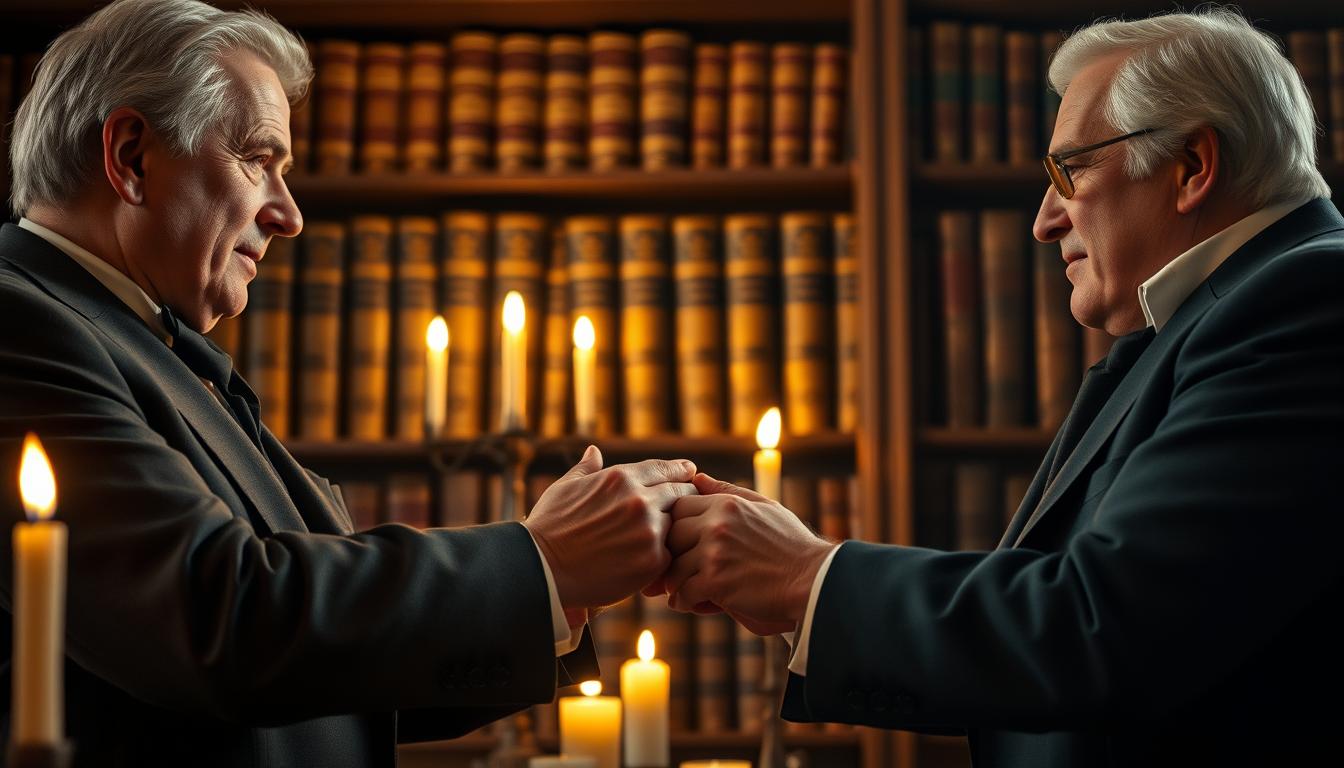
Unexpected friendships in history often go unnoticed. C.S. Lewis and T.S. Eliot, once rivals, became allies in 1959. They worked together to revise Anglican psalms. Their story shows how rivals can change the world together.
Today, our world seems divided, like the 117th Congress’s 50-50 Senate split. But history teaches us that enemies can become friends. This can lead to big changes.
Senators Orrin Hatch and Ted Kennedy, despite their differences, passed important laws. Artists Picasso and Matisse also found common ground in their rivalry. These examples show that conflict can lead to strong bonds.
In today’s world, leaders like Biden and McCain showed us that we can bridge our differences. This article looks at how partnerships in politics, art, and more can transform our world.
Introduction to Unexpected Friendships in History
History’s greatest famous enemy friendships show how rivals can become allies. When historical adversaries united, their teamwork often surprised everyone. This proves that even the most bitter foes can find common ground.
Social psychology explains that rivals to allies psychology relies on mutual respect. This respect grows from facing challenges together.
Henry Houdini and Sir Arthur Conan Doyle are a great example. Despite their differences on spiritualism, they became close friends for decades. Houdini’s doubts about mediums and Doyle’s belief in the supernatural bridged their gap.
Their friendship shows how curiosity about different views can lead to unexpected collaborations.
Ella Fitzgerald and Marilyn Monroe also had an unexpected friendship. Monroe’s support helped Fitzgerald’s career, leading to historic performances. Their partnership turned a rivalry into a success story. This shows that competition can spark creativity when used right.
These stories show a pattern: when rivals work together, their differences disappear. Later, we’ll see how these friendships influenced politics, art, and innovation. The move from rivalry to partnership is not just interesting history. It’s a guide for turning conflict into progress.
Political Rivals Turned Allies
In 1971, Durham, North Carolina, saw a remarkable change. Political enemies who became friends when C.P Ellis, a Klansman, and Ann Atwater, a civil rights leader, worked together. They aimed to ease school desegregation.
After 10 days of tough talks, Ellis publicly burned his KKK membership. This act showed that even the most bitter foes can change. Their story, told in *The Best of Enemies*, shows how rival politicians who collaborated can change communities.

Historical alliances like theirs remind us of others. Thomas Jefferson and John Adams, once rivals, started writing to each other in 1812. Their letters turned their feud into respect.
They talked about government and philosophy. By the time they died in 1826, their friendship was a symbol of unity. It showed that diplomatic enemies to allies can unite a nation.
These stories show how enemies can change history. Unlike the short-lived Boxer Rebellion coalition, these alliances lasted through understanding and compromise. From Southern cities to the White House, their stories prove that working together is key to progress.
Revolutionary Thinkers Who Found Common Ground
Intellectual rivals who worked together often turned disagreements into breakthroughs. C.S. Lewis and T.S. Eliot, once on opposite sides of literature, became allies in 1959. They were tasked with revising the Anglican psalter.
Their partnership ended years of tension. It showed that enemies could achieve more together than apart. Lewis later said, “I found it easy to love him” after they worked together.
“I found it easy to love him after getting to know him.”
Scientists who once competed in physics and medicine made discoveries they couldn’t have alone. Philosophers with different views came together, creating new theories. Even former enemies who became friends often produced better work together.
This shows rivalry can drive progress, not hold it back. History’s biggest leaps forward came when opposites united. Their stories teach us that working together, not fighting, unlocks our true power.
Sports Rivals Finding Common Purpose
Sports rivals turned teammates often change competition into teamwork. In the NBA, Patrick Beverley and Damian Lillard went from being opponents to teammates on the Milwaukee Bucks. They show how tension can turn into teamwork. Their partnership is a great example of how athletic competitors who became friends can succeed together.
Even when Russell Westbrook criticized Beverley’s defense, they worked together on the Lakers. This shows how sports enemies can put aside their differences.

Joel Embiid and Andre Drummond, once known for trash talk, now respect each other’s abilities. Kobe Bryant and Matt Barnes, after a heated game, became close friends. These stories show how rivalry can lead to unity when everyone works together.
Behind the scenes, this change is part of a bigger trend. Teams like the Bucks and Lakers use these alliances to improve. Even in the Olympics, athletes from rival countries team up, balancing pride with teamwork. These partnerships show that rivalry can make both players and sports better.
Artistic Collaborations from Unexpected Places
Artistic rivals who worked together found that tension could spark new ideas. C.S. Lewis and T.S. Eliot, once enemies, became friends through a shared project. Despite their public disagreements, their work together softened their differences.
This partnership changed their respect for each other. It showed that even deep disagreements can lead to collaboration. Friendship like theirs proves rivalry can open new artistic doors.
Warhol and Basquiat, once rivals, changed 1980s art together. They created over 150 joint works, blending Warhol’s pop culture with Basquiat’s street art. Warhol’s studio, The Factory, became a place where style clashes turned into inspiration.
Later, Haring’s work echoed Warhol’s, mixing activism with pop art. Their legacy shows how different views can create lasting art.
Musical rivals also broke new ground when they worked together. Ed Sheeran and Bring Me The Horizon, or Taylor Swift and Bon Iver, showed how genres can blend. Even Freud and Kate Moss’ portrait, painted over nine months, sold for £3.9 million.
This piece, a mix of Freud’s realism and Moss’ fame, was seen as a “union of opposites.” It shows that creative friction can be a spark, not a block. From Warhol’s silk screens to Eliot’s poetry, history’s greatest art often comes from collaboration.
Military Rivals Who Became Friends
Stories of military adversaries to allies show how war can lead to unexpected friendships. Alliances like the 1900 Boxer Rebellion coalition were brief. Yet, some wartime friendships had a lasting impact.
Take Confederate General John B. Gordon and Union General Joshua Lawrence Chamberlain. They were once enemies at Appomattox but later became friends. They spoke out for peace, showing they shared values beyond their differences.

“War’s end did not erase the humanity we all share.” — John B. Gordon, reflecting on his friendship with Chamberlain
After WWII, former enemies found common ground. German and Allied POWs in prisoner exchanges formed lasting bonds. A U.S. soldier and a Japanese officer who fought in the Pacific met in the 1960s. They worked together on peace projects, showing that wartime rivals who reconciled could become partners.
In Korea, North and South veterans joined NGOs to promote peace. These stories highlight how shared experiences can overcome past conflicts. Friendships started with small acts like sharing food or saving lives. These bonds remind us that humanity can prevail even after war.
Cultural Icons Overcoming Differences
C.S. Lewis and T.S. Eliot started as cultural rivals who united by necessity. They met in 1939, both tasked with revising Anglican psalms. Lewis, an Oxford professor, and Eliot, with Anglo-Catholic views, seemed worlds apart. Yet, their shared goal to preserve liturgical integrity brought them together.
Their work resulted in a revised psalter that is used today. This shows that even those with different views can opposing cultural leaders who collaborated.
In the 1940s, Eleanor Roosevelt and Mary McLeod Bethune showed how to bridge gaps. Roosevelt came from a high political background, while Bethune fought for civil rights. Despite their differences, they worked together to push for change.
Their efforts led to more opportunities for Black Americans. They helped create jobs and access to education through programs like the NYA.
These stories teach us that shared goals can overcome differences. Lewis and Eliot put aside their theological debates to achieve a common goal. Bethune’s work with presidents and activists showed the power of leadership in uniting people.
They remind us that even in deep divisions, working together is possible.
Business Competitors Who Became Partners
Business rivals turned partners have changed industries by combining their strengths. The battle between Apple and Microsoft, once fierce, marked a turning point. In 1997, Microsoft invested $150 million in Apple, ending years of legal fights over software patents.
This deal helped corporate rivals work together to avoid market collapse.
“If Microsoft wins, it will be a Dark Ages for computing,” Steve Jobs warned in 1985. Yet by 1997, their rivalry shifted to survival.

Entrepreneurial enemies who joined forces found common ground. Microsoft’s funding helped stabilize Apple, while Apple’s iMac revival in 1998 boosted its brand. Despite ongoing tension, their uneasy truce let both thrive.
By 2023, their rivalry evolved into a dance of innovation. This showed that even competing companies that merged or collaborated could redefine tech’s future.
Partnerships like Nike and Apple’s fitness tools or Starbucks- Spotify music ecosystems show collaboration’s power. These alliances let rivals pool resources, blending strengths like Apple’s design with Microsoft’s software reach. The 1997 deal alone averted Apple’s bankruptcy, proving even fierce rivals can shift from conflict to mutual growth.
Overcoming Historical Feuds
Starting to understand each other is the first step in resolving generational conflicts. The Hatfields and McCoys, once bitter enemies, now work together in tourism. This shows that overcoming family feuds takes courage to let go of past hurts.
Nations like France and Germany also found peace through shared projects. The European Coal and Steel Community was a key step in their reconciliation.
In Congress, former enemies found common ground after long disputes. The 1856 caning of Charles Sumner by Preston Brooks sparked important talks during the Civil War. Today, the Euro-Atlantic region faces ongoing conflicts like Nagorno-Karabakh and Transnistria.
A 2023 OSCE report found that 70% of regional disputes stem from unresolved historical claims. Reconciliation goes beyond treaties; it’s about envisioning a shared future.
Reconciliation demands more than treaties—it requires reimagining shared futures.
Recent efforts, like the 2020 Armenia-Azerbaijan truce, show progress is possible. Even long-standing rivalries, like Japan and South Korea, have started to mend their ties. Yet, 60% of Eastern European nations continue to teach conflicting histories in schools.
The “Marshall Plan for civil society” aims to change this. It funds education programs and joint economic projects. When leaders focus on the future, even deep-seated historical enemies can find a new path together.
Personal Relationships that Shaped History
Behind big historical changes are often quiet moments of human connection. Derek Jeter and Alex Rodriguez, once rivals, became friends. Their World Series win in 2009 was more than a game—it was a symbol of making peace. Their story shows how personal bonds can change history.
History’s most impactful friendships often start in unexpected ways. Harry Houdini and Arthur Conan Doyle, despite their differences, remained connected. Their debates on spiritualism became a bridge, not a wall, showing even big disagreements can lead to progress.
In 1983, Pope John Paul II visited his would-be assassin, Mehmet Ali Agca. This act of forgiveness was a powerful message. It showed how personal choices can change the world.
Marilyn Monroe and Ella Fitzgerald’s 1955 performance at the Mocambo nightclub was groundbreaking. Monroe fought for Fitzgerald’s chance to perform, breaking racial barriers. Their friendship showed that together, we can overcome obstacles.
Reagan and Gorbachev exchanged over 40 letters, turning distrust into dialogue. Their cautious trust led to arms control treaties. Their friendship shows how personal connections can change the world.
Lessons Learned from Unexpected Friendships
History’s most unlikely friendships teach us valuable lessons. At Yale in the 1980s, a secret society brought together 15 students from different backgrounds. They had to share meals and stories, which created strong bonds.
Today, 13 of them are friends for life. This shows how working together can break down barriers. It turns former adversary insights into lasting friendships.
Conflict resolution from history gives us clues for today’s problems. During the Cold War, Soviet and American women exchanged thousands of letters. They talked about raising children and books, not politics.
They even discussed Mark Twain’s works. This showed that personal connections can last longer than political differences.
“I found it easy to love him,” C.S. Lewis said after working with T.S. Eliot. Their work on Anglican psalms replaced rivalry with respect. This is a historical reconciliation technique where shared goals make enemies into friends.
This is similar to the Yale group’s experience. Working together for a purpose can turn enemies into people we can relate to.
These stories teach us that reconciliation starts small. It can begin with shared projects, open talks, or cultural exchanges. Their rivalry to friendship lessons remind us that even deep conflicts can fade when we focus on our shared humanity.
Conclusion: Celebrating Unlikely Alliances in History
History’s most impactful partnerships often started as rivalries. Unlikely friendships, from wartime alliances to artistic collaborations, show that enemies can change the world. The UK and US, once rivals, formed a key alliance that brought global stability.
During WWII, Winston Churchill and Franklin D. Roosevelt exchanged over 1,700 messages. This bond shaped post-war diplomacy. Their partnership, born out of necessity, stands as one of history’s greatest.
Lessons from rival collaborations show that shared goals can overcome old divisions. The Tizard Mission of 1940 shared British tech with the US, speeding up Allied victories. Today, the F-35 program, a joint effort between the UK and US, shows how former rivals can work together.
Economic ties between these nations also highlight success. Over a million jobs in each country rely on cross-border investments. This proves the lasting value of collaboration.
Historical enemies who changed the world teach us that conflict doesn’t define our futures. Churchill and Roosevelt’s wartime strategy and the UKUSA Agreement show how alliances can lead to progress. Their stories offer a blueprint for today’s leaders.
Transformative historical partnerships show that unity is about turning differences into strength. As global challenges become more complex, history’s lessons encourage us to find common ground. The UK and US alliance, built on past rivalries, continues to drive progress in technology, military, and economy.
Their story, and others like it, show that reconciliation is not just possible but a catalyst for change. In a divided world, these examples offer hope. Adversaries today could become tomorrow’s partners in solving humanity’s biggest challenges.