







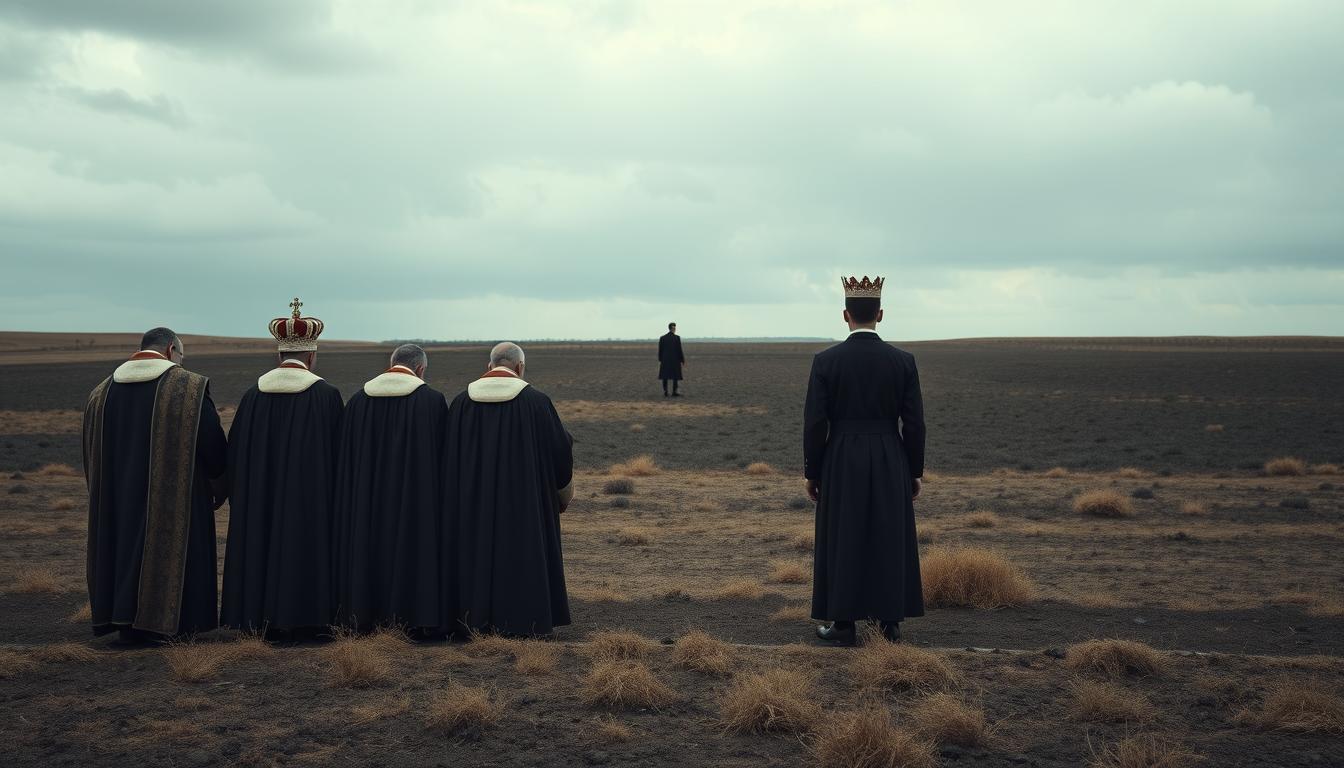
History is filled with leaders who stepped down. These voluntary power transfers changed the course of nations. For example, 8 modern dictators handed over power to open elections.
In ancient Rome, Cincinnatus led twice but stepped down each time. Famous resignations like Napoleon’s in 1814 and Japan’s Emperor Akihito in 2019 show the reasons behind these decisions. Leaders often faced pressure, health issues, or personal beliefs.
Even kings like Spain’s Juan Carlos I passed the throne to his son in 2014. Denmark’s Queen Margrethe II is a rare example in 2024. This article looks at these moments of surrender, showing why they matter.
The Concept of Walking Away from Power
History’s most memorable leaders often surprise us by stepping down from power. Rome’s Cincinnatus and U.S. President George Washington are examples. They showed that power doesn’t mean you have to stay in control.
Their acts of selflessness are key to understanding historical power changes. They taught us that leadership is not about keeping a title. It’s about knowing when to let go.
“I resign my commission, and take my leave of you.”
But why do so few leaders choose to leave? The psychology of leaving power shows how control can cloud judgment. Power’s pull often keeps leaders in roles too long.
Yet, leaders like Washington show wisdom in letting go. Their choices show a rare strength: choosing principle over permanence.
These stories teach us that power’s true test is not its grasp but its release. Their examples guide debates on when to hold power and when to release it. They balance ambition with integrity.
Notable Political Figures Who Stepped Down
George Washington’s choice to leave office after two terms was a historic move. He didn’t seek a third term in 1797, showing he valued democracy over personal gain. This rare act set a standard for peaceful power transfers in democracies around the world.

Jacinda Ardern, New Zealand’s youngest prime minister, became famous for her crisis management. In 2023, she surprised everyone by stepping down, citing exhaustion. Her book, A Different Kind of Power, talks about balancing leadership with personal health, showing leaders sometimes leave when they feel they’ve done their best.
Some dictators who stepped down later came back to power. Nicaragua’s Daniel Ortega, for example, lost in 1990 but returned in 2006. His story contrasts with Julius Nyerere of Tanzania, who left in 1985 and helped open up Africa to democracy.
In democracies, exits are significant. U.S. Senator Mitch McConnell, after 38 years, announced he’d step down as Senate leader in 2023. His decision to leave shows leaders sometimes step aside to make room for new voices. These choices, driven by ethics, exhaustion, or strategy, change the meaning of giving up power willingly.
Royal Figures Who Abdicated Their Thrones
Edward VIII’s 1936 abdication is one of the most famous abdications in history. He had to choose between the throne and Wallis Simpson, a divorced American socialite. He said, “I have found it impossible to carry the heavy burden of responsibility without the support of the woman I love.” His choice was opposed by the Church and government, changing British monarchy traditions. Today, his story is seen as a symbol of love versus duty.
Edward wasn’t alone. Monarchs who gave up thrones have existed for centuries and across cultures. Queen Wilhelmina of the Netherlands stepped down in 1948 for her daughter Juliana, following a Dutch tradition. Spain’s Juan Carlos I, known for stabilizing democracy after Franco, abdicated in 2014 to avoid scandals, passing the crown to his son Felipe VI. These acts show how personal choices and public pressure shape royal abdications.
Historical records show over 225 kings who stepped down globally, with 47 in the 20th century alone. Japan’s 43 recorded abdications reflect longstanding traditions. Thailand’s 2024 abdication of King Bhumibol Adulyadej marked a rare modern event. Even ancient rulers, like China’s Qin Dynasty emperor Qin Shi Huang’s successors, faced abdications due to political strife.
Edward’s legacy continues: in 1970, he said his choice was “the only thing that mattered.” These stories show how personal desires clash with duty, reshaping nations and monarchy itself. From love to scandal, abdication is a poignant reminder of power’s human cost.
Corporate Leaders Who Resigned
Not all CEO resignations mean failure. Some leaders step back when their companies are doing well. Bill Gates left Microsoft in 2000 to focus on global health. This shows success isn’t about staying in power forever. Steve Jobs’ exit from Apple in 1985 changed tech history. It shows walking away can lead to new beginnings. 
Founders who leave companies often have new goals. Google’s Larry Page and Sergey Brin gave leadership to Sundar Pichai in 2015. They trusted the next generation to lead innovation. Twitter’s Jack Dorsey stepped down in 2022, showing even pioneers can leave when they want. These moves show corporate leaders stepping down can mean personal growth over legacy.
Data shows a trend: 70% of executives now seek roles that prioritize well-being, according to Deloitte. Even at Amazon, Starbucks, and Pinterest, top leaders resigned in 2022. Today, stepping aside is seen as a strength, not weakness. Health, family, and burnout are common reasons for leaving, with 63% of workers saying they work too much.
Business leaders who walk away redefine success. Health Commissioner Dr. Ashwin Vasan left his role for family reasons. While some resign under pressure, others seek freedom. This shift shows a culture where being a leader isn’t just about staying long. As companies grow, so do the reasons for these big decisions.
Activists and Their Choices to Leave Power
Activist leaders who resign often put the movement’s goals first. Alicia Garza, a co-founder of Black Lives Matter, stepped back to let new voices shine. This shows a trend where leaders stepping down helps ideas live on.
Tarana Burke, who started #MeToo, also focused on survivors’ stories. This proves that passing power can make movements stronger.
Cesar Chavez’s temporary leave from the United Farm Workers shows the power of leadership changes. By stepping aside, leaders avoid becoming too central. Garza said, “Real change happens when everyone leads,” showing the strength of shared power.
Stacey Abrams’ work on voting rights shows how leaving a role can lead to new strategies. This approach is key to lasting change.
True leadership is knowing when to stand aside so others can lead.
Activist leaders stepping back is a sign of trust in the collective. It lets movements grow and adapt, not get stuck in old ways. These decisions are rare but can have a big impact on a movement’s success.
Artists and the Decision to Withdraw
Some artists who quit fame do it to keep their values safe. Bill Withers, famous for “Ain’t No Sunshine,” stopped performing in the 1980s. He chose a quiet life. Lauryn Hill, after her hit album, also stepped away from the public eye for years.
These choices show how fame can hurt personal peace. It’s a battle between fame’s demands and personal values.

In 2019, eight artists pulled their work from the Whitney Biennial. They protested trustee Warren B. Kanders’ ties to tear gas sales. Musicians who stopped performing and others now speak out for change.
Michael Rakowitz, who also stepped back, said,
“Art cannot exist in spaces that enable violence.”
J.D. Salinger and Harper Lee hid from the public to protect their privacy. Actors like Rick Moranis also left Hollywood after personal losses. These stories highlight that leaving fame is about more than fear.
It’s about taking back control. Whether through protest or personal choice, these moves redefine success. They show that success can mean more than just fame.
Sports Icons Who Retired Early
Athletes who retired early often leave fans puzzled. Jim Brown, the NFL legend, retired at 29 after 12,312 rushing yards. He wanted to act instead.
Another example is tennis icon Bjorn Borg, who stunned fans by retiring at 26. He had 11 Grand Slam titles. His sudden exit in 1983 is one of the most unexpected in history.
Barry Sanders retired at 31, just 1,457 yards short of Walter Payton’s record. His early retirement sparked debate. Andrew Luck, a 6-time Pro Bowler, retired at 29 due to injuries. He prioritized mental health over a long career.
Legendary names like Magic Johnson, who quit at 32 after an HIV diagnosis, show different reasons. Tiger Woods also considered early retirement. Ali Marpet, who left at 28 for health reasons, is another example.
Some, like golfer Jack Nicklaus, played longer. But those who retired early often found fulfillment elsewhere. Their choices remind us that while glory fades, legacy endures.
The Role of Public Opinion in Resignations
Public pressure can make leaders step down. Richard Nixon is a prime example. His approval fell from 68% in 1973 to 31% by 1974 due to Watergate. He resigned to avoid impeachment, showing how public opinion can lead to resignation.

In 1993, three U.S. Foreign Service officers resigned over Bosnia policy. Marshall Harris, Jon Western, and Stephen Walker left after feeling ignored by Secretary Warren Christopher. They chose to leave to protect their reputation, refusing to support policies they found wrong.
Today, leaders face quick feedback from social media. This digital age turns small issues into big movements, pushing for fast action. Whether it’s scandals or changing values, public opinion is key. Ignoring it can damage not just power but also a leader’s legacy, proving that sometimes, stepping down is the best choice.
The Impact of Resignation on Society
When leaders step down, it affects society in big ways. George Washington’s choice to leave after two terms helped start a tradition of peaceful power changes in the U.S. King Juan Carlos I of Spain also set a good example by stepping aside in 2014, helping to keep the country stable.
The Great Resignation showed us how big a deal it is when people leave their jobs. Over 24 million workers in the U.S. quit between April and September 2021. This big change was because of stress and bad work conditions.
Resignations can either bring people together or drive them apart. A good example is South Africa’s smooth transition after apartheid, which built trust. On the other hand, sudden leadership gaps can make things unstable. The pandemic made people think more about their jobs and what they want from work.
Leadership choices are very important. They affect how much trust we have in our leaders and how stable our societies are. Whether it’s a planned exit or a crisis, these moments show how strong or weak a society is.
Conclusion: The Value in Letting Go
Stepping down teaches us the value of giving up power. Leaders who choose to leave show great dignity. Their actions protect their legacies and build trust.
Peaceful power changes happen in many places. They show that giving up control can make systems stronger. It also honors shared values.
Studies show that leaving bad situations can improve lives. Over 60% found clarity and 70% regained self-respect. Forgiveness and setting boundaries help mental health.
Knowing when to step back is key. It builds resilience in both personal and professional life. This lesson is not just for leaders.
History shows that letting go is wise, not a failure. Choosing to leave unhealthy situations builds integrity. This wisdom is for everyone, not just leaders.
By letting go, we can find strength. This shows that dignity in resignation comes from valuing purpose over pride.