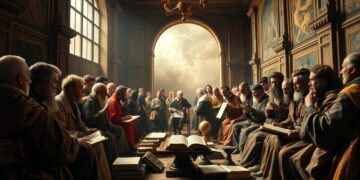



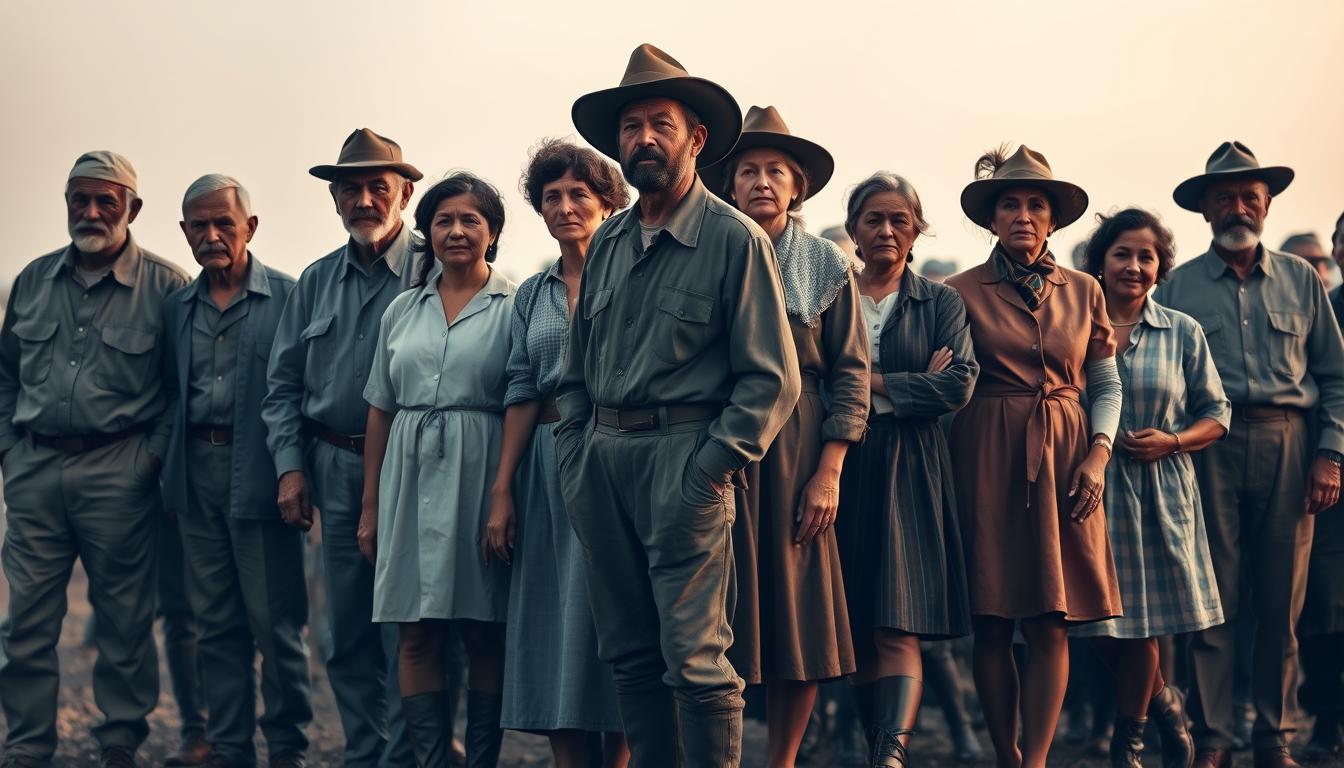
Recently, 50 people came together in New Haven. They listened to seven local voices share stories from 1860 to 1970. Denise Keyes Page of Ubuntu Storytellers led the event, “Forgotten Pioneers: Ancestral Family Stories of Dixwell.” It aimed to keep alive stories often forgotten.
One attendee showed a 1945 Q House membership card from Jesse Hameen II. This sparked cheers. But this event was just a small part of the hidden history.
History books often miss unsung heroes like George Edwin Taylor, the first Black presidential candidate. Claudette Colvin’s protest came before Rosa Parks’. Even Antonio Meucci, an early telephone inventor, was forgotten. These overlooked innovators made big contributions but were left out of history.
Stories like Biddy Mason’s fight for freedom in 1856 or Jonathan Grimshaw’s journey in Utah show how bias and missing records erase contributions. But, efforts like Dixwell’s storytelling are bringing back hidden history. Every family memory or unsung achievement helps bring forgotten pioneers back into the spotlight.
The Importance of Recognizing Forgotten Pioneers
History books usually focus on the same names. But, many stories are hidden. Historical erasure has pushed aside innovators who changed our world. By looking at historical recognition, we find voices ignored because of historical bias.
Books like People Who Led the Way but Were Left Out of History Books (304 pages) tell us about these pioneers. Richard Semon, for example, did groundbreaking memory research. Yet, his work was forgotten. Recently, it was rediscovered, showing how reclaiming history broadens our view of science.
Black settlers like the Grier family built communities in the Northwest Territory. Their stories challenge myths of exclusion. They faced backlash before the Civil War, showing how racism shaped America.
Today, their legacy is mostly in place names or local tales. This is a reminder of what we’ve lost.
“Rediscovering forgotten thinkers reshapes how we see human achievement,” notes psychologist Endel Tulving in the book’s preface.
Ignoring these stories is not just a mistake. It keeps power structures unequal. By embracing reclaiming history, we celebrate diverse role models. This change is not just for books; it’s for building a future where everyone’s history is valued.
Influential Women Who Shaped History
History books often miss the overlooked women who changed the world. Valentina Tereshkova was the first woman in space in 1963. She orbited Earth 48 times, but her story was overshadowed by later astronauts.
Claudette Colvin, just 15, refused to give up her bus seat nine months before Rosa Parks. She was a key figure in ending segregation laws. These female pioneers show how women’s contributions are often erased.

In the UK, women like Caroline Norton fought for legal changes. They won rights through acts like the 1839 Custody of Infants Act. Eleanor Roosevelt faced 40 years of FBI surveillance for her civil rights work.
Her efforts, like suffragette Emmeline Pankhurst’s 13 imprisonments, show courage against oppression. Despite their impact, these historical women leaders are often forgotten women in history.
Marie Stopes’ 1918 book Marrried Love and Sojourner Truth’s 1851 speech highlight marginalized voices. From Boudica’s rebellion to Queen Victoria’s reign, their legacies challenge historical gaps. Scholars today work to bring these stories back, ensuring no overlooked women are forgotten.
Trailblazing People of Color
Black pioneers like George Edwin Taylor broke barriers before the civil rights era. In 1904, he was the first Black to run for president. He fought for voting rights for African Americans, challenging the norms of the time.
Claudette Colvin refused to give up her bus seat nine months before Rosa Parks. This act sparked legal battles that fueled the Montgomery boycott.
Forgotten innovators of color overcame many obstacles to achieve great things. Jesse L. Brown was the first Black naval aviator in 1947. He earned a Flying Cross for bravery during the Korean War.
Bessie Coleman became the first Black female pilot in France. U.S. flight schools had barred her entry. These trailblazers opened doors in aviation and science.
Inventors like Thomas L. Jennings changed industries. His 1821 dry cleaning patent helped fund abolitionist causes. Marie Van Brittan Brown invented a home security system in 1966, a precursor to modern tech.
Leaders like Madam C.J. Walker built empires, employing thousands. Her haircare empire is a testament to her success. Their stories show that history’s margins are filled with unsung heroes who shaped our world.
Unsung Heroes in Science and Medicine
Every major breakthrough has a story behind it. These stories are about forgotten scientists and overlooked inventors. Their work changed lives but they rarely got the recognition they deserved.
Antonio Meucci is a great example. He showed off his “teletrofono” in 1860, years before Alexander Graham Bell’s patent. Despite his efforts to get credit, Meucci died without it. It wasn’t until 2002 that Congress recognized his contributions.

Luther Simjian invented the “Bankograph” in 1960. It allowed for cashless deposits, seven years before modern ATMs. But, commercial skepticism kept his invention from being widely used. This shows how some pioneers are overlooked.
Myths like Columbus “disproving a flat Earth” ignore ancient Greek knowledge. Columbus himself thought Earth was pear-shaped. This detail is often forgotten in simplified stories.
These stories show how bias and timing can erase legacies. By focusing on overlooked inventors and forgotten scientists, we uncover the true history of innovation. Their work reminds us that progress is not just about breakthroughs. It’s also about remembering those who came before us.
Artists and Cultural Innovators
Television’s first gay drama, South (1959), UK), hinted at a same-sex relationship. This was a bold move at a time when such topics were forbidden. The show faced criticism but is now celebrated by the British Film Institute as a landmark in LGBTQ+ history.
In 1962, You in Your Small Corner made TV history with its first interracial kiss. This moment showed how artistic innovators push boundaries, even when they’re ignored.
Early creative historical figures also changed how we see the world. Artists from the fourth century in Spain and Egypt showed Christ with short and curly hair, respectively. These forgotten artists remind us that history’s edges hold many untold stories.
From the 1950s to ancient frescoes, these works show that innovation often starts in the shadows. Even overlooked musicians and painters’ legacies continue to inspire us. Their stories teach us that art’s true strength is in lasting beyond eras of neglect.
Groundbreaking Authors Who Were Overlooked
Many literary pioneers were once ignored but now shape our culture. Zora Neale Hurston’s Their Eyes Were Watching God was forgotten for years until Alice Walker brought it back. F. Scott Fitzgerald’s The Great Gatsby was also overlooked until critics like Edmund Wilson saw its value.
These stories show how historical writers often face delays in being recognized. Their voices were muted by biases like gender or race.
“The supporting cast in She Alas! felt Dickensian—a backhanded compliment that overshadowed Joan O’Donovan’s bold focus on aging women’s lives,” noted early reviewers. Yet her 1986 novel Argument with the East Wind now highlights her sharp portrayal of post-retirement reinvention. O’Donovan’s work, like many overlooked authors, challenged norms about women’s narratives.

C.S. Lewis’s Narnia books now sell 150,000 copies yearly, defying his own prediction of obscurity. Joan O’Donovan’s The Visited, once overlooked, now commands $75+ for rare copies. These shifts show how legacies shift.
Even today, only 12% of curricula spotlight forgotten writers. But efforts like republishing O’Donovan’s works prove recovery is possible.
From marginalized voices to market revivals, these stories remind us that literary canons evolve. By rediscovering unrecognized literary figures, we enrich our understanding of storytelling’s true diversity.
Innovators in Technology You Should Know
Every big tech breakthrough has a story behind it. These stories are about forgotten tech pioneers who made big changes in our lives. Their work, from voice calls to flying across oceans, is often forgotten.
Antonio Meucci drew up plans for a “telegraphofono” in 1871, before Alexander Graham Bell got his patent. But Meucci’s name is not well-known. In 2002, Congress recognized his contribution, yet Bell’s fame stays strong.
In 1919, John Alcock and Arthur Brown flew non-stop across the Atlantic. They faced ice and storms for 16 hours before landing in Ireland. Their achievement was before Charles Lindbergh’s famous solo flight. Their story shows how media and timing can change tech history.
Luther Simjian created the first ATM in 1960, but banks didn’t want it. Years later, his ideas were used in modern ATMs. His story is like many others whose ideas were too early or ignored.
These stories show that tech history often makes it seem like one person did it all. But real innovation comes from many people. By remembering these forgotten tech pioneers, we get a more complete view of how technology has grown.
Environmental Pioneers and Activists
Before Earth Day or climate strikes, environmental pioneers fought to protect our planet. Many overlooked environmentalists and early ecological advocates are unknown in textbooks. Yet, their work is the foundation of today’s environmental movements.
Indigenous communities have held indigenous environmental knowledge for thousands of years. For example, the Indus Valley civilization managed waste over 5,000 years ago. Native American practices also prevented soil erosion long before modern science discovered these methods.
Colonialism and racism often erased these stories. The Chipko movement in India, led by women like Gaura Devi, used tree-hugging tactics decades before Julia “Butterfly” Hill’s famous 738-day protest in California. Wangari Maathai’s Green Belt Movement planted 30 million trees, showing grassroots efforts can change landscapes. Yet, her name is not as well-known as later activists.
“The earth does not belong to humans alone.”
Even forgotten conservationists like George Washington Carver and Chico Mendes faced obscurity. They promoted sustainable farming and fought for the Amazon’s survival. Their stories show environmentalism is not new—it’s a legacy of resilience.
By focusing on these voices, today’s movements can learn from centuries of experience. Healing our planet begins with honoring those who have always cared for it.
Forgotten Leaders in Social Justice
Many activists, like Claudette Colvin, are forgotten. Ida B. Wells, another leader, is overlooked. Colvin was 15 when she was arrested in 1955. She was left out of the Montgomery boycott’s leadership because she was pregnant.
Her story shows how the suffrage movement was divided. Black suffragists, like Sojourner Truth, fought racism in their quest for voting rights.
Ida B. Wells used her journalism to expose lynching’s horrors. She co-founded the NAACP and fought racial violence in the 1890s. Yet, her name is not well-known.
Pauli Murray was a legal genius who helped shape Brown v. Board of Education. Thurgood Marshall praised her work. But her role in history is rarely taught in schools.
“Women have been the backbone of the whole civil rights movement,” Coretta Scott King stated. Diane Nash organized Nashville sit-ins and faced violence during the 1961 Freedom Rides. Her bravery shows how marginalized voices drive progress.
These stories show the complexity of justice. Claudette Colvin’s arrest, Wells’ anti-lynching efforts, and Murray’s legal work highlight the importance of many contributions. Their legacies remind us of the need to recognize all who fought for equality.
Quick Profiles of Other Notable Figures
Many forgotten historical figures made a big impact in their own ways. Bea Arthur joined the Marine Corps during WWII, showing her bravery. Jimmy Stewart became a decorated pilot, and Audrey Hepburn helped the Dutch resistance by smuggling messages. These overlooked notables showed courage and later became famous.

Abraham Lincoln was known as the “Strongest Man in Illinois” in the 1840s. His wrestling skills are often forgotten, overshadowed by his political career. Eleanor Roosevelt faced 40 years of FBI surveillance for her civil rights work, a fact many don’t know.
Bessie Coleman was the first Black woman pilot in 1921. She flew planes that no U.S. school would teach her. Alice Coachman won Olympic gold in 1948, but her name is rarely mentioned in sports history. Both were unsung influencers who changed their fields.
Trailblazers like Max Robinson, the first Black D.C. news anchor, and Alvin Ailey, who started his dance troupe at 27, show impact isn’t just about being in the headlines. These hidden historical personalities and lesser-known pioneers remind us that history’s most inspiring stories often start offstage.
Bringing Forgotten Stories to Light
Efforts to recover lost narratives are changing how we see the past. Places like the British Film Institute and the Tacoma Historical Society are uncovering forgotten contributions. In 2002, the U.S. House recognized Antonio Meucci’s work on the telephone, showing justice can come late.
Deb Freedman’s “Tacoma’s Dry Goods and Wet Goods” tells of over 150 families who helped Tacoma grow. These stories show how uncovering lost tales gives us a fuller view of history.
You can help too. Supporting groups like the Tacoma Historical Society or donating to projects like Freedman’s book keeps history alive. The Gross brothers’ free kindergarten, found by Freedman, shows how small acts can leave big legacies.
Events like the Pasadena Japanese Cultural Institute’s June 23 program and exhibits like Tavares Strachan’s 2024 Hayward Gallery show are important. They turn forgotten stories into shared knowledge.
Historical recovery is an ongoing effort. Films like “Visas and Virtue” (Academy Award, 1997) and “Lil Tokyo Reporter” (21 awards) show that overlooked stories can find an audience. By supporting inclusive education or exploring family histories, we help preserve these stories.
Every discovery, from Tacoma’s 1893 economic struggles to Strachan’s installations, shows history is for those who seek it. Keep asking, “Who else is missing?” The past grows richer with every name we find.