







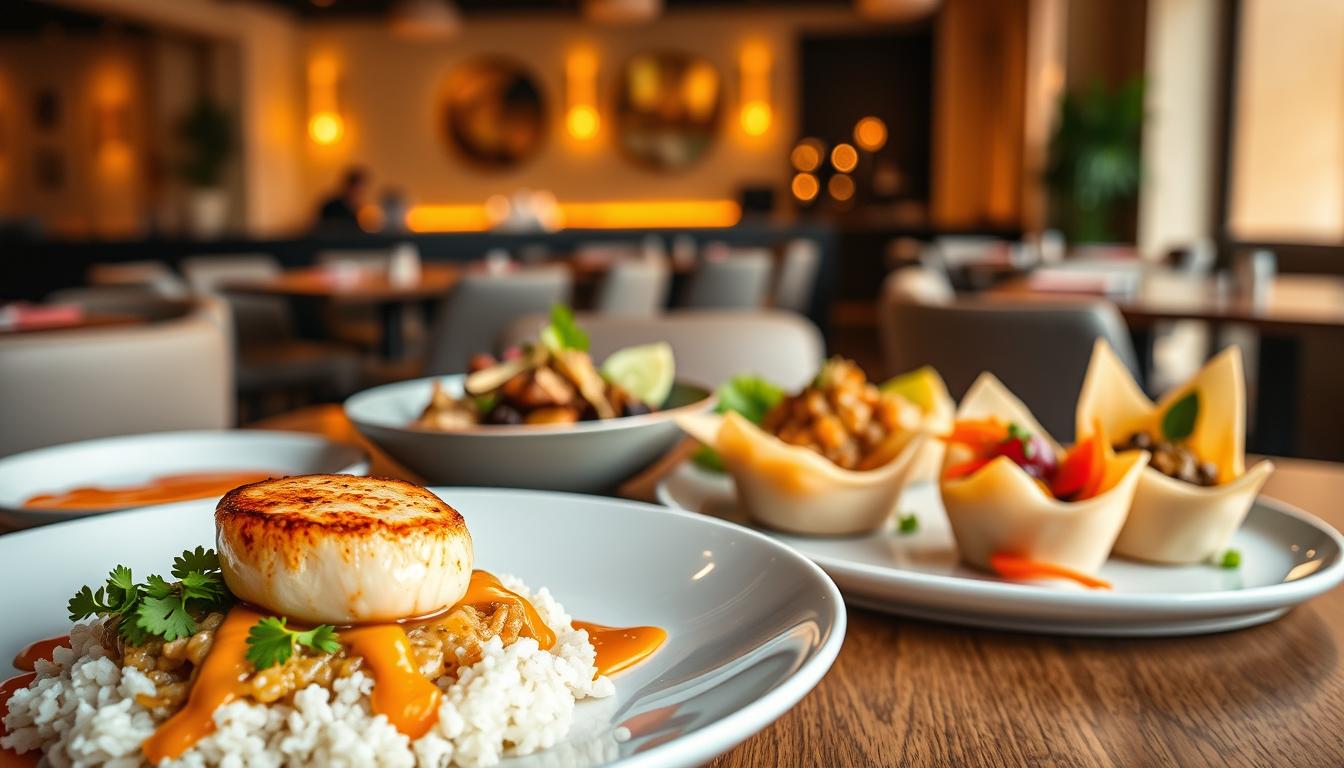
Fusion cuisine is more than a trend; it’s a global movement. It brings together different culinary traditions. Think Korean tacos and Indian-Chinese chili chicken. These dishes mix spices and techniques to create new, bold tastes.
This trend shows a world where food borders are disappearing. It excites adventurous eaters everywhere. The blending of food cultures has become a key part of dining.
Now, over 60% of diners look for fusion dishes. And 40% of urban restaurants offer them. Chefs are mixing Mexican avocado with Indian turmeric, showing that global flavors can be amazing together.
This isn’t just a trend; it’s a celebration of diversity on our plates. Behind this trend are impressive numbers. The global fusion market grows 15% each year.
Also, 70% of chefs try out cross-cultural recipes. Millennials are driving demand, and social media is buzzing. This isn’t just food; it’s a cultural conversation everyone wants to taste.
What is Fusion Cuisine?
Fusion cuisine is about mixing ingredients and techniques from different cultures. It’s not just about combining things; it’s about creating dishes with a purpose. Imagine sushi burritos or Korean BBQ tacos. These dishes blend traditions to make something new yet balanced.
This idea has been around for over 450 years in Macau. There, Portuguese and Chinese influences merged, creating UNESCO-recognized Macanese cuisine. Today, chefs around the world are inspired by this. Restaurants like Chicago’s Noodle Bird and New York’s Macao Trading Company show how well fusion can work.
Now, 60% of diners prefer fusion over traditional dishes. Chefs succeed by pairing flavors wisely, like Japanese rice with Mexican spices. But, it’s important to do it right. Forcing elements without understanding their origins can lead to “confused” dishes. Great fusion comes from knowing each tradition’s history and ingredients.
Chefs today mix global flavors while respecting their sources. Whether it’s a Thai-Mexican curry taco or a Vietnamese pho-inspired burger, the best dishes balance innovation with respect. This isn’t just a trend; it’s how modern cooking evolves.
The Historical Context of Culinary Blending
Food migration has shaped culinary history long before modern chefs used the term “fusion.” Ancient trade routes like the Silk Road spread spices, grains, and cooking techniques across continents. By the 1800s, the first Cantonese restaurant opened in San Francisco in 1850. London’s Nippon Rioriya introduced Japanese flavors to Europe in 1884.
These early exchanges laid the groundwork for traditional fusion cuisine. They blended ingredients from distant cultures into everyday meals.

Colonial eras added layers to this story. Indigenous and European ingredients merged in the Americas, creating dishes like mole or Caribbean callaloo. Later, 20th-century chefs like Wolfgang Puck and Roy Yamaguchi redefined these traditions.
Puck’s 1983 Santa Monica restaurant, Chinois on Main, showcased Asian-French techniques. Van Aken’s traditional fusion cuisine in Florida solidified the term by 1989. Even today, the culinary history of fusion thrives in dishes like the California roll. This shows that cross-cultural cooking is as old as exploration itself.
Popular Styles of Fusion Cuisine
“Today, fusion cuisine is found all over the world, from food trucks to high-end restaurants. It’s a testament to our increasingly connected global culture and our desire for new culinary experiences.”
Discover the exciting world of fusion food types that are changing menus everywhere. Popular fusion cuisines like Tex-Mex and Korean-Mexican are big in the U.S. They mix flavors from around the globe. In cities like Los Angeles, Korean tacos and kimchi quesadillas are huge hits.
Tex-Mex is a big hit, with chili con carne and queso dip combining Mexican and American tastes. Nikkei cuisine, with its Japanese-Peruvian roots, brings dishes like tiradito (a spicy ceviche-Japanese mix) to U.S. cities. Indian-Chinese popular fusion cuisines like chili chicken and Hakka noodles show immigrant creativity in cities.
Chefs are also trying out Cajun-Asian combos, like soy-ginger jambalaya. Poke bowls mix Mediterranean quinoa with Hawaiian poke. These trends show how fusion food types celebrate shared traditions. From food trucks to Michelin-starred spots, mixing cuisines leads to innovation and a desire for new tastes.
The Role of Chefs in Fusion Cuisine
Fusion chefs connect cultures through food, creating dishes that show off culinary creativity. They turn kitchens into places where old traditions meet new ones. Chefs like Nobu Matsuhisa have shown how mixing sushi with Peruvian flavors can change how we see food.
“Chefs are adding more diversity to their menus as diners seek traditional cultural food experiences.”
At Lotus Restaurant, dishes like the Lotus Roll (spicy tuna, avocado, and tempura flakes) show how chefs mix different tastes and textures. They blend tradition with new ideas, making sure each dish has a story. Their menus might include gluten-free options or Middle Eastern sauces on Western dishes, proving you can innovate without losing the real taste.

Fusion chefs have a big job. They must honor the cultures they draw from, learning about traditions and histories before mixing them. This way, they avoid taking things out of context and instead create something new with respect. From Farmingdale to Tokyo, these chefs make sure every dish respects its roots while opening up to new experiences.
Ingredients that Define Fusion Cuisine
Ingredients like yuzu, gochujang, and harissa are now key in kitchens around the world. They change traditional dishes in exciting ways. Imagine Korean chili paste adding heat to Mexican tacos or North African harissa making pasta sauces pop.
Chefs and home cooks are mixing tastes from different parts of the world. This blending of flavors is creating something new and exciting.
Thanks to modern supply chains, these ingredients are easier to find. Over 30% of chefs are now using them in their recipes. They mix Mediterranean herbs with Asian rice dishes or pair Middle Eastern spices with European proteins.
Even desserts are getting in on the action. Think baklava ice cream or wasabi-infused chocolate truffles. These desserts show how ingredients from different cultures can spark creativity.
Health trends are also influencing fusion cuisine. Turmeric, ginger, and other spices from around the world are used in 25% of fusion recipes. These ingredients add flavor and wellness to dishes.
70% of people want to try dishes that mix two or more traditions. From street food to Michelin-starred restaurants, the global pantry is driving a culinary revolution. It shows that flavor has no borders.
The Impact of Globalization on Food
Globalization has changed how we eat, making exotic ingredients common. Food globalization brings spices from India, grains from Ethiopia, and herbs from Mexico to our kitchens. Chefs and home cooks now mix flavors from around the world.
“Advancements in transportation and trade have led to the introduction of new ingredients and flavors,” a study notes. This has opened up new possibilities for cooking.
“The infusion of unique spices and techniques adds depth to dishes, blending old and new traditions.”

Platforms like TikTok and Instagram make global dishes famous. Korean tacos and sriracha-laced pasta are now well-known. The rise of fusion restaurants shows this trend, with 70% of urban diners trying international dishes every month.
But, there are challenges. While sushi is loved worldwide, traditional recipes might disappear. Mass production focuses on profit, not preserving heritage.
Brands like McDonald’s offer dishes like the Maharaja Mac or KFC’s rice bowls. This shows culinary globalization’s two sides. While 90% see fusion dishes as cultural celebrations, others fear homogenization.
Finding a balance between new flavors and tradition is essential. It ensures dishes respect their roots while exploring new tastes.
The Cultural Significance of Fusion Cuisine
Food mirrors culture, showing traditions and values. Fusion cuisine takes this further, making cultural food exchange a shared language. From the Silk Road’s spice routes to today’s fusion restaurants, blending traditions connects communities. “Understanding cuisine gives us insight into a culture’s values, beliefs, and identity,” says a culinary study.
Dishes like Korean tacos or Indian-Italian pizza now show culinary identity in motion.
“Food authenticity isn’t about borders—it’s about respect.”
Immigrant communities often use fusion to keep heritage alive while adapting to new homes. Caribbean dishes like jerk chicken mix African, Indigenous, and European flavors. This shows fusion isn’t new—it’s evolution.
Yet, debates arise: Is blending flavors respectful or disrespectful? Over 70% of chefs say fusion boosts creativity. But critics wonder if food authenticity is lost. Today, chefs balance new ideas with tradition, using local ingredients and honoring origins.
Modern diners enjoy this cross-cultural creativity. With 60% of U.S. eaters embracing fusion, restaurants flourish by blending old and new. Fusion isn’t just a trend—it’s a conversation, sparking dialogue about our past and future.
Challenges Faced by Fusion Cuisine
Fusion food challenges come when mixing cuisines need more than just creativity. They require a deep understanding of cultures. Chefs face technical issues like mixing curry spices with French sauces or combining sushi rice with barbecue flavors.
For example, Vindy’s tikka masala rice bowl blends Indian and Western tastes. But, success depends on respecting the culinary roots of each dish.
Cultural respect is key in cooking. If chefs ignore a dish’s history, fusion can turn traditions into fleeting trends. The Culinary Institute of America’s 2024 conference on “Borders, Migration & the Evolution of Culinary Tradition” sheds light on this issue.
Even famous chefs like Wolfgang Puck faced criticism in the 1980s for his East-West fusions. They were seen as prioritizing novelty over heritage.
Culinary authenticity is a constant battle. Restaurants like Guerilla Tacos show that fusion can elevate dishes without losing their essence. Yet, 80% of operators struggle to source global ingredients, as seen in Metz Culinary Management’s Street Eats initiative.
Training staff to handle diverse techniques adds to the complexity. From Chinese stir-fry burners to Neapolitan ovens, the skills needed are vast.
Consumer hesitation is another challenge. Lentz says most diners prefer what they know. Chefs at Vindy label dishes as “inspired by” to signal innovation while keeping origins intact. This approach ensures fusion food challenges are met with care, not just for profit.
The Role of Food Criticism in Fusion Cuisine
Food critics are very important in how we see fusion dishes. They help us navigate the world of new flavors. Through culinary criticism, they show us the creativity behind dishes that blend cultures.
Reviewing fusion food is more than just taste. Critics look at how flavors, textures, and cooking methods come together. They say, “Good fusion dishes need the right ingredients and cooking ways.” This way, each part respects its roots while making something new.
Social media has changed how we talk about food. Sites like Instagram let people share their thoughts, joining experts in discussions. But, professionals add more depth, explaining why a Thai-Mexican taco might succeed or fail. Their reviews help chefs improve and diners get the latest trends.
Now, top critics look for creativity that doesn’t forget quality. They praise chefs who respect traditions but also try new things—like Nobu Matsuhisa’s black cod or Wolfgang Puck’s pizza-rolls. By seeing fusion as both art and science, critics make it easier for us to enjoy cross-cultural food.
As fusion cuisine grows, food critics are more important than ever. They connect innovation with tradition, encouraging us to try dishes that show our global connections.
Emergence of Fusion Cuisine in Major Cities
Today, major cities are the heart of urban fusion cuisine. Multicultural restaurants are changing how we eat in cities. Places like New York and Singapore mix different traditions into new dishes.
Los Angeles is known for Korean-Mexican food, while Sydney’s streets blend Southeast Asian flavors with Australian ingredients. This shows how cities are becoming melting pots of taste.
“Today, fusion cuisine is found all over the world, from food trucks to high-end restaurants. It’s a testament to our increasingly connected global culture and our hunger for new tastes.”

Chicago’s now-closed Passeroto was famous for Korean-Italian dishes. It showed how chefs can mix traditions. New Orleans’ MoPho Vietnamese spot pairs pho with local spices, showing fusion can work in casual places.
These spots reflect the tastes of a generation that grew up with global flavors. They show how food can bring people together.
But, there are challenges. As trendy restaurants pop up, some areas lose their unique flavors. Yet, cities keep exploring new tastes. They prove that fusion cuisine is not just a trend, but a way for food cultures to grow.
From street carts to Michelin-starred restaurants, cities now celebrate both innovation and tradition. This makes their food scenes vibrant and diverse.
The Future of Fusion Cuisine
Future food trends are taking fusion cuisine to new heights. Now, chefs focus on sustainable fusion cooking practices. Expect to see dishes that mix African, Central Asian, and indigenous flavors with global menus.
They’re challenging old ways of eating. Chefs share recipes online, making a digital kitchen where ideas flow freely.
Technology is key: molecular gastronomy tools let chefs create new versions of old favorites. Imagine truffle-infused Khari mushrooms or coconut-based Dahi Puri. These dishes show innovation doesn’t mean forgetting cultural roots.
Restaurants are using local ingredients and global techniques. This approach cuts waste while staying true to culinary heritage.
Social media is driving this change. Dishes like Adobo Tuna Tataki or Jerk Salmon get lots of attention online. This shows bold flavor mixes are popular.
But success comes from respecting traditions. Today’s chefs give credit where it’s due, avoiding past mistakes. Expect more teamwork between immigrant chefs and local producers. They’ll create dishes that honor both tradition and innovation.
The future looks bright: expect dishes as creative as they are responsible. Fusion cuisine will keep growing. But it will do so by respecting its culinary roots.
Conclusion: Embracing Culinary Diversity
Culinary diversity is more than a trend; it shows our world’s connection. Fusion cuisine brings together old traditions and new ideas. It shows that mixing flavors from around the world can lead to amazing dishes.
Now, 68% of people want to try fusion dishes for their unique tastes and stories. Companies like Trilogy Flavors are leading this change. They make ingredients that are both tasty and good for the planet.
Fusion cuisine is not just about food; it’s a way for cultures to talk to each other. We see dishes like ramen burgers and kimchi desserts. These dishes encourage us to see the world in new ways.
With fusion cuisine growing by 10% each year until 2030, our dining experiences will keep changing. Every time we eat, we celebrate the diversity of global traditions. The future of food is about trying new things while respecting our culinary past.