






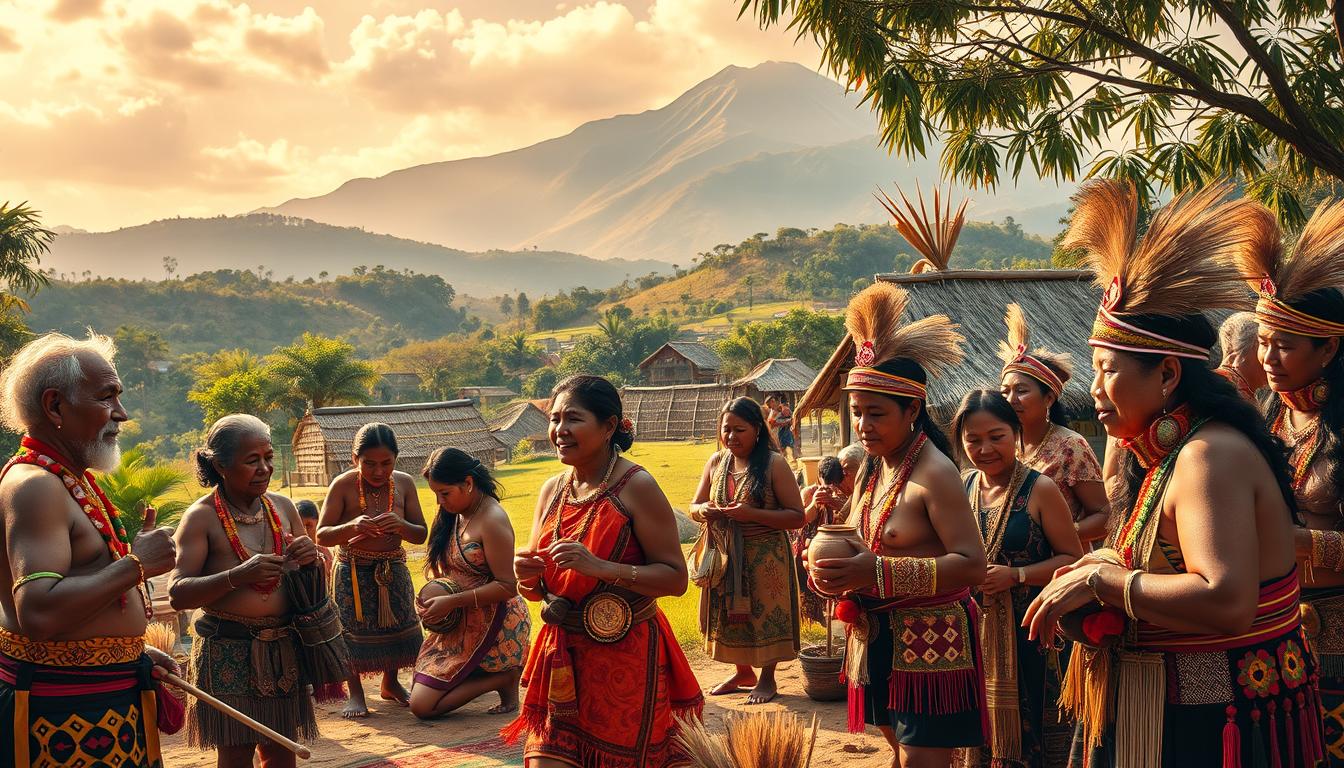
Indigenous cultures protect their stories, ceremonies, and knowledge. They use methods like oral storytelling and farming to keep their traditions alive. For example, the Lakota’s Sun Dance and the Iroquois Three Sisters crops connect them to their ancestors and the land.
Despite poverty and globalization’s pressures, Indigenous groups find ways to adapt. Organizations like Running Strong for American Indian Youth® help with clean water and food projects. This supports their cultural survival. Over 500 U.S. tribes keep their traditions strong, showing resilience against many challenges.
Art, like Lakota beadwork and star quilts, and yearly ceremonies, help keep traditions alive. With 20,447 views on this topic, more people worldwide are interested in honoring Indigenous heritage. These traditions are not just history; they are a living connection to the past and future.
The Importance of Cultural Heritage for Indigenous Communities
Cultural heritage is vital for Indigenous communities. It’s not just tradition; it’s a lifeline. Traditional knowledge systems help shape identities and connect people to their ancestral lands.
In Canada, programs like the Skidegate Haida Immersion Program show the power of preserving tribal heritage. Their app, with 2,000 Haida words, uses modern tools to keep ancient practices alive. These efforts honor Elders, ensuring cultural knowledge is passed down through generations.

The Musqueam Weavers group preserves weaving traditions passed down for millennia. These traditions are not just about art; they’re healing. Language loss erases stories and ecological wisdom.
Over 60% of Indigenous languages in Canada are in British Columbia, but many are at risk. Reviving these languages helps combat trauma from forced assimilation. It also improves mental health in communities like Native American nations.
Global recognition, like Indigenous artists at the Venice Biennale, boosts pride. Traditional Ecological Knowledge (TEK) guides environmental stewardship, helping scientists in climate studies. Protecting heritage ensures future generations inherit wisdom and resilience.
Oral Traditions: Storytelling Across Generations
Stories are the heart of traditional storytelling in Indigenous communities. Elders have passed down creation myths, migration routes, and moral lessons for generations. The Navajo use oral histories to explain the universe, while Aboriginal Australians share Dreamtime tales that connect land and identity. These stories are not just for fun; they guide survival.
“Stories are our textbooks,” say many elders, showing how oral histories teach important skills. The Shoshone and Paiute of Utah recorded winter counts on bison hides, tracking events like harsh winters or battles. Today, these stories face threats: over half of Native languages are endangered, risking the knowledge they carry.
Communities are finding new ways to keep stories alive. Navajo youth film elders’ tales for YouTube, and schools use animated Star Stories for kids. In the Pacific Northwest, Tlingit storytellers use digital apps with cedar-bark art to engage teens. These efforts aim to save indigenous cultural preservation, as 90% of Native languages could disappear by 2100.
Seasonal storytelling traditions are alive and well. Many tribes save storytelling for winter, when families gather indoors. But modern distractions like video games are a challenge. Tribes like the Ute now offer “storytelling tech camps,” letting teens record tales using smartphones. This mix of old and new keeps native cultural practices alive.
Every story saved is a thread in the cultural tapestry. As one Ojibwe elder said, “When we share stories, we stitch our future to the past.”

Rituals and Ceremonies: A Living Connection to Ancestors
Indigenous ceremonies connect 6.5 million Native Americans to their heritage. They range from the Potlatch to the Sundance, each carrying deep knowledge. The Strawberry Ceremony, for example, honors missing Indigenous women, blending old traditions with today’s fights.

Tribal heritage is threatened by land use and climate change. Places like Bear Butte and Standing Rock are key to these ceremonies. Laws like the 1978 American Indian Religious Freedom Act protect these practices.
“To protect and preserve the traditional religions of American Indians…”
Yet, these laws are not always enforced, putting sacred sites at risk.
Burial practices also show the diversity of Native American cultures. Haida mortuary poles and Sioux sky burials reflect their unique views. Even in death, these ceremonies strengthen identity and resist cultural loss.
Despite ongoing challenges, ceremonies evolve. The Strawberry Ceremony, for instance, addresses MMIW, linking ancient traditions with today’s issues. Tribes fight to keep their lands and traditions alive, preserving their very existence.
Arts and Crafts: Expressions of Identity

Indigenous art forms like Navajo textiles and Inuit sculptures tell stories passed down through generations. Each pattern in Navajo weaving shows balance and harmony. Arctic soapstone carvings honor ancient techniques.
These are not just art; they are survival maps. Artists like Jaune Quick-to-See Smith and Kent Monkman mix tradition with modern themes. They tackle issues like missing Indigenous women and colonial histories.
Their work fights stereotypes and keeps indigenous culture alive. Contemporary designers like Bethany Yellowtail use Kente cloth patterns in modern fashion. This makes traditions seen worldwide.
But, challenges remain: non-Native companies often use traditional designs without permission. Groups like the Indigenous Art Code fight for fair recognition. They ensure artists benefit from their heritage.
At Rocky Mountain College of Art + Design, students learn Indigenous Poetics. This teaches respect for cultural origins.
Veronica Johnny, a two-spirit artist, makes drums using her Dene family’s methods. Her music combines smudging ceremonies with protests against violence. It shows art’s power to heal and advocate.
Fritz Scholder’s paintings inspired a generation to reclaim their stories through art. These efforts connect the past to the present and communities to the world.
Education and Knowledge Transmission
Indigenous cultural preservation depends on good cultural transmission methods. This ensures traditional knowledge systems keep growing. Alaska’s Old Minto Cultural Camp is a great example. It mixes hands-on learning with ancient traditions.
Young people from all over the world spend eight days there. They learn about fishing, storytelling, and traditional medicine. These skills become part of their everyday life.
Language is key to these efforts. Schools in New Zealand and Hawaii focus on the Māori language. They show that saving a language strengthens cultural identity.
In Alaska, the AKRSI started in 1995. It brings local ecological knowledge into school lessons. This helps reverse cultural loss caused by policies like Indian Boarding Schools. Elders teach important skills like tracking pike and managing wildfires.
Now, tribal colleges and place-based education courses are popular. The University of Alaska offers these programs. Over 16 Indigenous groups in Alaska use them. Schools see better student engagement and understanding between cultures.
These methods focus on teamwork and caring for the environment. They make sure indigenous cultural preservation is alive, not just something to look at in a museum.
Community Gatherings: The Heart of Cultural Practices
Indigenous community gatherings are more than just social events. They connect the past with the present. Events like powwows and harvest festivals help Native communities share stories, songs, and skills.
In Alaska, the annual Celebration in Juneau is a highlight. Tlingit and Haida peoples dance, sing, and craft. This keeps their traditions alive. Such moments reinforce identity and strengthen bonds across generations.
Food is key in native cultural practices. Pacific Northwest tribes like the Nisqually and Makah smoke salmon using ancient methods. In Oklahoma, the Kiowa Tribe holds feasts where elders teach youth to cook sofkee, a corn-based dish.
These meals are lessons in ecology and history. They teach us to care for land and each other.
“Cooking together teaches us to care for land and each other,” shared a Crow elder during a 2023 community gathering.
Tribal heritage preservation thrives when gatherings prioritize local voices. Surveys show 75% of Indigenous groups prefer events led by their own members. When communities design festivals, participation spikes by 70%, fostering pride and economic gains.
The Pueblo of Zuni’s annual Shalako festival is a great example. It now draws thousands, boosting local arts sales by 30%.
These events also heal. The 1989 return of the Omaha Tribe’s Sacred Pole—a century-old artifact—sparked renewed interest in ceremonies. Today, gatherings like the Inter-Tribal Indian Club’s annual powwow in South Dakota blend tradition with resilience. They prove that cultural practices adapt while staying rooted in heritage.
Adapting to Change: Balancing Tradition and Modernity
Indigenous communities around the world are finding new ways to keep their cultures alive. They use modern indigenous activism and indigenous technology adoption to do this. Digital tools help share traditional stories, like apps that save endangered languages and social media campaigns that spread awareness.
Youth leaders are key in this effort. They use technology to connect the past with the present. For example, Canadian First Nations use VR to document sacred sites, combining technology with ancient knowledge.
This saying is at the heart of movements for climate justice and land rights. In Australia, the Indigenous Ranger Network uses traditional knowledge and climate science to protect nature. This shows how innovation and heritage can go hand in hand.
Today, educators teach youth to create apps that save languages, while elders share their stories online. This approach keeps traditions alive while embracing new ideas. It shows that culture is not fixed but is constantly evolving, shaped by those who carry it forward.
Activism and Advocacy: Protecting Cultural Rights
Modern indigenous activism works hard to protect cultural rights and save traditions at risk. Communities fight for their rights through legal actions and protests. They want their sovereignty recognized. The UN Declaration on the Rights of Indigenous Peoples is a key tool, but there’s more work to do to enforce tribal rights to land and resources.
Movements like Standing Rock and Idle No More show the power of grassroots efforts. They challenge projects that harm sacred sites. Over 5,000 Indigenous groups worldwide face threats from extractive industries and climate policies that ignore their rights.
In 2022, 177 environmental defenders were killed globally, with Indigenous leaders making up 34% of victims. Colombia alone saw 60 deaths, showing the dangers faced by those defending land and forests.
Indigenous cultural preservation depends on self-determination. The International Indigenous Peoples Forum on Climate Change fights for their inclusion in climate policies. Despite protecting 22% of Earth’s land, Indigenous territories are often taken for dams and plantations.
Over 476 million Indigenous people worldwide face barriers in healthcare and education. These barriers threaten their cultural survival.
Modern indigenous activism pushes for cultural rights protection through global alliances. Their knowledge is key to climate efforts, but agreements like the Paris Accord often leave them out. By focusing on Indigenous leadership, cultural heritage and ecosystems get the protection they need.
The Role of Technology in Cultural Preservation
Indigenous communities are using indigenous technology adoption to save their heritage. Tools like the Mukurtu content management system help store oral histories and sacred knowledge safely. Platforms like Instagram and TikTok let youth share traditional dances or language lessons worldwide.
The Aymara people use apps to document their farming practices, which are tied to spiritual beliefs. This ensures their knowledge is passed on to younger generations. These apps help them adapt to easier farming methods.
Modern tools also help fight urgent threats. Over 3,000 languages are at risk of disappearing, but apps like Codex’s language preservation programs offer hope. At Australia’s Indigenous Mapping Workshop, more than 125 participants learned to digitize ancestral lands using Google Earth.
These efforts help protect territorial claims. They also bridge the gap between elders and youth. In Chile’s altiplano, elders teach farming techniques through a mix of traditional and modern methods.
Modern indigenous activism now includes digital advocacy. Social media campaigns fight stereotypes, and the UN’s Digital Heritage Charter provides global support. Despite challenges like outdated storage tech and funding gaps, new solutions like DNA analysis and AI-driven archives are emerging.
By combining old and new, communities like the Aymara and First Nations in Canada prove technology can protect cultural identity. It’s not just a disruptor.