





Cultural views of beauty shape global beauty standards. They show how different societies see attractiveness. For example, ancient China bound women’s feet, while South Korea focuses on skincare routines.
Pakistan has a big market for skin-lightening products. These examples show beauty is a reflection of history, society, and economy.
Today, 70% of women worldwide feel they must meet beauty norms. Yet, 30% of women and 20% of men struggle with body image issues due to media. Even in Sweden, beauty standards are changing.
Sweden now promotes eco-friendly beauty, unlike the Victorian-era corsets worn by 90% of women. India values fair skin and hairless bodies, unlike the U.S.’s tanned look.
Chile now celebrates strength over thinness, showing a shift in global beauty views. With 50% of people recognizing cultural beauty differences, this article looks at how these standards affect our self-perception.
Introduction to Cultural Interpretations of Beauty
Beauty standards change around the world, influenced by culture and society. What one culture finds beautiful might shock another. These differences come from traditions, beliefs, and roles like marriage or status.
Beauty has always been linked to morality. Ancient Greeks saw “beautiful” actions as good. St. Augustine believed a virtuous person sees beauty beyond looks. Renaissance portraits showed beauty as a sign of virtue and wealth, showing what society expected.
“A strong person would see beauty in others no matter their looks.” — St. Augustine
Women have long faced beauty pressure. In the 1800s, Annie Starr said skincare was a woman’s duty, making beauty a responsibility. Yet, beauty is seen differently across cultures: scarification marks pride in Africa, while French culture values natural makeup. Asian societies often prefer lighter skin, unlike Western tanning trends.
These norms affect how we see ourselves and our place in the world. Naomi Wolf’s The Beauty Myth shows how beauty standards can limit freedom. Today, men also face beauty pressure, mirroring past beauty demands on women.
Seeing beauty as learned, not innate, opens up new perspectives. This understanding prepares us to explore how history has shaped today’s beauty ideals.
Historical Perspectives on Beauty
Humanity’s historical beauty ideals have changed a lot over time. The Venus of Willendorf, from 25,000 years ago, celebrated fertility with big curves. It showed how ancient beauty was linked to health and survival.
In Egypt (1550 BCE), women used kohl eyeliner for beauty and protection. Greek statues like Aphrodite also celebrated rounded figures, seeing them as signs of wealth. These early examples show how ancient beauty standards were connected to survival, religion, and social status.

The Renaissance (1400s) made pale skin fashionable, achieved through hairline plucking and avoiding sunlight. By the Victorian era (1800s), modesty was key. The 1920s brought bold flapper styles. Each era’s beauty trends reflected big changes in society.
Today, we see a wide range of beauty norms, showing that ideals are always changing. From Cleopatra’s kohl to 1990s supermodels, beauty has always been in flux. This reminds us that beauty’s rules are always evolving.
The Role of Media in Shaping Beauty Norms
Traditional media like magazines and TV have long pushed narrow beauty representation. They often focus on Western beauty standards. Ads and movies usually feature models with similar body types, setting limited ideals.
But social media platforms like Instagram have made this influence even stronger. Over 90% of 18–29-year-olds use these platforms every day. They see filtered images and unrealistic social media beauty standards all the time.
Studies show that using these platforms a lot can lead to eating disorders. 16% of participants said they overeat, and 20% admitted to purging behaviors. It’s clear that too much screen time can hurt how we feel about our bodies.
Algorithms on these platforms push trends like the “Instagram face,” encouraging users to change how they look. But movements like #BoPo are fighting back, promoting body positivity. Seeing unedited posts can even boost self-esteem.
Dermatologists are now using platforms to share skincare tips, balancing trends with health advice. During the pandemic, there was a 13% increase in eyelid surgeries, showing the media’s impact on beauty standards. While media has both positive and negative effects, the journey to fair representation is far from over.
Beauty in Asia: Diverse Perspectives
Asian beauty standards mix old traditions with new trends. In East Asia, pale skin is very important, seen as a sign of nobility. Today, brands like SK-II and Laneige focus on glow. Double eyelid surgery is common in South Korea and China.
Over 33% of Chinese women have had cosmetic surgery. They aim for the S-line body shape. This shows how beauty ideals have changed over time.

In South Asia, beauty is complex. Once, “fair” and “beautiful” meant the same thing. Indian ads used to show lighter skin as more attractive.
Now, brands like Glow and Lovely (formerly Fair and Lovely) are more inclusive. Yet, traditional skincare with turmeric is also popular. It shows a mix of old and new.
Historical figures like Parvati showed beauty as curvy. But today, slimness is more popular. This shows how beauty ideals have changed.
In China, young women feel a lot of pressure. 72% of women are unhappy with their looks, says Guangming Online. Social media makes beauty standards worse, with 58% of students linking beauty to old values.
But, there’s a growing movement for body positivity. Though, 50% of people say there’s more work to do. As the world gets smaller, Asian beauty standards are changing. They celebrate diversity but also face Eurocentric influences.
From Japan’s “kawaii” charm to Korea’s skincare, beauty in Asia is always evolving. It’s a mix of old and new, timeless and changing.
The Influence of African Cultures on Beauty
African beauty standards celebrate diversity rooted in centuries of tradition. Traditional practices like shea butter and African Black Soap are now global skincare staples. These natural ingredients, once used by queens and village elders, now inspire international brands.
Body adornment such as scarification and lip plates tell stories of identity and heritage. Each marking or adornment holds cultural meaning. For example, Mursi women’s lip plates symbolize strength, while Maasai beadwork represents social status.
Modern trends honor these traditions. In Nigeria, 96% of women aged 18-25 prioritize skincare routines, blending ancient techniques with contemporary methods. Body modification practices like scarification ensure no two markings are alike, celebrating individuality.
Studies like Arden Haselmann’s 2014 research in Senegal show how African beauty standards value both inner and outer qualities. The Shona term kunaka reflects this balance, linking beauty to character as much as appearance.
Historically, African beauty has been functional and communal. Ancient Egyptians used kohl for protection and elegance, a practice over 5,000 years old. Today, 16 million African women contribute to global shea butter production, proving traditional methods thrive.
As brands like SheaMoisture highlight, these practices are now a bridge between heritage and modernity. The Annang culture’s ntuen-akpo reminds us beauty without virtue holds little value—a lesson resonating globally as natural hair and body-positive movements gain traction.
Western Beauty Ideals: A Closer Look
In Europe, beauty is often about sharp facial features like high cheekbones and bold eyes. Scandinavian cultures love natural looks, while the Mediterranean celebrates expressive features. These European beauty ideals have influenced global trends, from skincare to surgeries like the Brazilian Butt Lift (BBL), which is popular in the U.S. American beauty norms have changed a lot. In the 1990s, Miss America contestants were often much thinner than average (Wiseman et al., 1992). Now, movements like body positivity promote diversity. Yet, 90% of women worldwide want to change how they look (Etcoff et al., 2005).

Today’s Western beauty standards face many challenges. The “natural beauty” ideal often requires makeup, filters, or surgery. Despite growing inclusivity, many women feel insecure, with 67% feeling bad when seeing “very thin” models (Garner, 1997). Young girls as young as six already feel unhappy with their bodies (Smolak & Levine, 1994. ). Brands like Fenty Beauty are showing diverse beauty, but there’s more work to do. We need to redefine what “ideal” beauty really means.
The Intersection of Race and Beauty
Colorism in beauty has shaped our views for centuries. A study in Northern Manhattan found 60% of women believed straight hair is seen as beautiful. Also, 50% thought lighter skin makes someone look younger. These beliefs show how racial beauty standards push people to change their looks.
Historically, Black beauticians in the South broke barriers. By 1920, Georgia had 898 Black beauticians, more than white ones. These places were also centers for civil rights, with beauticians helping with voter registration. But, beauty pageants like Miss America didn’t accept women of color until 1970, showing the strong hold of racial beauty standards.
Today, movements like “Black is Beautiful” and body positivity fight these norms. Hampton University banned dreadlocks in 2012, showing the ongoing battle against strict beauty standards. Brands like Fenty Beauty and Dove are also promoting diversity. As we become more aware, we’re embracing our natural looks and rejecting colorism in beauty.
Celebrating our ethnic beauty features, like monolid eyes and bold curls, is a way to resist and take control. It shows the power of beauty to change how we see ourselves and others.
Psychological Effects of Beauty Standards
Every day, countless people face beauty pressure that shapes how they view themselves. For many women, comments like “I hate my arms” or “My body isn’t enough” reveal deep-rooted insecurities. These struggles aren’t isolated—they’re part of a global pattern.
In the U.S., 70% of women report feeling pressured to meet unrealistic beauty ideals. This often leads to anxiety or depression. Social media amplifies this cycle: 80% of young women admit comparing themselves to others online. This has led to 30% developing depressive symptoms.

Cultural norms play a huge role. In collectivist societies, body image across cultures pressures might focus on community acceptance. Individualist cultures emphasize personal appearance. Yet both can trigger mental health struggles.
For example, 40% of girls as young as 6 years old worry about their weight. Also, 70% of LGBTQ+ individuals face extra stress from societal beauty expectations. This worsens anxiety or isolation.
Research shows solutions exist. Body neutrality movements encourage self-acceptance. Cultural pride in traditional practices—like African scarification or Indigenous adornments—can boost confidence.
Mental health experts stress that reducing harm requires education and visibility. When teens cut social media use by half, their self-esteem improves. This proves small changes matter. Let’s redefine beauty to celebrate diversity, not just perfection.
Globalization and Its Impact on Beauty
Beauty globalization has changed how we see beauty around the world. Brands like Colgate-Palmolive and Pond’s went global by the mid-20th century. They brought Western beauty to Asia, Europe, and more. By 1948, 90% of American women wore lipstick, showing beauty trends spread fast.
Today, beauty trends mix old traditions with new ideas. This creates a unique blend of both.
But global beauty trends aren’t just one way. Cultural beauty exchange has made Korean skincare and ayurvedic treatments popular worldwide. Yet, this has its downsides.
In India, modern beauty standards are making women feel pressured to look like Westerners. This has led to more body image and mental health issues.
Beauty globalization connects us, but it also risks losing local traditions. The cultural beauty exchange thrives online, where influencers share different beauty looks. From bold African patterns to minimalist Japanese makeup, beauty is diverse.
Brands now aim to be both global and rooted in local culture. As trends change, celebrating our differences keeps beauty vibrant and diverse.
Future Trends in Beauty Standards
Future beauty trends mix beauty technology with inclusivity. AI skincare apps and lab-grown ingredients, like Estée Lauder’s Re-Nutriv Ultimate Diamond Cream, are changing routines. These innovations let people focus on their goals, not what society expects.
The inclusive beauty movement is growing. Brands now show models of all ages and sizes. This reflects 69% of consumers wanting products that are sustainable and ethical. Trends like neurocosmetics and products made by therapists also show beauty caring for mental health.
“The future of beauty isn’t about perfection—it’s about empowerment.” — The Review of Beauty Editor
Non-invasive treatments like lip lasers and at-home kits are getting popular. Markets are expected to triple by 2030. The future beauty trends also highlight longevity and Gen-Z’s love for custom scents. Even removing fillers shows a move away from chasing trends.
The beauty tech market is set to hit $9 billion by 2026. Brands must be true to themselves while innovating. Today, people want honesty, from eco-friendly packaging to real claims. Beauty is now about who gets to decide what’s beautiful.
Conclusion: The Beauty of Diversity
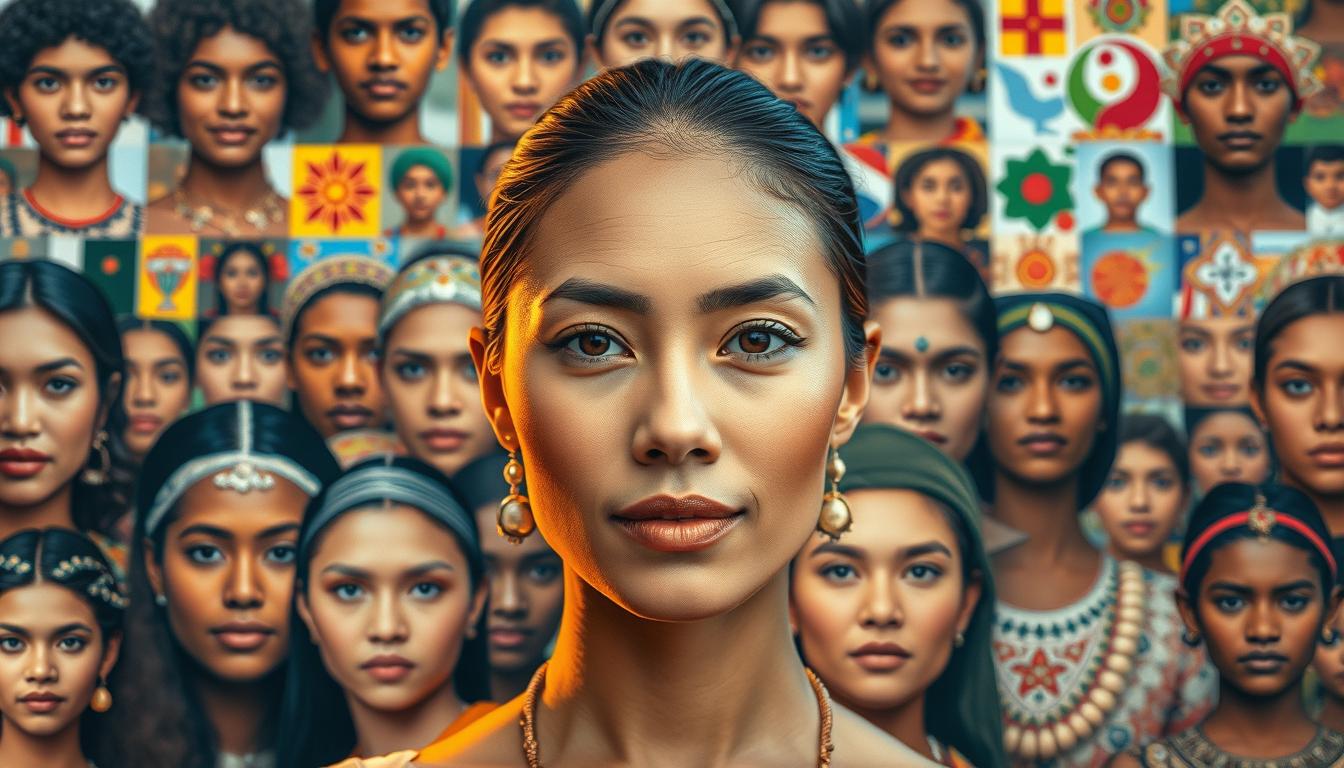
Beauty diversity is more than just trends. It’s a celebration of different cultures and traditions. Each one, from henna patterns to indigenous textiles, tells a story of strength and identity.
When we honor these roots, creativity blooms. Diverse teams come up with new ideas 35% faster. And global creativity jumps by 70% thanks to cultural exchange. Your beauty standards can be unique, blending old traditions with new styles.
Learning about cultural beauty heritage helps us connect. Today, 80% of millennials want brands that support diversity. By sharing our traditions through fashion or art, we build bridges.
Attending festivals or trying new recipes from other cultures also helps. These actions turn beauty into a way to connect with others. Studies show that when we see different perspectives, we grow more empathetic, bringing us together.
True beauty is about embracing what makes us different. Let’s see beauty as a mix of cultural pride, not just a list. The next generation should see their heritage celebrated, not hidden.
By choosing to accept ourselves and others’ traditions, we create a world where all standards coexist. Beauty is a journey, not a destination. Let’s celebrate our stories and wear them proudly.