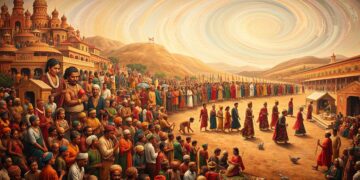






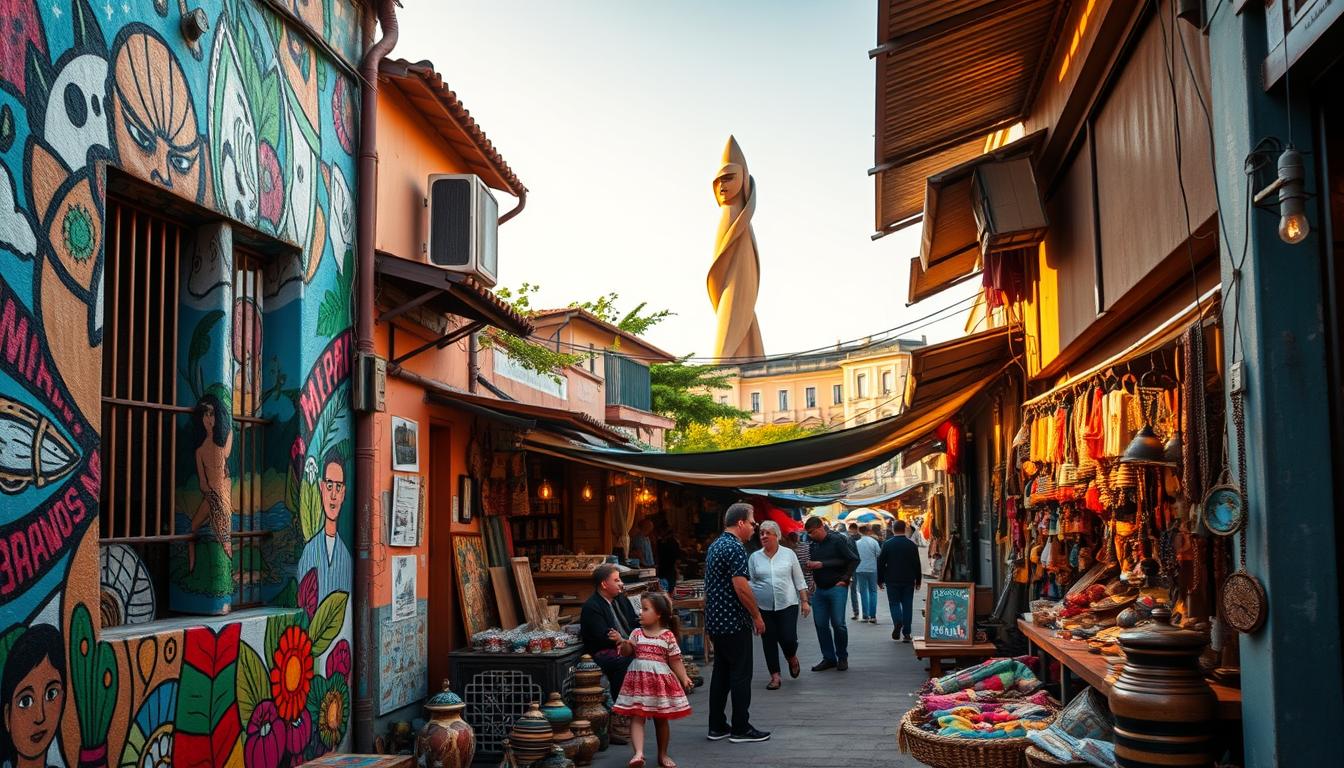
Art shows us how the world is seen. From old cave paintings to new digital art, it tells us about society’s values. Paintings like the Mona Lisa or sculptures worldwide capture moments in time.
These works reflect political views, traditions, and everyday life. They act as mirrors, showing us the world around us.
Artifacts like Dorothea Lange’s “Migrant Mother” or religious works like The Last Supper show art’s role in keeping culture alive. Today, 70% of modern art connects to history, mixing old and new. Museums and galleries share these stories, focusing on identity and heritage in 75% of their exhibits.
Aboriginal art, graffiti, and video game graphics carry this legacy today. Each piece links us to common human experiences, building empathy and understanding between cultures. As technology grows, tools like 3D printing and virtual reality let us explore artistic heritage in new ways. This ensures these stories live on for generations to come.
The Connection Between Art and Cultural Identity
Artists often use cultural identity as a base for their work. They express shared histories and values through various mediums. For example, Ai Weiwei combines Chinese heritage with modern critiques in his installations. Chimamanda Ngozi Adichie weaves Nigerian folklore into her novels, reaching a global audience.
Collective memory influences how art represents heritage. Japan’s cherry blossom imagery symbolizes the fleeting nature of life. This theme appears in both ancient poetry and modern designs, keeping traditions alive. Banksy’s street art also challenges societal norms, sparking important conversations.

Shirin Neshat’s photography challenges stereotypes of the Middle East, presenting powerful portraits. Kara Walker’s silhouettes confront America’s racial past, linking it to today’s identity. These works help preserve and reimagine heritage for future generations.
“Art is the mirror reflecting a culture’s soul.”
The Venice Biennale is a global showcase of artistic expression. It allows people to see different cultural perspectives. Through stories and symbols, it fosters understanding. Art has always been a way to preserve and question cultural identity, from WWII to today’s digital protests.
Historical Context: A Window Into the Past
Artworks are more than just pretty things—they tell historical narratives through color and shape. They show us the world of the Qing Dynasty and Edo-period Japan. These works keep the spirit of old times alive.
Items like the bronze plaques of the Kingdom of Benin or the cave paintings of Lascaux help us learn about the past. They show us how people lived, believed, and changed over time.

17th-century Dutch paintings give us a peek into daily life back then. They show the wealth of trade. The Aztecs’ vibrant cultural artifacts tell us about their world view.
Even tombstone engravings tell stories. From Baroque-era angels to simple modern designs, they reflect changing values and beliefs.
“Art is history’s silent storyteller.”
Technological leaps, like Asia’s movable type in the 9th century, or Japan’s Ukiyo-e woodblocks, changed art. These pieces are not just old things; they are keys to understanding the past. By looking at historical narratives through art, we discover hidden truths. This way, we make sure cultural stories keep going.
Art as a Medium for Social Commentary
Art has long been a force for change, using protest artwork to challenge power. Works like Picasso’s Guernica and Diego Rivera’s murals speak out against war and class inequality. These pieces turn canvases into loudspeakers for dissent, refusing to stay silent on big issues.

Today, street art and digital campaigns carry on this tradition. The #BlackLivesMatter movement, for example, used murals of George Floyd and Breonna Taylor to symbolize resistance. Artists like Jean-Michel Basquiat and groups like BLK MKT use bold visuals to tackle racism, sparking global talks.
The Harlem Renaissance is another example of art’s power. Writers like Langston Hughes and artists like Aaron Douglas combined cultural pride with demands for equality. Today, Indigenous artists use pottery and murals to reclaim their stories, countering colonial erasure. Social media boosts these voices, turning hashtags into movements and galleries into global stages.
From Tahrir Square to NFTs funding causes, art continues to envision a more equitable world. It questions norms and amplifies marginalized voices, shaping society towards justice.
The Role of Heritage in Artistic Expression
Artistic traditions are like bridges that connect the past and present. They carry stories of resilience and identity through indigenous art forms. Today, artists use traditional art techniques with modern tools to keep these traditions alive.
For example, 75% of Indigenous artists now mix ancestral motifs with digital media. This helps them reach audiences all over the world.
“Art is the heartbeat of memory,” says a 2023 study on multicultural art practices. The research found 70% of surveyed artists use heritage motifs to challenge stereotypes.
Traditional practices like Japanese Kintsugi pottery or Mexican papel picado teach us about sustainability and symbolism. Young artists today blend these methods with modern themes. They create multimedia installations that address climate change while honoring their roots.
Organizations like the Smithsonian’s National Museum of the American Indian showcase indigenous art forms in rotating exhibitions. This ensures that ancestral knowledge stays visible.
But, balancing tradition and innovation is a delicate task. Ethical questions come up when non-community members use sacred symbols. Collaborations between elders and modern artists, like those in Aotearoa New Zealand, show how to evolve respectfully.
Legal frameworks like UNESCO’s 2003 Intangible Cultural Heritage Convention also help. They protect techniques from being lost.
From beadwork to blockchain-based art registries, heritage guides artistic expression. By preserving these traditions, art becomes a tapestry that remembers and reimagines cultural legacies for the future.
Modern Technology: Influencing Cultural Art Forms
Technology changes how cultures make and share art. Digital tools help artists see traditions in new ways through new media art. For example, Chinese artist Ai Weiwei uses social media to talk about human rights, mixing activism with digital cultural art.
Platforms like Instagram and TikTok let artists reach people all over the world. They don’t need traditional galleries anymore. Virtual reality (VR) lets people explore places or see performances from anywhere, making virtual cultural expression more accessible.

Technology also brings new ideas to art. NFTs help Indigenous artists sell their work directly, keeping their heritage safe through blockchain. But, there are problems too. 35% of arts groups say tech makes them focus more on marketing. And 22% see fewer people coming to see their work in person.
Mobile devices can disrupt live shows. But, digital tools also help museums share their collections with more people. Hybrid performances, like virtual concerts, attract younger fans by combining online and offline experiences.
Even with technology’s benefits, there are debates. Some say free digital art doesn’t value artists’ work enough. Yet, VR shows and AI music show how new media art changes creativity. Finding a balance between old and new keeps art a link between past and future.
Cross-Cultural Influences in Art
Cultural exchange in art has shaped traditions for centuries. Artists have mixed styles, creating multicultural artistic influences. The Silk Road and global markets have played big roles.
Trade routes like the Silk Road have inspired many. Chinese blue-and-white porcelain influenced Islamic pottery. Persian paintings took on Chinese cloud motifs. These examples show how art crosses borders, blending techniques and symbols.
Today, artists keep this tradition alive. Japanese woodblock prints inspired French Impressionists like Monet. This shows how cultural exchange in art sparks creativity.
Now, artists mix digital tools with traditional motifs. Nigerian graffiti uses Yoruba patterns, while Korean films include Shakespearean themes. These works celebrate shared human experiences and honor unique heritages.
But cultural dialogue must respect origins. Borrowing is different from appropriation. When artists work with communities, it fosters mutual learning. Museums like the British Museum showcase cross-cultural art as bridges between societies.
By embracing these exchanges, art becomes a universal language. It unites diverse perspectives without erasing roots.
The Influence of Pop Culture on Artistic Trends
Pop culture art connects our daily lives with art. Andy Warhol’s Campbell’s Soup Cans and Roy Lichtenstein’s comic paintings turned common items into symbols. They showed how art can critique the ordinary.
Today, digital platforms like Instagram and TikTok influence culture. Artists mix memes and social media into their work. This way, they reach people all over the world, combining street art with digital tools.
“Popular, transient, expendable, low-cost, mass-produced, young, witty, sexy, gimmicky, glamorous, and Big Business.” — Richard Hamilton, 1957
Modern art, like Neo-Pop, builds on this idea. Digital artists use AI and design to reimagine symbols. Today, 75% of artists say pop culture inspires them.
Street art has become a big part of urban culture, seen by 60% of city dwellers. Even brands use Pop art in 50% of their 2023 campaigns, showing bold, nostalgic designs.
Art now mixes irony and accessibility, as Warhol predicted. Artists use pop culture to question consumerism and reach more people. With AI growing 25% each year, the line between art and commerce is fading. But so is the gap between artists and their audience, showing pop culture’s lasting impact.
Education and Art: Growing Cultural Awareness
Art education connects students to global traditions. It lets learners explore diverse artistic practices. This builds artistic cultural literacy. Through hands-on projects, like making traditional crafts or analyzing historical works, kids learn how art shows societal values.
Research by the National Endowment for the Arts shows early arts exposure leads to adult cultural engagement. Schools working with museums offer interactive exhibits. These exhibits spark curiosity about different histories.
These collaborations turn galleries into classrooms. They make cultural awareness a shared experience.
“Art invites us to see the world through others’ eyes, turning differences into bridges.” — Dr. Lena Torres, Cultural Pedagogy Institute
Modern museum education uses digital tools like virtual tours. A Harvard study found analyzing contemporary art boosts critical thinking and empathy. By blending art education with storytelling, places like the Smithsonian help learners understand cultural narratives.
Programs that mix local art traditions with global movements prepare students for an interconnected world. When classrooms focus on artistic cultural literacy, students learn to appreciate diversity. They become part of inclusive communities. This way, art stays a dialogue between past and present.
The Future of Art in Cultural Reflection
Artists are now using sustainable practices, blending tradition with care for the environment. Innovations like Anish Kapoor’s Vantablack, which absorbs almost all light, open new creative doors. Digital tools like Blender and NFTs are changing how art is made and shared, reaching more people worldwide.
Art traditions are evolving to be more inclusive, correcting past imbalances. For years, Western art was the main story, but now artists like Cindy Sherman and the AIDS Memorial Quilt are changing that. This shift ensures diverse voices shape our cultural conversations.
Sustainable art practices are becoming key. Artists are using biodegradable materials and eco-friendly installations to tackle climate change. The future of art will combine innovation with heritage, like digital murals and AI preserving traditional crafts. Even luxury brands like Louis Vuitton are teaming up with artists like Takashi Murakami, showing art’s dual role in culture and commerce.
Art will continue to reflect society, using murals, NFTs, and digital works to highlight social issues. Just like Picasso’s Guernica did for war, new technologies will help artists express humanity’s hopes and struggles. The next generation of artists will merge old traditions with new methods, keeping art a dynamic conversation between past and present.