







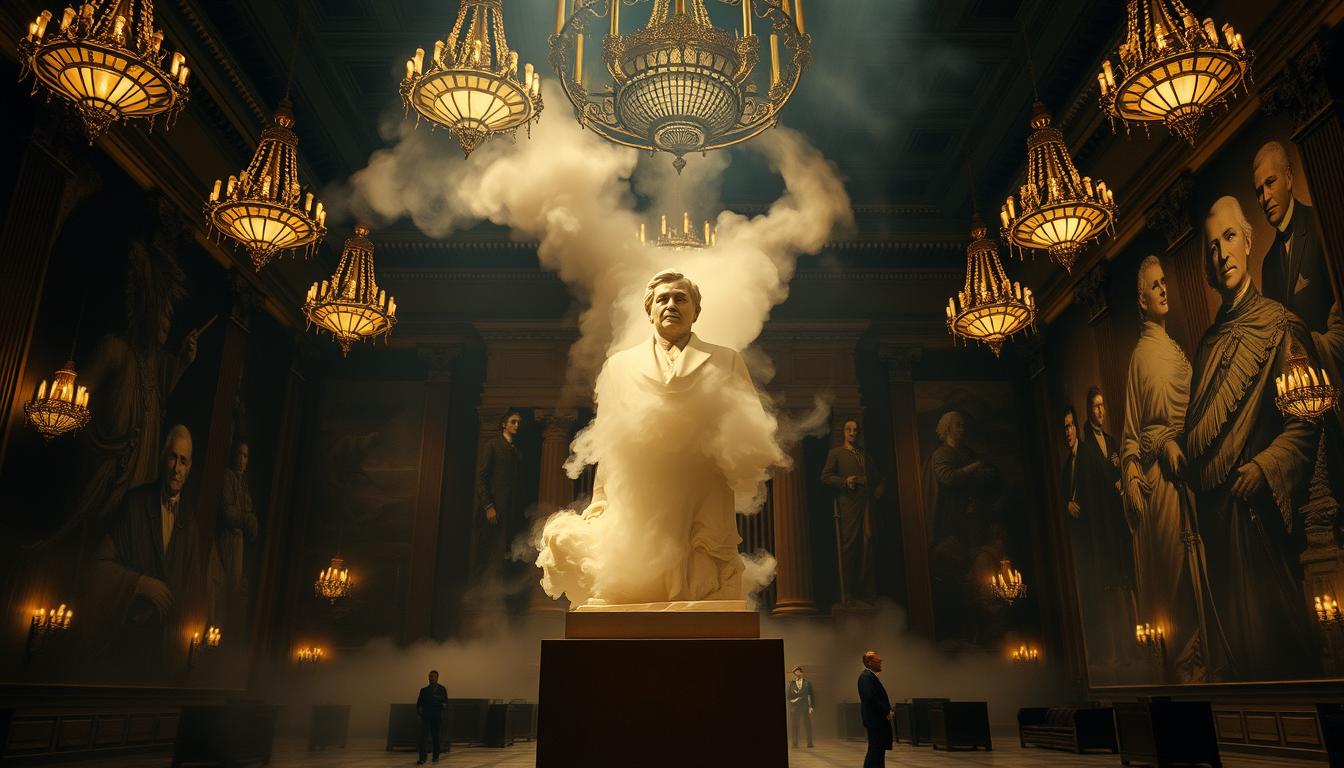
History is full of leaders who faced big setbacks but came back stronger. Richard Nixon lost the 1960 election and a gubernatorial race. Yet, he won the presidency in 1968. These stories show that failure can lead to amazing comebacks.
Napoleon was exiled to Elba but escaped in just 10 months to regain power. Winston Churchill faced many political lows before leading during WWII. These examples show that setbacks are chances to start anew.
Winston Churchill: From Political Failure to Prime Minister
Winston Churchill’s career hit rock bottom after the 1915 Gallipoli disaster. He was blamed for the campaign’s failure. He resigned as First Lord of the Admiralty and stepped away from politics.
For two decades, Churchill was in the Wilderness Years. Critics saw him as outdated. Yet, those years strengthened his determination.

In the 1930s, Churchill warned about Nazi Germany but was ignored. His isolation grew until 1940, when Britain faced collapse after Hitler’s invasion of Poland. At 65, Churchill became Prime Minister, a moment of failure turned to success.
Churchill’s leadership during World War II turned despair into defiance. His famous speeches, like “We shall fight on the beaches,” rallied the nation. Despite past failures, his wartime decisions strengthened alliances and inspired resistance.
Churchill’s journey is a story of redemption. From exile to hero, he showed that setbacks can lead to greatness. His story proves that perseverance can turn adversity into triumph.
Oprah Winfrey: From Poverty to Television Icon
Oprah Winfrey’s oprah rags to riches story started in rural Mississippi. Poverty and childhood trauma were big parts of her early life. After being fired as a news anchorin Baltimore, she made a comeback. She turned that fired news anchor success storyinto a hit talk TV show.
Her honesty and openness won over many viewers. This television industry comeback made her a household name.
“The more you praise and celebrate your life, the more there is in life to celebrate.”

She used her tough start to her advantage. Her talk show was a huge hit, with 6.6 million viewers every week. It made $125 million in its first year.
Her success didn’t stop there. She started magazines, made movies, and even had her own network, OWN. It took three years to launch but was a huge success.
Today, Oprah is worth $2.8 billion. Her empire includes many television industry comeback achievements. Even after her show ended, her brand remains strong. It shows that with hard work, you can turn setbacks into success.
J.K. Rowling: From Homelessness to Literary Success
J.K. Rowling’s journey from welfare to becoming the world’s top author is amazing. After Harry Potter and the Philosopher’s Stone was rejected by twelve publishers, Bloomsbury said yes. This led to a huge success. A single mother author success story, Rowling wrote while raising her daughter in Edinburgh, surviving on government aid. Her manuscript rejections success shows how hard work can turn failure into victory.

At first, she made only $4,200 from the first print run. But the series sold 500 million copies worldwide. Today, her net worth is over $1.1 billion. Despite many challenges, Rowling’s publishing industry comebacks legacy lives on. She gave over $160 million to charity, helping vulnerable children through her Lumos Foundation.
Rock bottom became the perfect springboard for every kind of growth.
From homelessness to shaping pop culture, Rowling’s story is inspiring. Her journey from poverty to wealth shows that creativity and determination can change lives. The Rowling poverty to success story is a guiding light for aspiring writers everywhere.
Thomas Edison: Resilience of an Inventor
Thomas Edison faced thousands of Edison failed experiments before he got the light bulb invention persistence right. His story shows how famous inventor failures can lead to new ideas. When working on the first practical light bulb, he tried over 10,000 times.
Each test brought him closer to success. He said, “I have not failed,” “I’ve just found 10,000 ways that won’t work.”
Genius is 1% inspiration and 99% perspiration.

Edison’s scientific persistence stories show a pattern of innovation through trial and error. He was once called “too stupid to learn” by teachers. He lost jobs and faced skeptics who doubted his ideas.
But these setbacks helped him grow. He invented the phonograph and improved telegraph systems. He showed that failure can teach us, not hold us back.
His legacy teaches us to keep going, even when it’s hard. Edison believed in using each failure as a chance to learn. Today, his story encourages us to see progress in every attempt.
Nelson Mandela: From Prisoner to President
Nelson Mandela’s journey from Mandela political imprisonment to leading South Africa’s government changed the nation. He was locked up for 27 years as an apartheid resistance leader. He faced tough times on Robben Island before becoming president in 1994.
His release brought hope for change. His election was South Africa’s first democratic vote.
As president, he focused on South African reconciliation. He wanted unity, not revenge. During the 1995 Rugby World Cup, he wore the Springbok jersey.
This jersey was once hated by Black South Africans. But Mandela used it to celebrate the team’s victory. It showed his dream of a shared future, using sport for peaceful transition leadership.
“In the ring, rank, age, color, and wealth are irrelevant,” Mandela wrote, reflecting his belief in equality. His government set up the Truth and Reconciliation Commission. It balanced justice with healing.
Mandela’s leadership turned bitterness into progress. His story shows that even deep divides can be bridged with courage and empathy. He left a legacy of hope for future generations.
Steve Jobs: Fall and Rise in Tech
In 1985, the Apple founder fired from his own company faced a public setback few expected. Yet this moment marked the start of an unconventional journey that reshaped technology history. After leaving Apple, Jobs launched the Jobs NeXT company, focusing on high-end workstations, while acquiring Pixar, an animation studio later known for hits like Toy Story. These ventures laid groundwork for unexpected successes.
The Pixar investment success turned a small studio into a Hollywood powerhouse, generating over $1 billion in revenue by 1995. At the same time, NeXT’s operating system became critical when Apple acquired the company in 1997, bringing Jobs back as interim CEO. His return ignited a tech industry comeback, transforming Apple from near-bankruptcy to a global icon.
Jobs’ focus on product innovation comeback led to groundbreaking releases: the iMac redefined consumer electronics, and the iPhone later revolutionized smartphones. By 2011, Apple’s market value hit $350 billion, up from $3 billion at his return. His mantra—“innovation distinguishes between a leader and a follower”—became the blueprint for turning failure into legacy.
Maya Angelou: Overcoming Trauma to Inspire
Maya Angelou’s journey from childhood trauma to becoming a literary icon shows the power of resilience. After years of silence following sexual abuse, she found strength in books. She turned her pain into poetic prose.
Her literary voice after silence emerged through works like *I Know Why the Caged Bird Sings*. This book exposed societal struggles while celebrating Black identity. It became a landmark in autobiographical storytelling, blending personal truth with collective history.
Angelou’s influence in the civil rights movement grew alongside leaders like Martin Luther King Jr. She merged activism with art. Poetry overcoming adversity became her signature—each verse a testament to survival.
Her later works, such as *Gather Together In My Name*, expanded her narrative. They showed how trauma fuels transformation. Speaking six languages and editing a Cairo-based magazine highlighted her global perspective, shaping a voice that transcended borders.
“You may encounter many defeats, but you must not be defeated.”
Angelou’s legacy reminds us that even profound struggles can birth creativity and advocacy. Her story endures as a blueprint for turning hardship into hope. It proves that recovery is not just survival—it’s a revolution of the spirit.
Abraham Lincoln: Persistence in Leadership
Before becoming president, Abraham Lincoln faced many challenges. He lost Lincoln electoral defeats in 26 campaigns, including Senate races. His early life was marked by bankruptcy after his general store failed.
He also battled depression, which tested his will. Yet, these struggles made him more empathetic and determined.
As president, Lincoln’s Civil War leadership was all about listening. He received countless letters and often replied personally. His presidential perseverance was evident during the war’s toughest times.
Despite criticism and setbacks, he kept the nation united. His Emancipation Proclamation and Gettysburg Address showed his moral strength. These were born from years of overcoming adversity.
Lincoln’s story shows that failure doesn’t define you. He turned personal pain into compassionate leadership. History honors him for leading a broken nation towards freedom, not for his defeats.
Michael Jordan: The Comeback of a Basketball Legend
Imagine being cut from your high school team. That’s what happened to Michael Jordan in 1979. His early cut from high school team didn’t stop him. Instead, it fueled a relentless drive that turned him into the NBA greatest player of all time. Jordan’s sports failure to success journey isn’t just about talent—it’s a athletic comeback story for the ages.
After retiring in 1993, Jordan briefly tried baseball, then returned to the Bulls in 1995 with a fax that said simply, “I’m back.” Critics doubted his skills after a year away, but he silenced them by leading the Bulls championship dynasty to three more titles. Even after two more retirements and comebacks, Jordan’s competitive fire never dimmed. His 55-point game in 1995 and six total NBA championships proved resilience matters as much as raw ability.
Jordan’s story mirrors those of Churchill, Mandela, and others who turned setbacks into triumphs. His quote, “I’ve failed over and over again in my life. And that is why I succeed,” sums it up. From a rejected teen to a global icon, Jordan’s legacy shows that setbacks aren’t endpoints—they’re stepping stones. His rise from the bench to the pinnacle of basketball isn’t just history—it’s a blueprint for anyone facing their own “cut.”