






Easter egg hunts, sunrise services, and family dinners are more than just activities. They are cultural traditions that make ordinary moments special. These rituals, like painting eggs and sharing stories, give us a sense of belonging and shared values.
Rituals have been a part of human life for over 70,000 years. They range from ancient python carvings in Botswana’s caves to today’s holiday customs. But why do they last? They provide a sense of stability in our fast-paced world, connecting us across generations.
This article looks at how rituals, from sports routines to spiritual ceremonies, impact our emotions, communities, and identity.
Understanding Rituals and Their Functions
Rituals are more than just actions. They are deeply rooted in cultural practices. For example, the Maasai have four male initiations. The Navajo have a kinaalda puberty rite. These rituals mark important life changes and strengthen group bonds.
The Maasai’s eunoto ceremony marks a boy’s transition to adulthood. It’s celebrated with the whole community. The Navajo’s trials of isolation show how ceremony purpose can differ between cultures.
Anthropologist Bradd Shore studied rituals in Southern U.S. families. He found they bring stability and comfort during change. Even small rituals, like morning tea, can be comforting.
Military units and urban gangs use rituals to bond. This shows rituals’ universal role in building unity.
Rituals have evolved with modern life. Virtual gatherings help families stay connected. Whether it’s a backyard barbecue or the Changing of the Guard, these acts link us to our past. Simple, heartfelt gestures often mean more than grand events.
The Historical Significance of Rituals
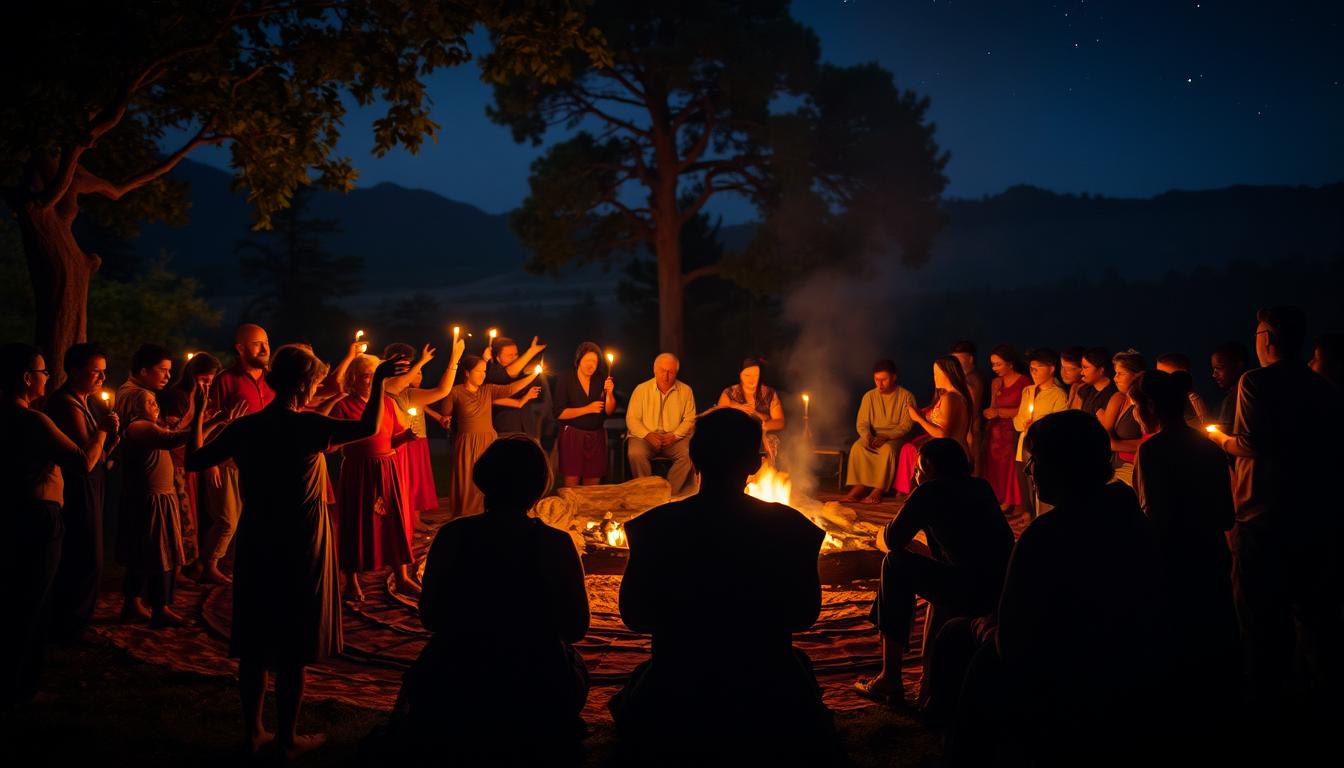
From early human gatherings around fires to today’s holiday traditions, the history of cultural rituals shows how they shape our identity. Archaeologists find evidence of ancient ceremonies like burial rites and watching the stars. These rituals were key to early communities, carrying survival knowledge, social rules, and spiritual beliefs.
Take Thanksgiving, for example. It started as a harvest celebration, blending Indigenous and European traditions. Now, it’s a time for family dinners and Black Friday shopping. This change shows how traditional practices evolve but keep their core: connecting and continuing.
Even modern rituals, like Starbucks’ Pumpkin Spice Latte launch, connect to old harvest festivals. They show how we keep traditions alive by linking them to our current lives.

“Rituals are bridges between past and present, allowing us to carry forward stories that define who we are.”
Rituals like the Ice Bucket Challenge mix storytelling with today’s needs, raising $115 million for ALS research. This shows rituals have always helped solve problems and bring people together. From ancient cave paintings to TikTok challenges, their main goal is to make the unknown familiar and manageable.
The Psychological Benefits of Rituals
Rituals are more than just cultural practices. They are tools for our mental well-being. The psychological effects of rituals can bring stability, reduce anxiety, and strengthen emotional bonds. For example, routines like Beyoncé’s pre-show meditation help ease stress before big moments.
“Traditions are important to our mental health because they provide a sense of stability and help us connect with our roots.”
Studies from Harvard and the University of Minnesota show rituals can make simple acts more enjoyable. Like eating chocolate. When people follow a ritual, they enjoy the experience more, showing how rituals improve emotional regulation.
During tough times, like grief or uncertainty, rituals act as anchors. Funeral ceremonies, for example, help us process loss by providing a shared framework.
Ritual therapy uses these principles to help people deal with anxiety. A 2016 study found that a pre-karaoke ritual helped singers perform with less tension and better accuracy. Even small acts, like lighting candles before work, can give us a sense of control.
Dimitris Xygalatas’s research shows that communal rituals can even sync our physiology, like heartbeats, fostering unity and calm.
Whether personal or shared, rituals build resilience. They are not just about tradition. They are pathways to mental health benefits, bringing clarity and strength in chaotic times.
Rituals in Various Cultures Around the World
In Benin, 60% of people join in Voodoo ceremonies, showing the power of global ritual practices. Japan’s tea ceremonies are calm and peaceful, highlighting the importance of cultural comparisons. These traditions help shape who we are.
In Tokyo, the Cherry Blossom Festival is a big event with 1,000 cherry trees. It mixes old traditions with today’s celebrations. These diverse ceremonies show we all share common needs, even though we live far apart.
Thailand’s Sak Yant tattoos are blessed by monks, while South Korea’s Hahoe ghost festival is 450 years old. Mexico’s Día de los Muertos honors ancestors with altars and parades. It shows how different cultures view death.
Coming-of-age rites vary a lot. In Japan, teens celebrate at 20. In Vanuatu, boys jump from 100-foot bungee towers as teens. These rites show how different cultures mark important life moments.
“Rituals are humanity’s universal language, binding us through shared fears, hopes, and transitions.”
China’s Ji Li ceremonies last 20 years, while Ethiopia’s cow-jumping trials test marriage. These practices are more than just customs. They are our shared human experiences. They help us understand life’s big moments, no matter where we come from.
The Role of Rituals in Religious Practices
Religious rituals are key in many faiths, linking people to the divine through actions. The Hajj pilgrimage and the Navajo Night Chant are examples. These rituals ground spiritual traditions in real actions.
Baptisms, sacraments, and meditation are ways to reach beyond ourselves. They mix symbols with community involvement.
Sacred ceremonies, like Freemason initiations, teach through allegory and symbols. The square and compass are used to teach ethics and unity. Despite changes, the core meanings of these rituals stay the same.
The Tsembaga’s pig-slaughtering rituals show how traditions adapt while keeping their essence. They help maintain social bonds through repeated performances.
These rituals also boost mental health. Studies show they activate brain areas linked to memory and emotion, helping with stress. Being part of communal worship makes people feel connected, reducing feelings of loneliness.
Christmas traditions, though often seen as secular, have roots in ancient solstice rituals. This shows how faith practices evolve but keep cultural ties.
Spiritual traditions also keep cultural heritage alive. The Navajo use herbal medicine and chants, while Jewish Passover Seders tell Exodus stories. As populations grow, these rituals help maintain identity and purpose.
Rituals remind us that humans have always sought meaning through shared acts. Whether through sacred ceremonies or personal practices, they connect us all.
The Influence of Rituals on Social Identity
Rituals shape how people see themselves and their place in society. Practices like national holidays or community gatherings play a key role in identity formation. They help individuals feel connected to something larger. For example, the Garden of Innocence (GOI), a nonprofit started in 1998, holds funeral rites for unclaimed infants. These acts foster cultural belonging by turning grief into collective action.

Rituals like GOI’s ceremonies strengthen group cohesion by uniting volunteers around shared values. Even in challenging cases—such as when a baby is born too early—these acts create bonds through consistent actions. California’s laws requiring burials for fetuses over 20 weeks show how rituals enforce societal norms, guiding behavior and meaning-making.
Participating in rituals helps people balance personal identity with community expectations. Birth and death rites, for instance, mark life transitions while reinforcing cultural narratives. Studies show such practices improve social bonding by reducing anxiety and boosting trust. Whether through religious ceremonies or secular traditions, rituals give structure to shared experiences, making abstract ideas like belonging feel tangible.
In diverse societies, rituals become bridges between differences. By focusing on depoliticized acts—like silent vigils or communal meals—they help groups navigate divisions. This process isn’t just symbolic; it’s how cultures ensure no one is forgotten, and no story goes untold.
How Modern Technology is Impacting Rituals
Technology is changing how we do rituals, mixing virtual traditions with modern ceremonies. We now have livestreamed weddings and online holiday parties, thanks to Zoom and Instagram. But, this change makes us wonder about the true meaning behind these actions.
A study found that 70% of cultural practices now use digital tools. This combines old and new ways of connecting. It’s a big change.
Digital rituals make it easier for more people to join in, like saving Indigenous languages on apps. But, there’s a catch. The digital divide means some communities are left out. Even though 50% of groups use tech for preservation, 65% fear it might lose the real essence of their traditions.
Family moments, like lighting candles together over video call, feel warm but miss the physical closeness. It’s a trade-off.
New rituals are born online, like birthday parties in video games or virtual vigils. These modern ceremonies show creativity but might lack true depth. Technology also changes how we celebrate life’s big moments, like job promotions or digital grief circles instead of in-person meetings.
Rituals work best when they mix new ideas with real meaning. Viktor Lysell Smålänning says good rituals need separation, change, and coming back together. The goal is to make tech help, not take away, from what makes these moments special.
The Economic Impact of Rituals and Traditions
Ritual tourism and traditional markets boost economies around the world. Events like Diwali or Mardi Gras attract millions, helping hotels, food stalls, and local crafts. These festivals turn cultural practices into money makers, supporting jobs and keeping heritage alive through cultural economics.

Traditional celebrations are one of the most significant parts of human history and they have been shown to reduce stress, increase mental well-being, and increase physical health.
In many places, ritual tourism brings life back to rural areas. For example, Mexico’s Day of the Dead festival boosts local economies while keeping ancient rituals alive. But, too much commercialization can harm traditions. Studies show Ramadan fasting can increase productivity, showing rituals can also help the economy.
Traditional markets do well where communities keep commerce and culture in balance. The Max Planck Institute found Bulgarian villages revived crafts by linking them to seasonal rituals. This created income without losing authenticity. Also, wedding traditions in some cultures now include traditional markets for handmade attire, blending old customs with new trade.
Visitors to India’s Pushkar Camel Fair spend millions each year, showing rituals can be both cultural and economic drivers. As global brands like Uniqlo or Nike work with artisans, traditions get a new lease on life. But, it’s important to find a balance so rituals keep lifting communities without losing their essence.
The Role of Family in Maintaining Rituals
Family traditions keep generations connected. Bedtime stories and Sunday dinners shape our identity. They turn simple moments into precious memories, teaching kids about their heritage and values.
“Traditions are about more than just following a set of steps. They are about creating unity and gathering people together.”
Holiday meals and seasonal activities pass down family history. Grandparents’ stories and crafts spark curiosity. Small routines, like planting a tree or lighting candles, build resilience in kids.
Research shows 70% of families say these practices strengthen bonds. 80% find spontaneous traditions, like movie nights, create lasting connections.
Modern families adapt rituals to fit changing lives. Bedtime reading might turn into weekly hikes as kids grow. Indigenous communities worldwide keep nature-based practices alive, showing traditions can thrive for centuries.
Creating simple routines, like weekly game nights or meal-planning, builds emotional security. These acts of togetherness don’t need grand gestures. As one parent said, “Even rearranging couches for a holiday setup becomes a ritual kids look forward to.” Embracing flexibility while honoring roots keeps traditions alive, connecting past and future.
Challenges to Traditional Rituals Today
In 2005, a Swedish family changed tradition for Maria, a mother of three. They chose a sky blue coffin instead of the usual burial. They also mixed 5 hymns with a bird symbol to honor her soul’s journey. This shows how traditional challenges lead to creative cultural adaptation.
“Surely one might find the synonymous use of the terms ‘tradition’ and ‘progressive’ in the same sentence a bit odd…”
Rituals today face challenges like globalization and technology. Yet, they remain important. Studies show even baseball players use pre-game rituals to handle stress, proving their universal role.
Sweden’s funerals now often mix digital memorials with old customs, creating modern traditions. Maria’s service, led by a woman priest and marked by candle-lighting by her children, shows how rituals evolve without losing meaning.

Research shows rituals help with grief and group unity. When families update practices, they preserve core values while addressing new realities. Maria’s story reflects this: her family kept cultural roots while embracing change.
Rituals thrive when they adapt, proving that changing rituals needn’t erase heritage but can strengthen it. As traditions shift, they become bridges between past and present, not relics of the past.
The Future of Rituals in a Modern Society
As societies change, so do the ways we find meaning. Emerging ceremonies today mix old traditions with new needs. Think of virtual meetings blending with ancient customs or green festivals for climate action. These future traditions show a world where tech and heritage meet.
“Without [tradition], our lives would be as shaky as a fiddler on the roof.”
This quote tells us rituals ground us, even as they evolve. Ritual innovation now includes digital tools like virtual altars or global meditations. Yet, studies show face-to-face interaction is key. Sociologist Randall Collins’ research shows shared physical presence strengthens group bonds—a vital part of modern ritual design.
Communities are creating emerging ceremonies for today’s issues. Earth Day vigils or AI apps for honoring ancestors blend tech with tradition. Festivals like Holi’s theme of rebirth inspire digital and in-person celebrations.
Good rituals mix old and new. They focus on collective energy, like Steve Jobs’ team huddles. Even small acts, like weekly tech-free dinners, can become personal future traditions. The aim is rituals that feel real yet relevant.
Rituals evolve with us. By designing ceremonies that honor both roots and innovation, we keep traditions alive. The future isn’t about old versus new. It’s about combining both into meaningful experiences.
Celebrating the Power of Rituals in Our Lives
Personal ritual importance starts with small moments. Daily ceremonies like savoring morning coffee, journaling, or walking outdoors can anchor us in the present. As Ardis Whitman noted, traditions are not static—they grow by blending heritage with fresh perspectives. Even simple routines, such as sharing meals or lighting candles, become meaningful traditions that nurture connection. These acts turn ordinary days into opportunities for mindfulness.
Modern rituals need not be complex. Athletes like Rafael Nadal use routines to focus under pressure, while teams build unity through shared practices like weekly lunches. Even ceremonial-grade cacao, used by ancient cultures for wisdom, can inspire today’s rituals. Studies show small acts—like weekly date nights or morning stretches—strengthen relationships and emotional resilience. Such practices remind us rituals are tools for grounding in a fast-paced world.
Balance is key. While honoring cultural roots matters, adapting rituals to fit personal needs keeps them alive. A five-person team’s lunch rotation, for instance, blends structure with creativity. Dr. Michael Norton’s pre-class pacing ritual shows how even small habits can boost confidence. The goal isn’t rigid adherence but thoughtful engagement. Ritual celebration becomes a way to honor both heritage and individuality.
Embracing rituals means choosing moments to pause, reflect, and connect. Whether through nature walks, family dinners, or quiet mornings, these acts foster emotional depth. As research highlights, diverse emotions—joy, gratitude, even quiet moments—enrich life. Rituals remind us that meaning lives in consistency and intention. By designing daily ceremonies that resonate, we inherit wisdom while shaping our own stories. Let rituals become bridges between past, present, and future, guiding us toward mindful living in every season.