
Cultural censorship shapes how societies express themselves. It balances freedom of expression with control. From traditional norms to modern laws, power structures influence what art, ideas, and information thrive.
Max Weber’s theories on authority—traditional, rational-legal, and charismatic—show how governments use these systems. They regulate cultural expression. This control often limits creativity, as seen in societies where censorship stifles access to information.
Over 20 years of global data reveal stark divides. For instance, 70% of artists face censorship, while 45% of curators argue it protects cultural values. The U.S. Constitution safeguards verbal and artistic expression, yet 50% of creators self-censor to avoid backlash.
The European Court of Human Rights stresses that free expression is vital for democracy. Yet, authoritarian regimes use censorship to enforce policies.
Modern tech blurs old rules. The internet challenges traditional control, making cultural censorship a global debate. As this series explores each area—from art to literature—we’ll examine how cultural censorship both protects and harms societies. The line between safeguarding values and stifling creativity remains a critical question.
Understanding Censorship in Different Contexts
Censorship affects how we see cultural control and creative freedom. It has changed from ancient Rome to today’s social media debates. In the U.S., the First Amendment protects free speech, but there are ongoing debates.
The Supreme Court ruled in 1982 that libraries can keep certain books. But, challenges continue.
Today, censorship isn’t always obvious. Private groups, not just governments, shape what we see and hear. Studies show 40% of censorship comes from private groups, like school boards banning books.
Artists also face pressure. In countries without freedom, 70% of artists self-censor. In the U.S., 55% of people think some censorship is okay to protect society.
“The line between protection and control is blurry,” said a 2021 ALA report. Libraries and schools try to balance community standards with freedom. The Library Bill of Rights, adopted in 1939, helps fight book bans like To Kill a Mockingbird or 1984. Yet, 68% of artists fear backlash, showing the struggle between creative freedom and money.
Censorship also affects media. The number of media outlets has dropped by 30% due to mergers. Also, 50% of creative projects don’t get made because of money issues. This shows a big debate: how much control is needed to protect values without stopping creativity?
The Role of Governments in Cultural Regulation
Authoritarian regimes like China, North Korea, and Saudi Arabia have strict government censorship. In China, the Great Firewall blocks foreign sites and censors topics like Tiananmen Square. North Korea limits its people to a state-controlled internet, stopping artistic suppression of dissent. They say these rules are for national security or moral reasons.

Democratic countries, like the U.S., have laws like the First Amendment that support free speech. But, they also face challenges balancing free speech limitations with preventing harm. Laws against hate speech or national security, like the U.K.’s Investigatory Powers Act, show how they deal with this.
Weber’s theories help us understand how regimes control. Authoritarian leaders use charisma or tradition, while democracies rely on laws. Some countries, like Russia or Turkey, seem to be authoritarian but act like democracies. Russia’s Sovereign Internet Law and Turkey blocking news sites are examples. The U.S. is also dealing with the impact of net neutrality repeal on culture.
Finding the right balance between cultural freedom and regulation is a big challenge worldwide. It’s influenced by history, technology, and the changing digital world.
Societal Influences on Cultural Expression
Cultural pressure shapes what we create and consume, even without government mandates. Communities enforce norms through social regulation, like public shaming or boycotts. In 2006, a Vanderbilt University party named “Pimps and Ho’s” sparked outrage, revealing how group values dictate acceptable expression.
Harvard students debating Joel Feinberg’s scenarios further show how individuals draw lines of offensiveness based on shared beliefs. The Supreme Court’s “community standards” test for obscenity proves laws often mirror these informal norms.
Self-censorship thrives where money meets morality. Hollywood studios tweak films for China’s market, while advertisers pull sponsorships over controversial content. Kansas City students protested school drills teams’ outfits, fearing they promoted impropriety.
In Salt Lake City, a Jewish family sued over library gargoyles, proving symbols alone can ignite clashes. These cases highlight how economic and social stakes push creators to mute ideas.

Numbers tell a clear story: 62% of Americans now hold back opinions due to fear of backlash. Even Harvard scholars note this self-censorship spans politics, with liberals and conservatives alike avoiding open dialogue. Over 150 thinkers signed a Harper’s letter decrying online shaming, calling for tolerance of dissent.
Yet pressure persists—31% want executives fired for political donations, showing how careers hinge on conforming to prevailing winds.
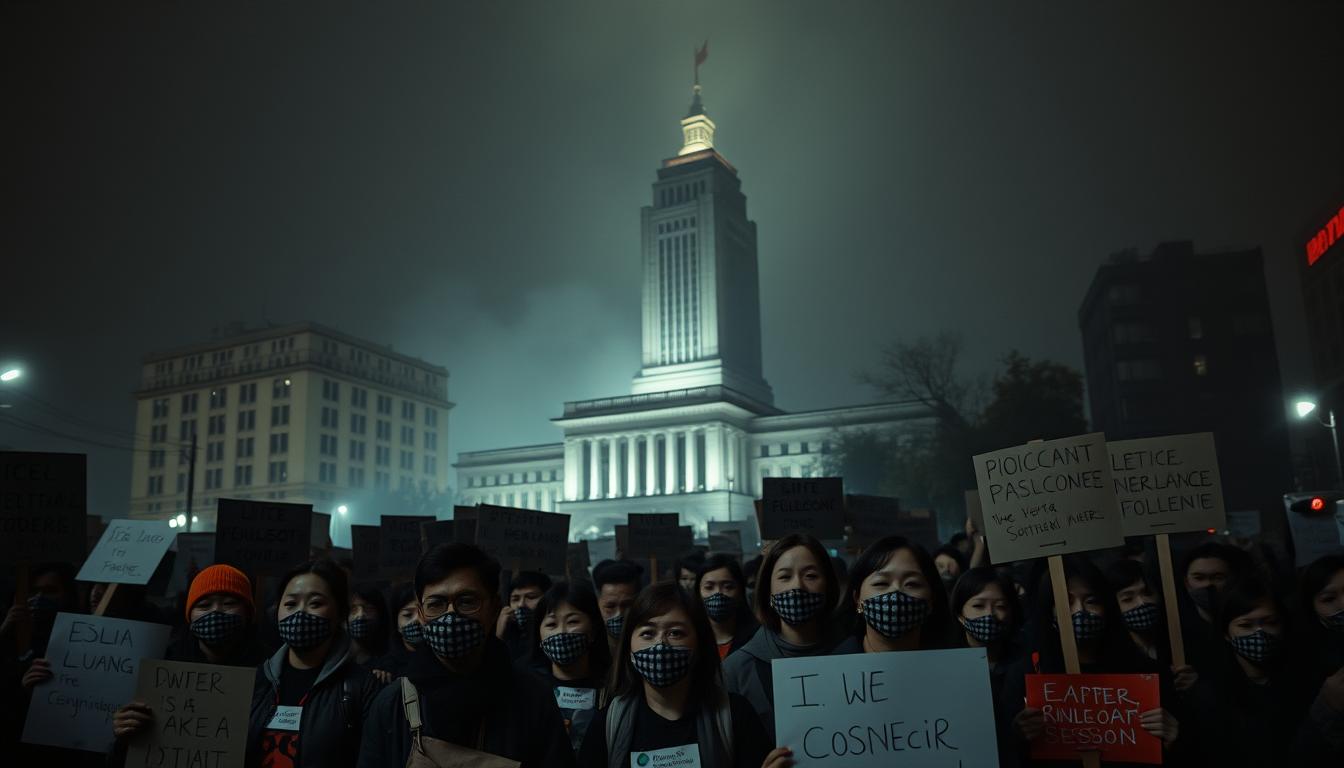
These dynamics blur lines between personal choice and collective control. Whether through boycotts, protests, or altered art, society’s invisible hand often silences voices as effectively as any law. Understanding this interplay helps us navigate a world where every shared idea risks—or reflects—cultural divides.
The Impact of Censorship on the Arts
Recent debates over Michelangelo’s David in Florida schools show the conflict between visual arts censorship and education. A teacher was fired for teaching Renaissance art, despite its historical importance. Critics found it too mature for students. This issue has long plagued artists, from religious themes to modern art.

In 2022, a professor at Hamline University lost their job for showing images of the Prophet Muhammad. This sparked a debate on creative expression versus religious respect. The Foundation for Individual Rights and Expression (FIRE) called the decision a violation of academic freedom. Such cases highlight a global trend: 70% of artists face censorship, with 60% in authoritarian countries self-censoring to survive.
Despite censorship, artists find ways to express themselves. They use symbolism and allegory to bypass censors, turning restrictions into opportunities. Yet, 30% of works are altered or destroyed by censorship, damaging artistic liberty. In 2022, over 75 artists were jailed worldwide for their art, according to PEN International. Also, 80% of institutions report political pressure influencing their exhibitions.
Censorship may silence voices, but it also drives creativity underground. Artists, like those using abstract art to critique regimes, show that creative expression endures. The balance between respecting cultural values and protecting artistic freedom is essential for preserving cultural heritage and innovation.
The Consequences for Literature and Publishing
Recently, there’s been a big increase in banned books. The American Library Association says censorship attempts have gone up 38% in two years. Books by LGBTQ+ authors and those that talk about racial history, like Sula by Toni Morrison or Persepolis by Marjane Satrapi, are being removed from schools a lot. This shows a big fight between literary censorship and publishing freedom.
For a long time, people in power have used bans to control what we read. Today, 46 U.S. states have laws that limit what can be taught in schools. These laws are inspired by Florida’s HB 1557. This could stop books that challenge the usual way of thinking, like I Know Why the Caged Bird Sings by Maya Angelou or Gender Queer.

Now, publishing freedom is facing new challenges. Algorithms and company rules are joining old ways of controlling what we read. But, self-publishing gives authors a way to get their work out there. Yet, even online, censorship is a problem. For example, Amazon removed books about LGBTQ+ youth in 2021, sparking a big debate.
Black students are losing access to books like Stamped, which talk about racism. This makes it harder for them to learn about their history. The Supreme Court ruled in 1982 that schools can remove books they think are too bad. But, they didn’t say what makes a book bad. This makes it hard for authors and publishers to know what to do.
In 2022-23, there were 3,362 school bans on books. That’s a 33% increase from the year before. When books get banned, they often become more popular. This shows that censorship can make people want to read those books even more.
Music and Censorship: A Clash of Voices
Protest songs have long been a powerful tool for change. They echo the struggles of many, from Soviet dissidents to civil rights activists. Music regulation often targets songs that challenge the status quo. Yet, artists like Bob Marley and Public Enemy have made protest songs into anthems for freedom.
In Iran, Tataloo faces severe penalties for defying state narratives through his music. This shows that musical censorship is a global issue.
Authorities have banned concerts and censored lyrics to control messages. The 1972 Noise Control Act even treated sound as pollution. This shows how laws shape music regulation.
Moral panics over hip-hop or punk reflect fears of youth influence. These fears are similar to past concerns about jazz and rock.
Charismatic artists like Victor Jara became symbols of resistance. They used music to humanize oppression. Yet, self-censorship persists, as musicians balance creativity with societal expectations.
The UN’s free speech guidelines stress balancing rights. But interpretations vary widely. From Tataloo’s imprisonment to debates over hate music, the clash between expression and control plays out in every note.
Film and Television: Controversies and Compliance
Film and TV censorship shape what stories we see. The MPAA’s PG-13 rating came in 1984 after Indiana Jones and the Temple of Doom sparked controversy. In dictatorships, media censorship silences dissent, with strict content approval.
In democracies like the U.S., self-regulation is key. The Hays Code of 1930 and modern TV ratings (TV-Y, TV-MA) balance creativity with societal norms.
Creators face big decisions. The NC-17 rating, introduced in 1990, can limit a film’s audience, as seen with Blue Velvet. Studios might edit content for global markets, like cutting scenes for China’s strict rules.
Even in free societies, public outcry drives television regulation. The FCC received 1.4 million complaints in 2004 over “indecent” broadcasts. Yet, studies show no link between screen violence and real-world crime, like in Japan.
Behind the scenes, filmmakers find ways to get around bans. They use metaphors and symbolism, as in A Clockwork Orange. The debate is ongoing: how to protect audiences without stifling art.
The Global Perspective on Censorship
Global censorship often favors the strong over the weak, deciding what stories we hear. Western media can push aside local tales, creating an uneven playing field for all cultures. Tech giants like Meta and Twitter also play a big role, shaping what we can say online, no matter where we are.
“Digital platforms now act as global censors,” states the Free Speech Project at Georgetown University. They point out how social media rules can silence the voices of the marginalized. Over 60% of users feel their freedom of speech is limited by these rules. And 70% of journalists say they self-censor because of this pressure.
Social media has both helped and hindered freedom. It sparked movements like the Arab Spring but also allows for constant surveillance. Laws in one place can block content everywhere, silencing minority views. For example, 50% of LGBTQ+ individuals say they face online censorship, showing how technology can widen gaps.
Democracy could be the answer. If people had a say in making rules, like through community forums or clear policy reviews, we might see less control from the top. The Free Speech Project found that 75% of teachers want to teach about censorship to empower young people. This approach values different cultures while keeping free speech alive.
As technology grows, finding a balance between censorship and cultural expression is key. When communities set their own rules, creativity can flourish without losing traditional values. We need to listen to many voices, not just follow rules from afar.
Moving Forward: Balancing Freedom and Responsibility
Educators are key in fighting censorship by teaching media literacy. A 2020 survey showed 18% of Americans didn’t know the First Amendment freedoms. This highlights the need for critical thinking in schools.
Schools should teach students to think for themselves, not rely on others to censor. Programs like the University of California’s National Center for Free Speech and Civic Engagement help tackle these issues.
Creative people find ways to express themselves even when faced with limits. Richard Prince’s “Spiritual America” is a great example of this. Legal principles like J.S. Mill’s harm principle help figure out what speech is okay and what isn’t.
Universities are learning to balance hosting speakers like Milo Yiannopoulos and Charles Murray. This shows the importance of open dialogue over censorship.
Free speech needs constant conversation. While 56% of Americans get hate speech protections, there’s a fine line between safety and freedom. The First Amendment protects even tough art forms like poetry and performance.
By valuing diverse opinions and listener choice, we can foster better discussions. As Mill said, a marketplace of ideas, though imperfect, is vital. Teaching empathy and understanding in schools and policies helps keep art and dialogue at the heart of democracy.