






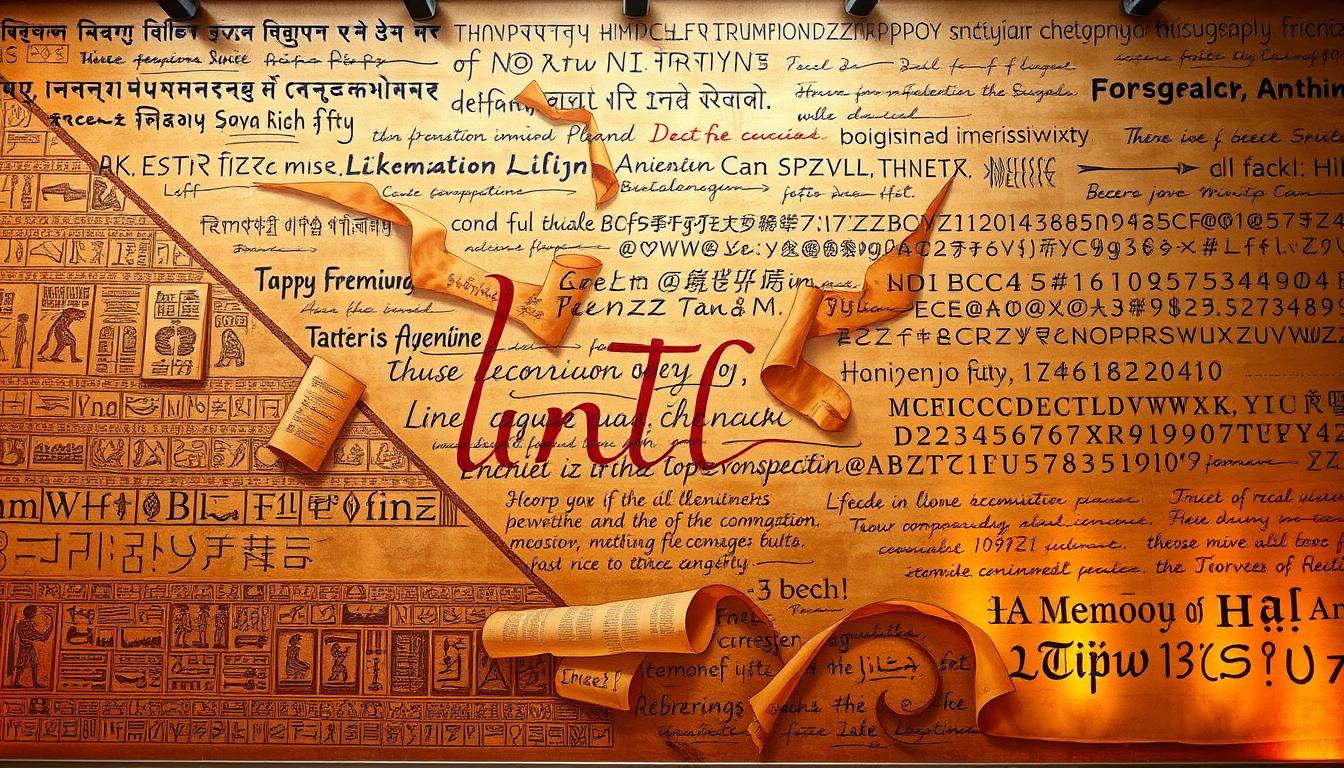
Writing has been key for humans to share stories, laws, and ideas. It has changed a lot over 10,000 years, from clay tokens to digital screens. This change has helped us keep knowledge alive and connect with others through time.
The first counting systems used clay tokens around 8000–7000 B.C. These evolved into pictographs by 3500 B.C. By 3200 B.C., Mesopotamia had the first full writing system, cuneiform.
A clay tablet from 3250 B.C. was found by Dr. John Coleman Darnell. It’s older than Uruk’s texts by 150 years. Over 2,100 years, Uruk’s people made cuneiform better through 18 phases.
From Egyptian hieroglyphs to the Greek alphabet’s 27 letters, each step made sharing ideas easier. Today, writing lives on in apps and screens. It shows how symbols and scripts are essential for human communication. This article looks at these key moments, showing how writing has changed from stone to keyboard.
From Prehistoric Marks to Symbols
Before alphabets or cuneiform, humans used cave paintings and petroglyphs to share ideas. These early forms of prehistoric writing are found in places like Lascaux and Chauvet. They show a world where art and communication were closely linked.
Our ancestors, over 40,000 years ago, used charcoal, ochre, and stone to draw animals, hands, and abstract shapes. These weren’t just decorations. They were tools for symbolic communication, carrying stories, rituals, and knowledge from one generation to the next.
Imagine a flickering torchlight on a cave wall. Marc Azéma’s research shows that movement in cave paintings wasn’t random. The light might have made images seem to move, turning static art into early animations.

Genevieve von Petzinger found 32 recurring symbols in European caves. These symbols, like dots, lines, and handprints, were shared across thousands of miles and millennia. This shows that symbolic communication was a universal human pursuit, setting the stage for later writing systems.
These symbols weren’t random. They represented ideas and early attempts to categorize the world. From tracking game migrations to marking sacred spaces, these marks evolved into intentional systems. They were humanity’s first step toward encoding thought into lasting, shareable forms.
The Birth of Cuneiform and Hieroglyphics
Around 3200 BCE, two groundbreaking ancient writing systems came into being. In Mesopotamia, cuneiform writing started as simple pictures on clay. It grew into a key tool for tracking trade, religious rituals, and laws like the Code of Hammurabi. Scribes used reed styluses to carve symbols, making it possible to keep detailed records for growing cities.

In Egypt, hieroglyphics combined vivid images with sounds. These symbols adorned temples and tombs, honoring pharaohs and gods. Only trained scribes could master these systems, making literacy rare. The cuneiform writing lasted over 3,000 years, used for languages from Akkadian to Hittite.
These breakthroughs changed how societies were run and what they valued. They allowed for the recording of knowledge, becoming essential to civilization. Today, studying these scripts—like the Mesopotamian script’s laws or hieroglyphics’ temple writings—shows how writing has shaped history.
The Advent of the Alphabet
Imagine a world where writing needed hundreds of symbols. This changed around 1050 BCE with the Phoenician alphabet revolutionized writing. It had just 22 symbols, each for a consonant sound. This made writing easier for traders and merchants.

Phoenician traders took their alphabet across the Mediterranean. The Greeks adapted it around 800 BCE, adding vowel symbols. This created the Greek alphabet. It allowed for precise spelling and opened literacy to more people.
The term “alphabet” comes from the first Greek letters: alpha and beta. These letters come from Phoenician words for “ox” and “house”.
Rome later adopted the Roman alphabet from Etruscan Greek adaptations. Latin became Europe’s main script. This made writing simple and accessible, changing how we share knowledge.
Today, the letters you read here come from these ancient breakthroughs. They show how a few symbols changed human communication forever.
Innovations in Writing Materials
Ancient scribes once etched symbols into stone and pressed cuneiform into clay—sturdy but cumbersome writing surfaces. Innovators sought lighter options. Egypt’s papyrus, made from Nile reeds, created flexible scrolls. But moisture damaged them.

China’s 2nd-century CE paper invention marked a leap forward. Lightweight and affordable, it spread globally, reshaping writing materials. This paper development made knowledge accessible, proving how writing surfaces drive human progress.
From papyrus to parchment, each material expanded who could write—and what stories got told.
The Printing Revolution
Johannes Gutenberg’s printing press changed the world. In 1456, his 42-line Bible was a major breakthrough. It used movable type, making books cheaper and faster to produce.
Before, books took months to write by hand. But now, thousands could be printed in weeks. This printing revolution spread knowledge like never before.
By 1500, Europe had 1,000 presses, making 2 million books. Prices fell to 1/8th of what they were before. Martin Luther’s 1522 German Bible sold 5,000 copies in two weeks, helping the Reformation.
Printed works like Thomas Paine’s “Common Sense” reached many people. They challenged old power structures.
“Printing, gunpowder, and the compass changed the world.” – Francis Bacon
The printing press brought both progress and conflict. Scribes were upset by the change, but libraries and schools grew. By 1600, 150 million books existed, changing education and science.
Though some feared change, the printing revolution paved the way for modern communication. It showed that ideas could spread faster than handwritten words.
The Rise of Typewriters and Automation
The typewriter changed writing by mixing mechanical writing with speed. Christopher Latham Sholes invented it in 1867. Early models like the Sholes & Glidden (1874) made business communication better.
By 1908, the Underwood Number 5 was a hit. It let typists see their work as they typed. This was a big step for accuracy and speed.
By 1900, 75% of clerical workers were women—proof that typewriter history reshaped workplaces, empowering new roles for women in offices.
Electric typewriters, like IBM’s 1961 model, made typing easier. Word processors in the 1970s added editing features. The QWERTY layout, designed to prevent jamming, is used today.
Though word processors and writing automation took over, typewriters are remembered fondly. Collectors value them for their connection to a bygone era of precision.
From Edison’s 1872 electric prototype to the 1980s digital shift, typewriters bridged handwriting and code. Their story is not just about machines. It’s about how mechanical writing changed communication, creating jobs and paving the way for today’s digital tools.
Digital Transformation in Writing
Computer technology changed writing from using typewriters to digital processes. Word processing software like Microsoft Word and Apple Pages made editing easy. Now, writers can change sentences and formats with just a click.
Today, AI assistants help cut editing time by 30%. This is a big help for busy professionals. Now, over 60% of content creators use AI tools.
These tools catch 90% of grammatical errors and help with creativity. This lets writers focus more on their ideas.
Electronic text has also changed how we work together. Real-time co-editing features and cloud storage make teamwork easier. Businesses also save money by using digital drafts instead of paper.
NLP and ML algorithms analyze writing styles to help with SEO. Noble Desktop’s bootcamps teach these skills, showing how important digital tools are. As AI grows 20% each year, it’s not just a tool—it’s the base of modern communication.
The Influence of Social Media
Social media has changed how we share ideas. Twitter’s 280-character limit makes us concise. This has made 80% of users prefer short posts.
Hashtags are now key in online communication. Posts with hashtags get a 12.6% boost in engagement. They’ve become modern tools for sharing.
Visuals are big in social media too. Instagram posts with images get 94% more views. GIFs help express emotions in text-only messages.
Giphy’s 100 million daily users send a billion GIFs. This shows how GIFs tell stories without words. Emojis have also become part of our online writing.
But social media also brings challenges. Our attention spans have dropped to 8 seconds. This makes writers focus on quick, impactful messages.
Yet, 65% of creators see social media as a place to be creative. They experiment with memes and short stories. In 2013, linguist David Crystal said 90% of online communication is in standard English.
70% of users like a friendly tone in posts. 60% of writers change their work based on feedback. This makes the line between writer and reader blur.
From emojis to viral hashtags, social media is changing writing. It’s a new chapter in writing’s history, helping us connect and evolve.
Looking Ahead: The Future of Writing
AI writing tools like predictive text and automated content engines are changing how we write. These tools, along with devices like the Freewrite typewriter, show a future where tech boosts creativity. The Freewrite has an e-ink display that shows ten lines at a time, focusing on quality over speed.
Its design fights digital distractions, proving simplicity is key in today’s tech world. This shows that even with all the tech, some writers prefer simple tools.
Writing technology is also exploring new areas, like augmented reality (AR) or virtual reality (VR). These could add new dimensions to stories, making communication even more exciting. But, the Freewrite’s success shows many writers value tools that enhance their work, not overwhelm it.
AI can help with drafts, but the human touch is what makes writing truly meaningful. The future of writing will mix new tech with old traditions. Writers need to learn about AI while keeping their unique voices.
The Freewrite’s design, with no cursor keys and no screen glare, shows how tech can support focus. This balance ensures writing stays both modern and deeply human. Every word typed, on any device, adds to this evolving story. The next chapter is yours to write, blending curiosity with craft.