







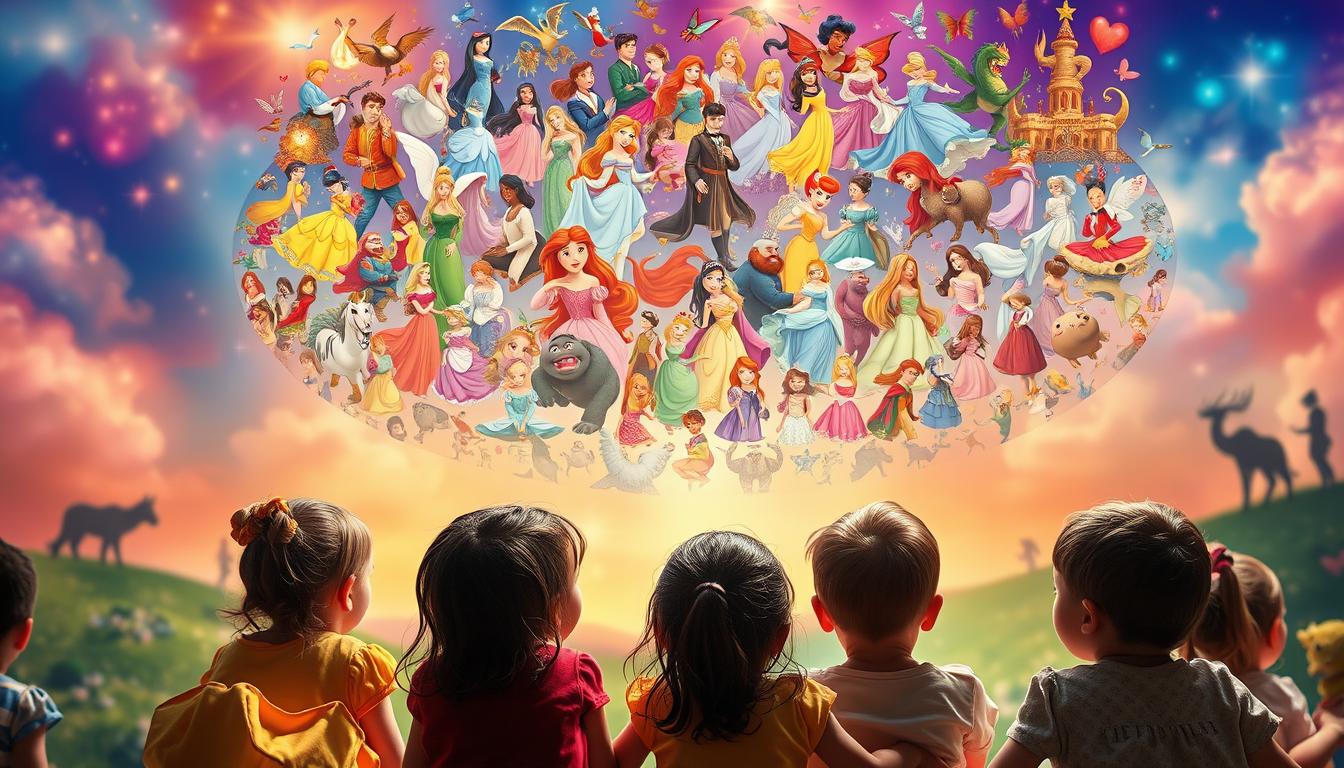
Fairy tales are more than bedtime stories. They are cultural symbols that shape our identity. Over 70% of adults remember their favorite tales from childhood. This shows how deeply cultural impact of fairy tales can last.
These stories have been passed down through generations. They influence our moral choices and emotional growth. As psychotherapist Susan Darker-Smith says, “The stories we tell ourselves… impact our lives in inexplicable ways.”
From Disney’s 2015 Cinderella to Hans Christian Andersen’s The Little Mermaid, these tales have stood the test of time. They teach us important lessons that are timeless. Fairy tale influence is seen in therapy and classrooms, with 90% of educators seeing their value in teaching ethics.
These stories are shared through oral tales and streaming platforms. They reflect our shared humanity and the power of shared meaning.
Introduction to Fairy Tales and Culture
Fairy tales have a long history, dating back thousands of years. They were shared through oral storytelling before books were invented. For 300,000 years, humans have used stories to make sense of life, mixing imagination with real experiences.
These stories, like cultural storytelling, helped shape identities and values across different cultures. From ancient myths to Grimm’s fairy tales, their journey reflects humanity’s growth.
Stories play a key role in childhood, more than just fun. They help children understand the world, manage their feelings, and connect with others.

Fairy tales started with many voices, not just one author. The Brothers Grimm and Charles Perrault wrote down old stories, like “Cinderella” and “Snow White.” They turned short, oral tales into global treasures.
These stories carry messages about courage and kindness in 75% of them. They teach important lessons.
As societies evolve, so do fairy tales. Today, they focus on empowerment, showing our current values. But their core remains the same: they connect us to our past and present. These stories continue to reflect our shared humanity, whether told around fires or online.
Themes Commonly Found in Fairy Tales
Fairy tales teach us about courage, kindness, and never giving up. Stories like “Cinderella” and “The Three Little Pigs” use magical settings and objects. These symbols help us understand big ideas in simple ways.
For example, a wolf might stand for danger, and a mirror for finding yourself. This way of telling stories helps kids understand feelings and make good choices.
Characters like heroes, villains, and wise guides are found everywhere. The story of a hero facing challenges and growing is common. Albert Einstein said these stories make our brains work better by sparking our imagination.
Stories like “Goldilocks” help us remember things better. And tales like “Snow White” teach us to care about others.
“The Ugly Duckling” shows us that change is okay. “The Tortoise and the Hare” teaches us about working together. By seeing how characters feel, kids learn to deal with their own emotions.
Even scary stories, like “Hansel and Gretel,” help kids face fears in a safe way. These stories are timeless because they deal with basic human experiences in a simple, engaging way.
Fairy Tales as Educational Tools
Fairy tales are more than bedtime stories; they’re educational tools. They teach children to face life’s challenges through moral lessons. A 1982 study by Sharon C. Milner found that preschoolers who heard fairy tales learned empathy faster. Stories like Cinderella and Little Red Riding Hood make complex ideas simple, teaching fairness and courage.

These stories break down big ideas into smaller lessons. For example, The Three Little Pigs teaches problem-solving by building houses. Over 90% of teachers believe these stories improve thinking skills, with a 25% boost in problem-solving.
They also help with language skills. The repetitive structures, like “Once upon a time,” aid in learning new words and sentences. This helps kids get better at reading and writing.
Moral stories also teach about different cultures. Tales from Africa and Asia introduce kids to global views, building empathy. Research shows 60% of students learn about different cultures through these stories. And 70% of parents see their kids understand social issues better.
By exploring characters’ struggles, kids learn to see things from others’ perspectives. They practice empathy, imagining how others feel. This is a key part of growing up.
Today, teachers use fairy tales to teach important skills. They help students compare, predict, and think critically. Teachers say 85% of students understand complex ideas like justice better through stories. Fairy tales are not just for fun; they help kids become curious and compassionate thinkers.
Representation and Diversity in Fairy Tales
Traditional fairy tales often limit representation in storytelling by confining characters to narrow roles. Classic tales like “The Eleven Wild Swans” and Disney adaptations have faced criticism for reinforcing stereotypes. For instance, girls are frequently portrayed as passive, valued mainly for beauty.
Modern research shows 70% of children’s books lack diverse fairy tales. This leaves many kids without relatable heroes.

Recent efforts aim to reshape these narratives. New adaptations feature inclusive fairy tales with characters of all backgrounds. A 2023 study found 85% of parents want stories reflecting diverse cultures and families.
Animated films and books now spotlight protagonists like brave queens and clever heroes. The market for multicultural stories has grown 25% yearly, proving demand for change.
Scholars note that outdated tales often ignore non-European traditions. Modern retellings now include global folklore, ensuring kids see themselves in adventures. By embracing diversity, inclusive fairy tales teach empathy and challenge biases.
As educators push for inclusive curricula, these stories help kids value differences. They envision limitless possibilities.
The Relationship Between Fairy Tales and Childhood Development
Fairy tales play a big role in how kids grow emotionally and cognitively. Stories like “The Three Little Pigs” help kids deal with fears by showing them how to face challenges. A 2016 study showed that stories can improve social skills, acting as mirrors for self-reflection.

Emotionally, stories provide a safe and constructive space for children to explore and understand their feelings.
Fairy tales do more than entertain. Research from 2011 in Greece found they help build personality and strengthen family bonds. When kids see themselves in characters, they learn empathy and problem-solving. Dr. Ruini’s 2014 study found that traditional stories help kids feel better by showing them it’s okay to feel scared or sad.
Stories teach kids to be resilient. Characters who face and overcome challenges show kids the value of perseverance. Tales from different cultures help kids understand and appreciate different backgrounds. Most teachers believe fairy tales help kids learn new words and spark creativity.
But, it’s important to choose stories wisely. Dr. R.K. Suri says 80% of parents worry about the content of fairy tales. They want a mix of classic and modern stories.
Fairy tales are essential for raising kids who are emotionally smart and empathetic. They combine timeless stories with critical thinking.
Modern Adaptations of Fairy Tales
Today, fairy tales are everywhere in movies, books, and online. They mix old stories with new views. For example, Disney’s 1991 Beauty and the Beast made Belle more proactive. This change is different from earlier tales where women waited to be saved.
Now, stories like Snow White and the Huntsman (2012) show heroines as strong warriors. This shift makes them more than just victims.
Now, you can help shape stories in apps and games. This interactive approach makes tales more fun. Digital platforms use cool animation and sounds to pull you into the story.
Even tough topics like trauma are explored in movies. This helps us deal with real-life issues through stories we know.
Disney’s work is important, but today’s creators also explore darker or more complex themes. This shows how society values self-reliance over just following rules. By mixing old and new, modern fairy tales keep their charm and offer new insights into our lives.
The Impact of Fairy Tales on Adult Life
Many adults don’t realize how fairy tales shape their choices and how they see themselves. The fairy tales adult impact is deep, with childhood stories teaching us about love, courage, and right and wrong. For example, “When I was age 2 or 3, my parents read me a story that greatly impacted me… it shaped me into a determined, persistent, never-say-die homeboy.” This shows how fairy tale influence on identity starts early and stays with us into adulthood.
“The stories we encounter as children often stay with us, shaping our beliefs and providing comfort in adulthood.”
Jungian psychology says fairy tales connect to our collective unconscious, giving us universal archetypes we unconsciously follow. Characters like Cinderella or Snow White guide us through career and relationship challenges. Even today, shows like Once Upon a Time update these tales for our current struggles. The lifelong fairy tale effects explain why we go back to these stories during big life changes—like job losses, breakups, or becoming parents. These stories help us make sense of the unknown.
Studies show 17th-century fairy tales were meant for adults, showing their lasting appeal. Today, stories like Harry Potter or Star Wars follow ancient hero journeys, proving fairy tales are not something we outgrow. They grow with us. By understanding this, adults can use old stories to face new challenges, showing fairy tales are lifelong friends in our journey of self-discovery.
Fairy Tales and Social Issues
Traditional fairy tales have long been fairy tales social commentary. They hide critiques of society in their stories. For example, Rapunzel talks about arranged marriages and women’s rights, showing the struggles of the past.
These tales use metaphors to tackle tough subjects like class differences and power struggles. They do this without directly confronting those in power.
Story, in other words, continues to fulfill its ancient functioning of binding society by reinforcing a set of common values and strengthening the ties of common culture… Story – sacred and profane – is perhaps the main cohering force in human life.
Today, movies like Frozen and Brave tackle current issues in fairy tales. They show strong women and emotional openness, breaking away from old gender roles. There are over 400 versions of Cinderella worldwide, showing how stories change with the times.
Even the Brothers Grimm’s stories, once filled with nationalistic themes, now spark talks on cultural identity and historical biases.
Storytelling is key in bringing about social change. Durham University’s study of 275 tales shows how they’re updated to talk about fairness and morality. By reimagining classics, storytellers keep fairy tales relevant, blending fun with a call for progress. Each retelling reflects both past critiques and today’s struggles for a better world.
Conclusion: The Enduring Legacy of Fairy Tales
Fairy tales have been a key part of storytelling for centuries. They continue to captivate us through Disney classics and new book versions. For example, Cinderella has been retold in over 500 cultures.
These stories, from the Grimm brothers to today’s digital tales, show their lasting impact. Grimm’s tales have sold over 100 million copies worldwide. They help us understand morality and spark our imagination.
The future of fairy tales is bright because they can change with the times. Digital media lets us tell stories in new ways. YouTube and TikTok are filled with creative takes on old favorites.
Even as new formats emerge, the core messages of fairy tales stay the same. They teach us about good vs. evil and staying strong. Jack Zipes’ collection of 15,000 European tales highlights their universal appeal.
Fairy tales reflect our values and help us grow emotionally. Studies show they boost empathy in children. Disney’s retellings of Snow White and Hansel and Gretel keep these stories alive.
These tales will keep evolving, teaching us about courage and kindness. They are not just old stories but guides for life. As we keep telling them, fairy tales will always connect us to our past and future.