







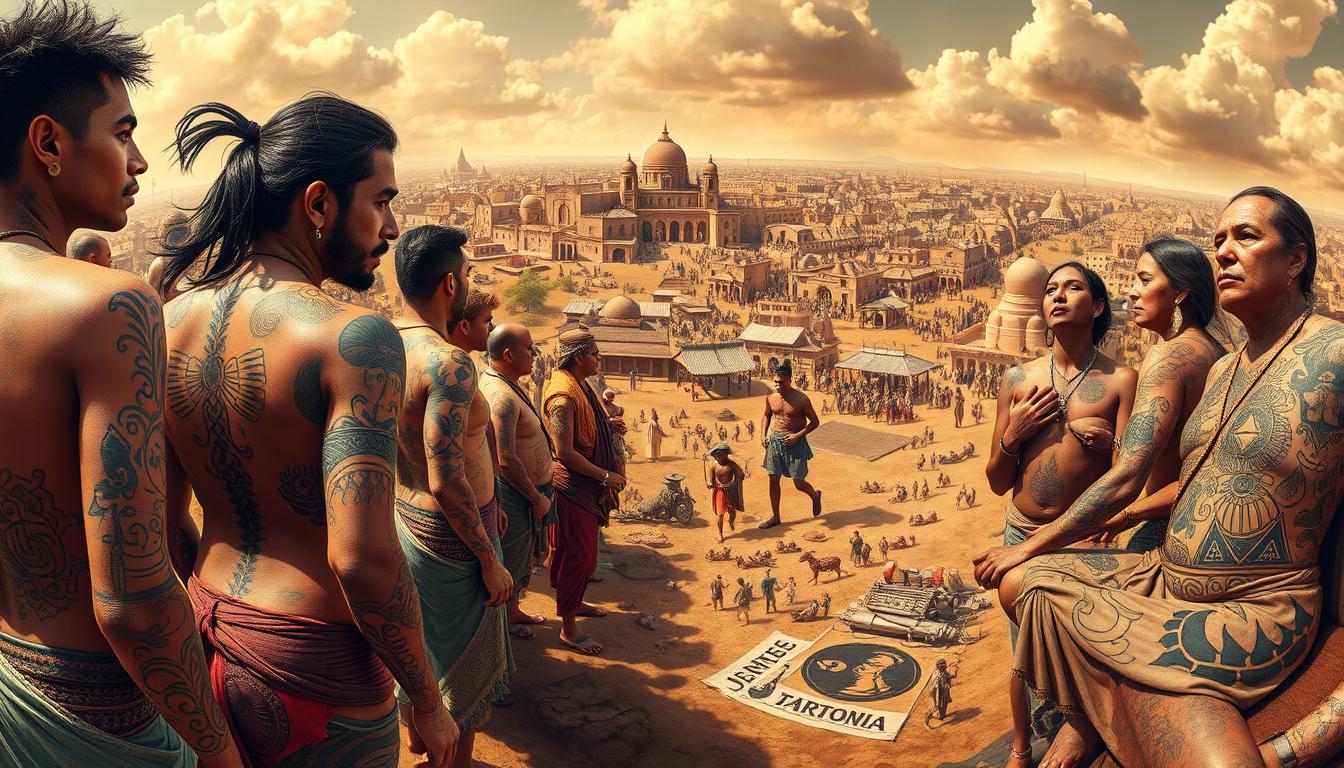
Tattoos have been telling stories for thousands of years. They blend art and identity, showing the rich history of tattoos worldwide. In ancient times, tattoos like Polynesian tatau and Maori moko told of family, bravery, and spiritual beliefs.
Today, tattoos are more than just art. They carry deep meanings passed down through generations. Designs from Japan’s irezumi to Thailand’s Sak Yant show the power of tattoos.
In the US, tattoos are popular among young people, making up a $3 billion industry. Modern tattoos mix old and new styles, creating unique designs. Tattoos turn skin into a canvas of heritage and global connections.
The Historical Roots of Tattooing
Archaeological findings show that tattooing has been around for thousands of years. Ötzi the Iceman, a 5,300-year-old mummy from the Alps, had 61 tattoos. These tattoos were made with soot-filled needles and were near his joints.
They might have been for healing or spiritual reasons. Tattoos also have a long history in Egypt. Infrared scans found dot patterns on mummies from 3351 BCE. A female mummy from 1292 BCE had over 30 tattoos, used in religious or social rituals.
Indigenous tattoo traditions are found all over the world. The Chinchorro culture in South America used tattoos on mummies around 2500 BCE. In Siberia, Pazyryk mummies from 500 BCE had animal motifs for status and ancestry.
Tools like bone needles and plant-based pigments were used. For example, 2,700-year-old bone tattoo implements were found in Tonga.

Historical tattoo practices were diverse. The Greeks used tattoos to identify spies, while in Japan, they were a form of punishment. The Maya used a special pigment called Maya Blue for sacred designs in ceremonies.
These traditions show how tattoos connected the physical and spiritual worlds. This was long before electric machines changed tattooing in the 19th century.
Cultural Significance of Tattoos
Tattoos are more than just skin art. They carry deep cultural tattoo meanings across the world. For the Māori in New Zealand, facial tattoos, or moko, tell stories of family and status. In North Africa, Amazigh women’s hand tattoos symbolize strength.
In Polynesia, tattoos mark important life events and show social rank. Chiefs wore bold designs to show their power.

Religious tattoos also play a big role globally. Buddhist mandalas represent the universe’s order. Ancient Egyptian healers used tattoos for health and spiritual reasons.
Today, artists mix old and new styles, keeping traditions alive while expressing themselves. Tattoo artist Lina Nguyen says, “Every line tells a story. A tattoo isn’t just ink—it’s a bridge between past and present.”
Wanting your body to be a canvas for other people’s work is spiritual in itself. It’s a constant reminder of trust and growth.
Now, tattoos blend tradition and personal style. Celebrities like Willow Smith and Mistah FAB show cultural tattoo meanings to the world. But, there are also challenges, like the misuse of sacred designs.
By understanding these histories, we respect traditions and share our own stories. Tattoos are a global conversation between old and new, connecting our past and future.
The Evolution of Tattoo Styles
For thousands of years, tattoo style evolution has shown our creativity and cultural identity. Traditional methods like Polynesian hand-tapping and Japan’s tebori are highly valued. These regional tattoo styles keep heritage alive, like Maori moko tattoos and Ainu facial marks.
But, new ideas also change old traditions. The 1891 invention of Samuel O’Reilly’s electric machine made tattoos more detailed. It allowed for designs that were once impossible by hand.

Now, artists mix different styles, like Japanese irezumi with hyperrealism. Styles from Thailand to America inspire new designs. Inks have also changed, from ancient carbon to bright, safe pigments.
This mix of old and new lets people celebrate their heritage while exploring new ideas. It shows tattoo style evolution is a conversation between the past and now.
Tattoo Rituals and Ceremonies
Tattoo ceremonies around the world turn the body into a canvas of deep meaning. In Samoa, the pe’a ritual marks a man’s transition to adulthood. It takes weeks of ritual tattooing.
Each tap of the needle echoes ancient traditions. Families sing to help the bearer through the pain. This tattoo rite of passage shows strength and belonging.
In Thailand, Sak Yant tattoos mix Buddhist mantras with tattooing. Monks chant blessings as they carve sacred designs into skin. They believe these marks offer protection or luck.
The Ainu of Japan once tattooed women’s lips and hands. They used soot and needles to mark their coming-of-age and marital readiness.
Traditional tools are powerful. The Maya made ink by burning palygorskite with indigo. This merged art and religion. In the Philippines, 100-year-old tattoo elder Whang Od uses bamboo sticks dipped in charcoal.
She continues sacred tattoo practices passed down through generations. These methods make the body a living archive of cultural memory.

Community tattoo rituals often involve everyone. Polynesian tattoo rites of passage need family support. Elders guide the initiate through trials.
In Russia, Yakuza members get full-body ink as a rite of passage. Their designs show rank and defiance. Even today, these practices blend ancient symbolism with personal stories.
“The pain is a prayer,” said one bearer of Thai Sak Yant tattoos. They describe how the ritual’s pain deepens spiritual connection.
These traditions show tattoos are more than skin deep. They connect past and present, individual and community.
Tattoos in Contemporary Society
Today, tattoos are a big part of our culture, showing how they’ve become a common way to express ourselves. More than 40% of Americans between 26 and 40 have tattoos. This change shows how tattoos have moved from being seen as rebellious to being a way to celebrate life’s moments and personal style.
Stars like Angelina Jolie and David Beckham have made tattoos more accepted. Social media has also played a big role, making tattoo artists famous.
“Wanting your body to be a canvas for other people’s work is spiritual… a constant reminder of meaning.”
Now, 32% of employers see tattoos as okay or even good. But, there’s a problem with cultural respect and how tattoos are used. Designs from places like Maori and Thai cultures are being used without proper understanding.
The tattoo world is growing, with fancy studios and new techniques like 3D tattoos. MEDermis Laser Clinic says more people want tattoos removed, showing tattoos are a personal choice.
Today, tattoos are all about being unique. They mix old and new styles, telling stories through art. With new tech, like bioluminescent inks and AI designs, tattoos are getting even more interesting. Tattoos are now about showing who we are, blending heritage, art, and identity.
Legal and Ethical Considerations
Understanding tattoo ethics is key in today’s tattoo world. Laws like tattoo consent laws make sure minors can’t get tattoos without a parent’s okay. This protects young clients. Studios must also follow tattoo industry regulations, using clean tools to cut infection risks by 90%. But, respecting cultural heritage is most important.
Cultural tattoo appropriation is a big issue. Many artists now say no to sacred designs from Indigenous cultures without the right context. Over 65% of pros teach clients about cultural sensitivity. “Taking symbols without knowing their history is a disrespect,” says a tattoo artist in Hawaii, where ancient Polynesian patterns are sacred.
“Sacred tattoo protection requires dialogue, not imitation,” emphasizes a Maori artist advocating for collaboration with Indigenous communities.
Legal protections also protect sacred tattoo protection. Some places now make artists check if designs are theirs. Ethical shops don’t make money off uncredited traditional patterns. Also, 50% of studios now say who owns custom art, making it clear who has rights to designs.
When picking a shop, ask the right questions. Do they follow tattoo industry regulations? Do artists explain the cultural meanings? Responsible practices show respect for both art and tradition. With 30,000 U.S. tattooists, making informed choices is more important than ever.
The Future of Tattoo Culture
New tattoo future trends are changing how we see tattoos. Tattoo technological innovations like 3D-printed designs and augmented reality previews let clients see tattoos before they’re done. Also, sustainable tattooing practices, like biodegradable inks and zero-waste studios, are becoming common.
Old methods like hand-tapping are now celebrated in evolving tattoo practices. Indigenous artists around the world are bringing back ancient techniques. They mix cultural heritage with today’s demand. At the same time, digital tattoo developments include tattoos that track health data, mixing art with science.
Social media is making global trends, like minimalist geometric patterns, go viral. Studios like Urban Canvas offer temporary tattoos that change colors, blending fashion with tech. Today, over 29% of Americans have tattoos (Harris Poll, 2015), up from 14% in 2008. This shows tattoos are more accepted than ever. Even workplaces are welcoming tattooed employees, showing a shift in society’s views.
Biodegradable inks and solar-powered tattoo machines show a focus on sustainability. Medical tattoos, like those for diabetic monitoring, suggest future uses. As trends change, one thing is clear: tattoos will always balance new ideas with respect for tradition.
Personal Stories and Testimonials
Every tattoo has a story behind it. Tattoo personal stories show how tattoos become lifelong friends. Shannon Raczynski’s shamrock and dove tattoos connect her Irish Catholic roots to her identity. “They’re not just symbols—they’re a daily reminder of faith and peace,” she says.
These tattoo meaning testimonials show how tattoos link the past to the present.
“I chose these designs because they connect me to my ancestors. Tattoos are my living history.” – Whang-od Oggay, the 107-year-old Kalinga tattoo artist from the Philippines
Traditional tattoo artists like Whang-od keep old practices alive. Her hand-tapped designs honor Kalinga warriors. Māori people use ta moko to reconnect with their tribal lineage.
Artists like Horiyoshi III mix tattoo artist interviews with modern clients. They blend tradition and innovation. Tattoos mark important moments for many, like remembering loved ones or celebrating heritage.
These stories show tattoos are more than just skin art. They are conversations between personal beliefs and cultural heritage. Whether healing from loss or exploring identity, each tattoo personal story shows the power of art to bring people together across time and borders.
Resources for Learning More
Explore tattoo traditions with tattoo educational resources. Visit museums like Honolulu’s Museum of Traditional Tattooing or the Amsterdam Tattoo Museum. See historical tools and designs.
Online exhibitions, like Paris’s Musée du Quai Branly, offer virtual tours. They showcase global tattoo art.
Read tattoo history books like Margo DeMello’s Bodies of Inscription or Donald Richie’s The Japanese Tattoo. Documentaries like Skindigenous focus on Indigenous practices. Trent Aitken-Smith’s Tattoo: An Illustrated History covers styles worldwide.
Join tattoo research organizations like the Tattoo History Project. They support traditional tattoo preservation. Check out digital archives from places like the Polynesian Cultural Center for free access.
Academic journals and cultural workshops offer direct engagement. Whether you browse museum collections or attend workshops, these resources link past to present. Start your journey today with these accessible resources to tattoo heritage.