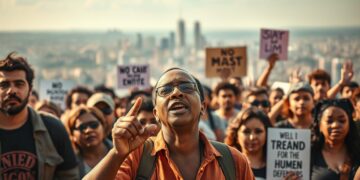





History is filled with leaders who used fear to control their people. Stalin’s purges and Hitler’s Holocaust are examples. Today, leaders like Vladimir Putin follow in their footsteps, enforcing strict laws and facing human rights cases.
These leaders have left deep scars on their countries. Stalin’s Great Purge killed 700,000 in the 1930s. Mao Zedong’s policies led to millions of deaths. Even ancient rulers like Genghis Khan and Caligula used violence to maintain power.
They used tactics like mass executions and economic control. Their actions have shaped and shattered the world they ruled over.
Overview of Feared Leadership Throughout History
History shows us leaders who ruled with fear. These cruel leaders, or historical tyrants, used iron-fisted rule to keep people in line. Their goal was always to have complete power.
These tyrants often started with support from the people. But then, they took away freedoms. Attila the Hun would show enemy heads to scare others. Stalin used secret police to keep people quiet.
Their methods changed over time, but the goal was always the same: to control through fear. By studying these leaders, we can see how they maintained power. They crushed opposition and changed laws to fit their own image.
Learning about these leaders helps us spot signs of tyranny today. It’s important to understand their tactics to prevent similar situations in the future.
Genghis Khan: The Conqueror of the Mongolian Empire
Genghis Khan started from a tough life to become a feared conqueror. Born in 1162, he united Mongolia’s tribes by 1206. He created a strong military state.
His armies were fast and disciplined. They expanded his empire from the Pacific to Eastern Europe. He became a symbol of the world’s worst rulers.
By his death in 1227, his empire was huge. It covered 13.5 million square kilometers. This was the largest territory ever held by one ruler.

“The earth became a place of terror,” wrote one observer of the Mongol advance. Cities that resisted faced total destruction, a tactic that spread fear across continents.
Genghis Khan was known for brutal dictators tactics. But he also introduced reforms. He rewarded skill over family ties, creating a fair system.
Trade routes like the Silk Road flourished under Mongol rule. They connected East and West in new ways. His policies allowed for religious freedom, showing a different side of him.
Despite causing millions of deaths, his legacy is complex. His empire fell after his death in 1227. Yet, his impact remains. His mix of terror and progress makes him a fascinating figure.
Joseph Stalin: The Man of Steel in the Soviet Union
Joseph Stalin started as a Georgian revolutionary. He turned to Marxism and pulled off a 1907 bank heist for $3.4 million to help the Bolsheviks. By the 1920s, he took control through totalitarian regimes, getting rid of his rivals in brutal purges.
By 1938, 93 out of 139 Central Committee members were dead. His political oppression tactics included the Great Terror, killing 750,000 and sending millions to gulags. Farms were collectivized, leading to famines like the Holodomor, which killed 3.9 million Ukrainians.
Stalin’s rule pushed for rapid industrialization, making heavy industry 400% bigger by the 1930s. But this came at a huge cost: 18 million were sent to labor camps. Purges targeted scientists, artists, and even his own family.
His 25-year rule ended with his 1953 stroke death. It was revealed that his regime killed 6–20 million people. After his death, Khrushchev spoke out against his tyranny. Yet, Stalin’s shadow stayed in Eastern Europe’s communist states.
Behind his WWII victories and the 1949 atomic bomb success lay a legacy of fear. His cult of personality hid a system where even allies feared arrest. Today, there’s debate over his role in Soviet modernization versus the political oppression he caused. The numbers show a leader who used progress to terrorize.
Adolf Hitler: The Architect of Terror in Nazi Germany
Adolf Hitler started as a struggling painter but became Germany’s brutal dictator. He joined the army in 1914 during World War I. After the war, economic troubles and the Treaty of Versailles fueled his rise.
By 1933, the Nazi Party took control, with Hitler as chancellor. The Enabling Act soon gave him total power, ending democracy.

Hitler’s rule turned Germany into a place of oppression. The Nuremberg Laws of 1935 took away Jews’ rights. Kristallnacht in 1938 was a violent step up.
His regime killed six million Jews and millions more during the Holocaust. This made him one of history’s worst genocidal leaders.
Hitler’s rule was based on propaganda, indoctrinating youth, and terror. Concentration camps and mass executions enforced his rule. Even after defeat in 1945, his legacy warns us about the dangers of unchecked power.
Mao Zedong: Revolutionary Leader of China
Mao Zedong is often seen as a hero of revolution. But his rule from 1949 to 1976 was marked by great suffering. His actions show the risks of leaders who put ideology above people.
The Great Leap Forward, from 1958 to 1962, aimed to make China industrial. But it led to the deadliest famine in history. Millions died due to forced collectivization, showing how oppression can destroy human rights.
The Cultural Revolution, from 1966 to 1976, was even more brutal. Youth Red Guards attacked those seen as enemies, causing 1.5 million deaths. This era showed how fear can silence dissent.
Now, China’s government sees Mao’s later years as complex. Yet, his rule was marked by mass deaths and repression. His story warns of the dangers when power is more important than compassion.
Kim Jong-un: The Current Face of North Korean Oppression
Kim Jong-un leads the Kim dynasty with a tight grip, using fear and propaganda to control North Korea. Over 40,000 bronze statues celebrate his family. Yet, 120,000 people suffer in labor camps under political oppression.
His regime is strict, punishing dissent harshly. Even family members are not spared from torture or execution.
In 2020, North Korea banned foreign media, with severe penalties for those who access it. Public executions, sometimes involving children, are used to scare people into obedience. Defectors speak of constant surveillance, hunger, and a system favoring the elite over the common people.
Kim’s childhood was isolated, but he now holds power through fear and nuclear threats. Despite global sanctions, he keeps control through spies and propaganda. While most people struggle with poverty, he enjoys luxury.
His brutal actions, like executing his uncle in 2013, show his willingness to eliminate threats. North Korea’s 25 million people live under a regime that crushes dissent. It uses both old and new methods to silence critics.
Attila the Hun: The Scourge of God
Attila the Hun became powerful in 434 CE with his brother Bleda. They ruled the Hunnic Empire until Attila killed Bleda in 445. He was known as the “Scourge of God,” a name that fits his role as a cruel leader in ancient Europe’s darkest times.
His military campaigns along the Danube made Rome pay more gold. The amount went from 350 to 2,100 pounds of gold. This shows how he used fear to get what he wanted.
“The Huns under Attila brought such destruction that the very earth trembled,” wrote historian Jordanes, capturing the fear his raids inspired.
In 451, Attila invaded Gaul but was stopped at the Battle of the Catalaunian Plains. Over 160,000 soldiers died in this battle. Yet, Attila’s fame as a world’s worst rulers grew.
His 10-year rule saw the Huns destroy over 100 cities. Panic spread from the Black Sea to the Rhine. Even his death in 453, reportedly from a nosebleed on his wedding night, didn’t stop rumors of his survival.
After his death, his empire fell apart. But Attila’s legacy lives on as a reminder of tyranny’s short-lived power. His story teaches us that even the strongest historical tyrants can’t keep their empires standing without their iron grip.
Benito Mussolini: The Father of Fascism

Benito Mussolini, Il Duce, was a key figure in modern politics. He was the first fascist dictator. Born in 1883, he moved away from socialism to create a system of totalitarian regimes.
By 1922, Mussolini took control of Italy with the March on Rome. This event marked the end of democracy in the country.
Soon, Mussolini banned opposition parties and censored the media. He also used secret police to silence critics. His deal with the Vatican in 1929 made him even more powerful.
His military actions, like the invasion of Ethiopia in 1935, showed his ambition. Over 500,000 Ethiopians died under his rule, highlighting the cruelty of his policies.
Mussolini teamed up with Hitler, leading Italy into WWII. This move drained resources and sparked resistance. By 1943, his defeats led to his first removal. But German allies brought him back as a puppet leader.
His rule ended violently in 1945, executed by partisans. They displayed his corpse in Milan. This event marked the end of a leader who inspired many.
Mussolini’s approach to power and propaganda has influenced many regimes. His downfall shows the dangers of totalitarian regimes built on fear and militarism.
Ivan the Terrible: The First Tsar of Russia
At 16, Ivan IV Vasilyevich became Russia’s first tsar. He mixed reform with tyranny. He updated laws, started the Zemsky Sobor, and changed the army.
But later, his actions showed the dark side of cruel leaders. After his wife died in 1560, he became paranoid. He created the Oprichnina, a secret police that scared nobles.
By 1570, the Novgorod massacre took thousands of lives. This event made him known as a brutal dictator.
“The Oprichnina’s cruelty turned Russia into a wasteland of fear,” wrote a 16th-century chronicler, describing the regime’s atrocities.
In 1581, Ivan’s anger led him to kill his son Ivan. His 37-year rule ended in 1584, leaving Russia in chaos. Ivan’s story shows how power can corrupt even the most visionary leaders.
His reforms made the state stronger, but his violence broke society. This paradox defines his legacy.
Pol Pot: The Leader of the Khmer Rouge
Pol Pot is a name that stands out among the world’s worst rulers. His rule over Cambodia from 1975 to 1979 was marked by extreme violence. Over two million people lost their lives under his regime.
Pol Pot was born in 1925 into a wealthy family. His early life was far from the genocidal leaders he would become. He studied in Paris and returned to Cambodia with communist ideas.

When he took power in 1975, Pol Pot started a new era called “Year Zero.” He wanted to create an agrarian utopia. Cities were emptied, and millions were forced into labor camps.
Intellectuals, professionals, and minorities were immediately killed. Those with education, like teachers or doctors, were marked for death. The regime was filled with oppressive leaders who executed anyone who disagreed.
Pol Pot’s policies led to widespread starvation and disease. Over 2.5 million people were moved from Phnom Penh. Survivors of the camps tell of endless work, hunger, and executions.
The Killing Fields, filled with mass graves, are a haunting reminder of his cruelty. Though he never faced trial, a UN-backed tribunal later convicted his followers for crimes against humanity.
His death in 1998 did not bring peace to Cambodia. The trauma of his rule is felt to this day. Many victims’ families are seeking justice. Pol Pot’s legacy teaches us about the dangers of unchecked power and ideology.
Historical Lessons from Feared Leaders
“Power seized through violence must be maintained by violence,” wrote historian Frank Dikötter in How to Be a Dictator. This truth underpins the rise and fall of many authoritarian rulers.
Totalitarian regimes often emerge during chaos. Economic collapse, war, or social fractures create openings for leaders promising order. Yet their solutions almost always rely on political oppression—secret police, propaganda, and censorship. These tools suppress dissent but erode trust, creating fragile systems prone to rebellion.
History shows patterns. Authoritarian rulers centralize control by eliminating rivals, manipulating truth, and isolating populations. Over time, paranoia grows. Fear keeps people silent but never loyal. Eventually, such regimes collapse under their own cruelty, as seen in the Soviet Union, Nazi Germany, and Cambodia’s Khmer Rouge.
Modern democracies face risks when institutions weaken. Courts, free media, and open debate act as shields against tyranny. When citizens demand transparency, they safeguard their freedoms. The past warns: power built on fear cannot endure. Vigilance ensures stability outlasts terror.
Conclusion: The Line Between Fear and Respect
Historical tyrants like Stalin and Hitler ruled with fear, but their power faded when their control weakened. Their stories teach us that fear can only last so long. Respect and legitimacy are what truly last.
Machiavelli said leaders should balance fear and respect. But many dictators chose fear over cooperation. Studies show that fear-based regimes lack the trust needed for stability.
Today, leaders can learn from these examples. Companies like Patagonia and Johnson & Johnson prove that fairness and shared goals build loyalty better than threats. Fear doesn’t inspire innovation or loyalty like respect does.
The choice between fear and respect is key for leaders. Fear may silence critics, but respect creates partnerships to solve big problems. History teaches us that empires built on fear are fragile and can fall easily.