







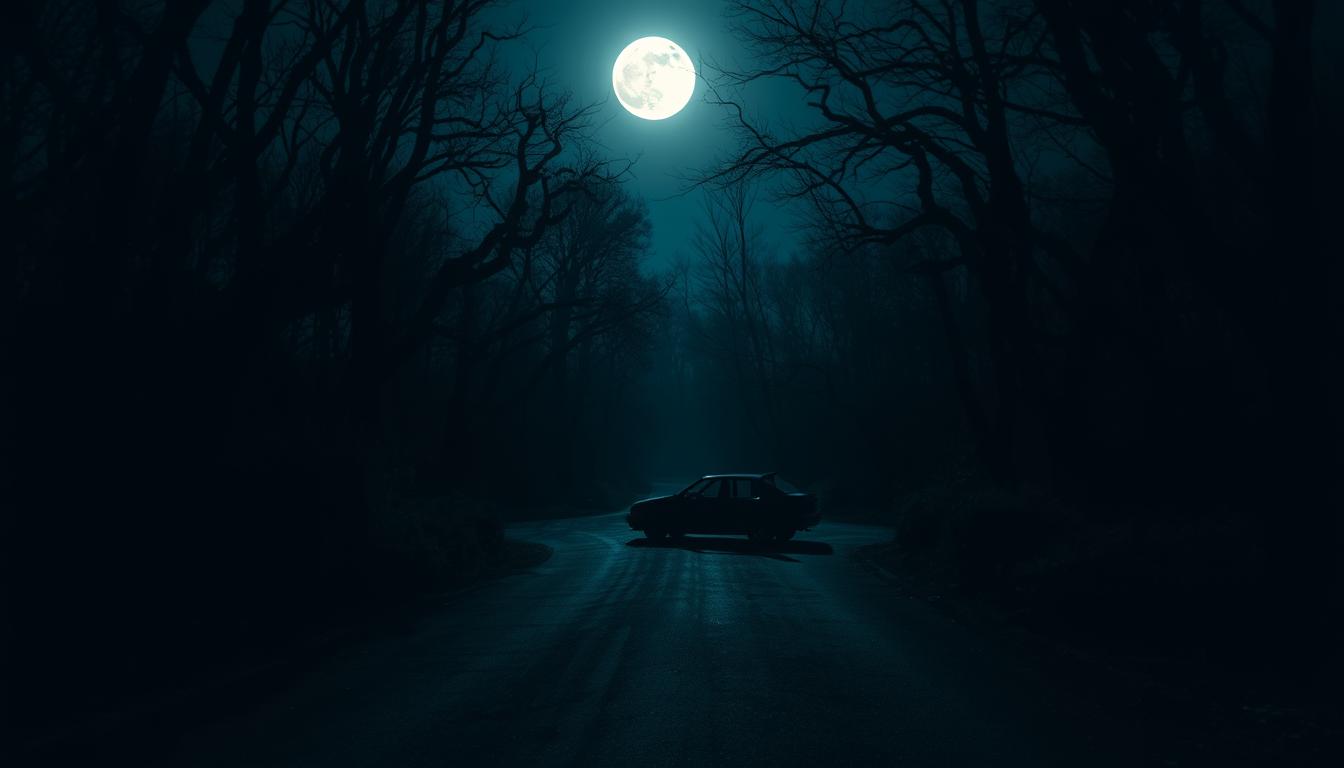
Unexplained disappearances have always fascinated us. Cases like the Lost Colony of Roanoke and missing persons puzzles keep us guessing. Over 40 cases from 1910 to 1990 remain unsolved.
People like Ambrose Bierce and Joseph Force Crater vanished without a trace. DNA testing, which solved Bobby Dunbar’s case in 2004, often raises more questions.
Historical mysteries go back centuries. The Roanoke settlers vanished in the 1580s, leaving only a clue. Edward V of England disappeared in 1483, with his remains sparking debate.
Today, cases like Jimmy Hoffa’s 1975 disappearance continue to intrigue us. These unsolved mysteries show that some puzzles never get solved.
The Fascination With Mysterious Disappearances
Why do stories of vanishing without a trace capture our attention? The public’s interest in disappearances has lasted for centuries. From ancient tales to today’s news, these mysteries blend fear and curiosity.
“The allure of unsolved mysteries lies not only in finding answers but in the imaginative possibilities they offer.”
Historical mysteries like the 1587 Lost Colony of Roanoke intrigue us. The cryptic “Croatoan” carved into a post is all that remains. The 1788 disappearance of Aimée du Buc de Rivéry, a French noblewoman, also remains a mystery. These stories tap into our deep-seated fears of the unknown.
Modern cases, like the 1992 disappearance of the Springfield Three, get attention on social media. Over 12,000 followers follow updates. These stories keep us coming back for more, fueling books, films, and podcasts.
At the heart of this fascination is a truth: every mysterious absence shows us life’s unpredictability. From ancient times to now, these stories continue to captivate us. They remind us of our shared vulnerability and our drive to solve the unsolvable.
Famous Cases of Mysterious Disappearances
Amelia Earhart, a trailblazing aviator, became a famous missing person in 1937. Her flight vanished over the Pacific. Searches lasted 18 months before she was declared legally dead in 1939. Her disappearance sparked many theories, from crashes to secret captures.

D.B. Cooper’s 1971 skyjacking is another unsolved missing person case. He parachuted with $200,000 and vanished. Years later, some money turned up, but his identity and fate are unknown. Jimmy Hoffa’s 1975 disappearance also remains a mystery, despite FBI investigations into mob connections.
“Croatoan”—the lone clue left by the vanished Roanoke Colony in 1587—stills puzzles historians. Over 100 settlers vanished, leaving only this carved word, a riddle unresolved for centuries.
Ambrose Bierce, a Civil War writer, vanished in 1913 on his way to Mexico. Cases like Malaysia Airlines Flight 370 (2014) and the 1972 disappearance of Congressmen Boggs and Begich keep mysteries alive. Each story, from Earhart’s cockpit to Cooper’s parachute, fuels curiosity about what happens when the unknown swallows the known.
Disappearances in National Parks
National parks draw millions of visitors each year. But, their beauty hides dangers. Cases like Dennis Martin’s disappearance in 1969 in the Great Smoky Mountains National Park are haunting. A 1,000-person search was launched, but no answers were found.
The National Park Service reports over 1,180 missing hikers from 2018 to 2023. Some bodies were found decades later. This shows the complexity of wilderness disappearances.
Scott Walsh’s 2015 disappearance in Lake Mead is another example. His body was found six years later. Researchers find patterns in these cases, like bodies surfacing far from where they were last seen.
Over 10 individuals have vanished without explanation in recent years. Factors like extreme heat in Death Valley or drowning risks in the Grand Canyon add to the dangers. Yet, there is hope, like Patricia Hicks, identified via DNA in 2022 after vanishing in 1957.
Search teams face tough challenges. They deal with rugged landscapes, extreme weather, and subtle clues. These mysteries fuel debates and keep families and researchers searching for answers.
Maritime Mysteries: Lost at Sea
The ocean’s depths are home to many ships that disappeared, leaving only mysteries. The Mary Celeste, found adrift in 1872 with no crew, is a big mystery. In 1918, the USS Cyclops vanished with 309 maritime missing persons, and its fate is unknown. These lost at sea mysteries are hard to solve.

“After a 6-day search covering 24,500 square miles, the Witchcraft vanished in 1967, deepening the ocean disappearances legend,” noted in official records.
The Bermuda Triangle is famous for mysteries like Flight 19 (1945) and the SS Marine Sulphur Queen (1963). It carried 15,260 tons of sulfur. The 1996 Intrepid case, with 16 crew missing, shows how deep the mystery goes. Ancient sailors like Eudoxus of Cyzicus also vanished, leaving us with many questions.
Even with today’s technology, storms, rogue waves, and human error can cause disappearances. These lost at sea mysteries show the ocean’s power over humans. They remind us of the sea’s timeless mystery.
Historical records tell of Vasco de Ataíde’s 1500 crew vanishing and the 1726 Dutch ship Aagtekerke losing 200,000 guilders in silver. The 1800 HMS Babet and 1815 Epervier disasters also add to the list. Each story, from the Intrepid‘s Mayday call to the SS President’s 1845 voyage, shows the sea’s indifference. As searches continue and theories grow, these enigmas remain, showing the ocean’s lasting impact on history.
Urban Legends: Mysterious Urban Disappearances
Urban areas, with their crowded streets and hidden spots, are perfect for city disappearances. The 2009 case of Elisa Lam at Los Angeles’ Cecil Hotel is a prime example. It shows how urban missing persons cases mix fact and fiction. Security footage showed her acting strangely before she vanished, leading to many theories.
Stories like the Black Volga—a ghost car said to take kids in Eastern Europe—scare people. Even cases like Barbara Newhall Follett’s 1939 disappearance after a fight are unsolved. Her books and journals are clues in a mystery that’s debated to this day.
Urban settings, like subway tunnels and old factories, add to the mystery. The 2016 “clown sightings” made people fear the unknown. Technology, like CCTV, has helped solve some cases but also made others more puzzling, like Brian Shaffer’s 2006 disappearance.
These tales shape a city’s history. From ghost trains in Korean tales to Mexico’s Death Ship sightings, metropolitan vanishings show mysteries exist even in busy places. Each story, like the 1962 Halloween massacre myth, challenges us to find truth among legends.
The Role of Technology in Solving Disappearances
Technology brings new hope for finding missing people. DNA databases and digital tools connect clues from the past. Forensic advances have identified remains from old cases. Genetic genealogy solved the Golden State Killer case, showing tech’s power in solving cold cases.

Drones now search remote areas quickly. Over 900,000 U.S. drones help find missing people. In Virginia, a drone found a lost hunter in minutes. Hartford police used aerial tech to find an 8-year-old boy.
While drones couldn’t find Brian Laundrie in Florida, they are a big help. They change the game for search teams.
“A disproportionate number of missing Indigenous women persist in Yakima,” said Sharon Miracle of the Yakima Valley Community Foundation. Over 28 Indigenous individuals linked to Washington’s Yakama Nation remain missing. Local efforts use Microsoft’s Power BI software to map cases digitally tracking missing individuals.
Technology’s promise raises ethical questions. DNA databases raise privacy concerns. Yet, tools like facial recognition and cell tower data help investigations. Microsoft’s grants to newsrooms in Yakima help track cold cases, combining journalism and tech.
As tech evolves, solving cold disappearances depends on innovation and ethics. From drones to DNA, each breakthrough brings us closer to closure. The journey ahead needs progress and responsibility to honor the missing.
Cold Cases That Remain Unsolved
Unsolved disappearances like the Springfield Three’s 1992 vanishing and the 1945 Sodder children’s fire mystery are haunting. These cases from decades ago are hard to solve, leaving families in limbo. Out of 29 cases, 86% are from places where the last sighting was made, but they remain unsolved.
In 1974, three girls went missing from a Texas mall, adding to the list of unsolved tragedies. The 1983 disappearance of Emanuela Orlandi in Rome had a green BMW sighting and ties to organized crime. Despite theories, like a Vatican tomb burial, no answers came after 40 years. The case is linked to the Banda della Magliana syndicate, making it even more mysterious.
“Her case involved exploitation networks,” claimed Vatican exorcist Gabriele Amorth, pointing to darker motives behind some long-term missing persons cases. Tips and theories flood in, but closure remains elusive.
Decades-old cases like Madeleine McCann’s 2007 disappearance and the 1945 Sodder fire show the emotional toll on families. Even with modern tools, 22 of 29 cases saw searches reduced, showing how these cases linger. The 90,000 active cases nationwide show the system is struggling with these mysteries.
Cultural Interpretations of Disappearances
Cultural beliefs about missing persons often turn real-life mysteries into timeless tales. The Roanoke Colony’s 1587 disappearance inspired theories blending historical records with supernatural vanishings, such as curses or alien encounters. Every culture reimagines these gaps in history to make sense of the unknown.

Folklore disappearances spread through oral traditions. European myths warn of fairies luring travelers, while Native American stories describe nature spirits guiding lost souls. Asian cultures sometimes see vanishings as ancestral warnings or spiritual tests. These narratives reflect shared fears of the natural world’s power.
Mythological disappearances like Atlantis or the Nabatean civilization’s 11,000-year decline show how societies encode history into legend. Even the Clovis people’s sudden 9050 BCE disappearance fuels debates between scientific theories and mystical explanations.
Modern science now explains some vanishings—like the Franklin Expedition’s lead poisoning—but myths persist. The MV Joyita’s empty 1955 discovery, for example, inspires tales of ghost ships. These stories endure because they mirror humanity’s timeless need to explain the unexplainable.
The Psychology Behind Disappearances
Every missing person has a story, shaped by choice or crisis. In the U.S., over 600,000 people go missing each year, but most are found. The psychology of disappearances shows that some vanish to escape legal trouble or start fresh—deliberate disappearances. Others disappear due to mental health issues, like depression or dementia, making searches tough.
“Why people vanish often depends on their emotional or financial state,” noted experts analyzing case patterns.
Mental health plays a big role in disappearances. Conditions like schizophrenia can cause erratic behavior, making it hard to track someone. The term mental health missing persons highlights how illness impacts search efforts. Many cases involve the “missing missing”—those who are isolated or transient, never reported.
Jacob Gray’s case is a good example of how psychology can confuse investigations. His remains were found 5,300 feet from where he was last seen, leaving many questions. Families of missing people often face long-term grief, holding onto hope even after years.
Investigative Efforts to Solve Disappearances
Today, missing persons investigations mix old and new ways. Police use DNA and AI, along with foot patrols. In the U.S., over 520,000 cases were open in 2021, showing the big challenge. Search techniques include drone scans and online sleuthing. Yet, many families wait years for news, like those from the 1945 Sodder case.
Private groups and volunteers help when police are short. Organizations like the National Center for Missing & Exploited Children share tips worldwide. Detective work disappearances needs patience, like in the Roanoke Colony mystery. New tech, like in the Golden State Killer case, shows tech’s power in .
“Every clue, no matter how small, could lead to answers,” says the International Commission on Missing Persons. “Persistence drives every step forward.”
Despite progress, many cases remain unsolved. Over 20% of U.S. cases are unsolved, and global numbers rise in places like Syria. Yet, each success, like the 2018 identifications in Syria, gives hope. Families and investigators worldwide keep searching, knowing every name deserves closure.
The Legacy of Mysterious Disappearances
Disappearances leave a lasting impact. They have led to changes in legal systems around the world. For example, Etan Patz’s disappearance in 1979 led to National Missing Children’s Day and the Amber Alert system.
These efforts show our dedication to protecting the vulnerable. Yet, many families of missing people are left without answers. In the U.S., over 600,000 people go missing each year, with many cases unsolved for decades.
Even when cases are solved, like Harold Wayne Lovell’s in 2011, emotional scars remain. Families hold onto hope, even when authorities say someone is dead. Petra Pazsitka’s case shows how a person can reappear after being declared legally dead, changing lives forever.
Communities are shaped by these mysteries, like Judge Joseph Force Crater’s disappearance in 1930. DNA technology and databases have helped solve cold cases, like the HMS Erebus from Franklin’s 1845 expedition. But for every solved case, many families continue to grieve, pushing for support in investigations and victim advocacy.
These stories show how disappearances change lives forever. While some find answers, the legacy of unsolved cases keeps families and investigators strong. By remembering these stories, we honor those affected and work towards better prevention and support systems, ensuring no family’s struggle is forgotten.