






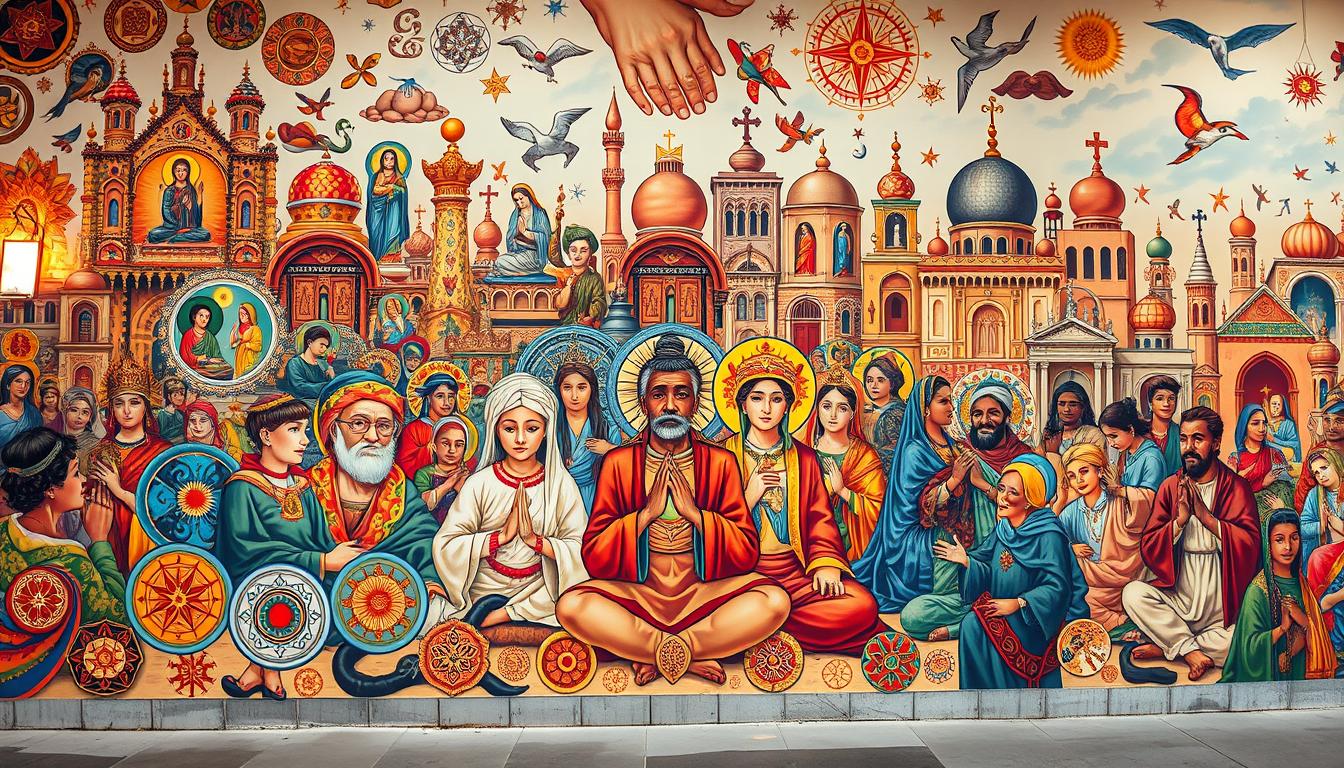
Religion and culture shape our world in many ways. In the United States, 83% of adults believe in God without doubt. Also, 78% say prayer is very important. These numbers highlight the strong bond between faith and social norms.
Religion has a big impact on society. For example, 70% of Americans are Christian, influencing education and politics. But this connection is not just in America. Around the world, 84% of people belong to a religious group. This shows how faith and culture are the base of society.
Spiritual beliefs and social norms shape community values. Religious events like Eid or Diwali are celebrated by over 80% of their communities. These events help strengthen cultural identity. Today, 65% in diverse areas want to talk more about different faiths, showing the power of religion in bringing people together.
Also, 70% of Americans believe religion helps solve problems like poverty and inequality. This shows religion’s ongoing importance. This article looks at how religion shapes traditions, ethics, and daily life in America and around the world, even as new trends emerge.
The Definition of Religion and Culture
Imagine visiting a mosque in southwestern Germany. It’s a real-life example of how religion and culture are connected. Students felt uncomfortable when called ‘Christian,’ showing how cultural identity and faith influence our beliefs. This shows we need to look beyond stereotypes when understanding defining religion and culture.
Religion is more than just worship. It includes rituals, ethics, and shared beliefs. Culture, on the other hand, is about traditions, art, and values. Both play big roles in our lives: Islamic prayer times are based on the moon, while Christmas carols have roots in ancient festivals.
Sociologist Andreas Reckwitz says that today, people mix global trends with local faith practices. This blending is common in cosmopolitan groups.
Today, we often debate between keeping cultural traditions strict and embracing change. For instance, Sufi poetry brings together spiritual and artistic expressions globally. By understanding these layers, we can respect both traditions and new cultural expressions. This helps create harmony in diverse societies.
The Historical Connection Between Religion and Culture
Ancient religious practices set the stage for many cultural norms we see today. Mesopotamian ziggurats and Egyptian pharaohs’ claims of divine right show how religion influenced art, laws, and social structures. The Torah’s 613 commandments, for example, shaped Jewish dietary laws and the weekly Sabbath, making spiritual beliefs part of daily life.

Early settlers in America saw their mission through a religious lens. Historian Paul Johnson noted their belief in a divine purpose, comparing their journey to biblical stories. This belief shaped education, governance, and community values. Hinduism’s caste system and Buddhist meditation practices also deeply influenced Asian societies, showing how religion shapes identity.
The evolution of religious traditions is clear in global customs. Islamic architectural wonders like the Taj Mahal mix faith with art. Indigenous American rituals celebrate nature’s sacredness. Even today, religious holidays like Diwali’s lights and Christmas traditions show history’s lasting impact. As cultures change, these traditions evolve but stay connected to shared human experiences.
“Spirituality and culture are threads woven into the same fabric of human history.”
From ancient texts to modern celebrations, this connection continues to shape societies. It defines what is right and wrong, beauty, and belonging. Understanding this history shows why religion is a key part of cultural identity around the world.
How Religion Shapes Social Norms
Religion and social norms are closely linked. Religious moral codes guide our daily choices. Faith-based ethics tell us what is right and wrong. For example, the Ten Commandments or the Five Pillars of Islam set rules for honesty and charity.
These codes go beyond just worship. They influence laws and social policies in many places.
Religion and family values are also closely tied. Over 80% of stable families say faith is key. Going to church regularly can make marriages stronger and divorce rates lower.
Studies show couples who share their faith are happier together. This shared belief brings them closer. Even in today’s world, these traditions help shape parenting and family bonds.
Regular religious participation reduces psychological distress by 30%, per a 720-person study.
Health also benefits from faith. Going to church weekly can lower blood pressure and reduce stroke risks. Religious practices shape our ethics in everyday life.
For instance, 70% of religious people say their faith guides their decisions on justice and charity. These practices include cultural rituals like weddings and holidays. They strengthen community bonds. Religion plays a big role in shaping values in many societies.
Cultural Practices Derived from Religious Beliefs
Religious practices shape our daily lives, mixing old traditions with new ways. Festive lights during Diwali and Christmas carols bring people together. Rituals like fasting, lighting candles, and sharing meals keep heritage alive while fitting into today’s world.

Our faith influences our daily choices. Jewish dietary laws lead to kosher restaurants everywhere. Observing the Sabbath affects school and work schedules. A teenager said, “I’ve never seen a movie on Friday or Saturday nights because of my religious practices.” This shows how beliefs guide us, even as we live in today’s world.
“My faith feels like a compass—it’s not always steady, but it’s always part of who I am.”
Spiritual influence is seen in art everywhere: stained-glass windows, Islamic patterns, and Navajo weaving. These works of art show devotion and are found in museums and cultural centers. Even places like holiday markets and music festivals show these roots.
Even though 12% of U.S. adults are Catholic outside of formal religion, their traditions live on. They are seen in family recipes, holiday gatherings, and architectural landmarks. This mix shows how religious ideas evolve and become part of our culture. Through food, art, and festivals, these traditions keep our spiritual heritage alive, enriching American diversity.
The Role of Religion in Political and Social Systems
In today’s democracies, finding a balance between church and state relations is a big challenge. The United Nations supports religion in governance rules that keep freedom of belief safe. But, political talks around the world show how religion and politics mix. For example, 78% of Americans pray every week, which can influence their views on education or healthcare.
“Civil religion” concepts, like those described by sociologist Robert Bellah, show how national identities often borrow religious symbols without endorsing specific doctrines. This blend influences laws, as seen in India’s citizenship amendments favoring Hindu migrants over Muslims.
In the U.S., faith-based groups run 85% of homeless shelters, showing the power of faith-based social services. These groups help everyone, but there’s debate over government funding and religious messages. Conflicts also happen when policies don’t match beliefs, like France’s ban on religious symbols in schools or U.S. debates over healthcare mandates.
From Hungary’s anti-immigrant stance to Myanmar’s sectarian violence, politics often use religious identities. But, there are ways to solve these issues. Poland’s Solidarity movement, for example, combined Catholic values with democratic goals. As societies grow, it’s key to talk between different faiths and governments to protect freedom and community well-being.
Religion as a Unifying Force in Communities
Religion and community building go hand in hand. Faith communities bring people together through shared beliefs and rituals. This creates trust and unity among members.

These networks offer practical help in times of need. They provide meals for the sick and financial aid during tough times. Studies show faith community members volunteer more and donate generously.
They also engage actively in local causes. This support makes communities stronger. For example, regular churchgoers have lower rates of suicide, drug abuse, and divorce.
Religion is a source of social cohesion, providing meaning and stability in life’s ups and downs.
These networks also boost mental health. Research shows that faith community involvement can lower depression and increase happiness. Shared rituals and moral guidance help people feel less alone.
Books like Uniting America: Restoring the Vital Center to American Democracy show how these bonds fight against division. From weddings to funerals, religious practices offer lasting support. They prove faith communities are essential for our collective strength.
Challenges to the Intertwining of Religion and Culture
Today, societies face religious diversity challenges as they try to balance old traditions with new ideas. In the U.S., 16% of adults don’t identify with any religion, showing a big change. Younger people, like 25% of Millennials, are moving away from traditional religion, changing how we see faith in modern society.
When religious cultural tensions meet changing values, conflicts happen. Issues like LGBTQ+ rights, medical ethics, and education show the struggle between religious teachings and modern laws. A 1993 study found that those without religion are more likely to change partners, showing how beliefs influence our choices.
“Tradition without adaptation becomes a cage, not a compass,” reflects how rigid interpretations fuel divides.
To overcome these challenges, we need to talk more. While 25% of Americans see religion as key to who they are, others want to break free from strict rules. Finding a balance between respecting different beliefs and moving forward is essential.
Globalization’s Effect on Religious Practices
Globalization is changing how people practice their faith around the world. In the U.S., 69% of people identify with a religion. Now, apps and livestreamed prayers are changing worship. Technology and faith meet on platforms like Instagram and TikTok, spreading religious messages.
Online sermons and virtual pilgrimages let people connect with traditions from anywhere. This mix of old rituals and new tools is reshaping faith.

Migration also influences religious practices. Immigrants build temples, mosques, and churches in new places. They adapt traditions to fit local cultures.
Hindu temples in U.S. suburbs or Muslim community centers in Europe show this. These spaces are where heritage meets global identity. They become centers for preserving rituals and embracing new cultural norms.
Neo-Pentecostal churches in Brazil, like the Universal Church of the Kingdom of God, use TV and social media. They spread prosperity theology, blending faith with media. Now, 70% of religious leaders use social media, connecting people worldwide but raising questions about tradition.
Religious adaptation is thriving, with groups like Indian Pentecostals merging prayer with business ethics. Yet, 45% worry globalization is eroding cultural roots.
“Faith communities must evolve to remain relevant in interconnected worlds,” noted a UN report from 2000, urging collaboration across beliefs.
Despite challenges like cultural clashes, 55% in multicultural societies value interfaith dialogue. From Nairobi to New York, globalization is making faith both adaptive and inclusive. It shows faith’s lasting role in a changing world.
Case Studies: Religion and Culture in Action
Religious case studies show how faith groups adapt and grow in different places. In the U.S., African American Baptist churches and Latino Catholic parishes mix old traditions with new ideas. The Amish, on the other hand, stick to their strict ways, showing how faith guides their lives.
Across the globe, religious practices vary greatly. Brazil’s Universal Church of the Kingdom of God uses TV and radio to spread its message. This church is active in 176 countries, showing how faith groups use modern tools.
In India, Pentecostalism is growing fast among the poor. This shows how faith responds to social changes. These examples highlight religion’s role in adapting to new times.
Neo-Pentecostalism is changing old ways of believing. In Brazil, it often rejects Afro-Brazilian rituals, changing spiritual views. Its use of media, from music to online prayers, shows how religion adapts to a global world.
The Future of Religion and Culture Interrelationship
Generational changes are reshaping how we view religion. Millennials are looking for personal meaning outside of traditional religious groups. Yet, they also find value in rituals like meditation and interfaith dialogues.
This mix of old and new shows how people today want to choose their spiritual path. It’s a time when personal beliefs and community ties can both be important.
Globalization and technology are making religions adapt. Islamic finance combines ancient rules with modern markets. Christian groups use fair trade and ethical investing.
Online platforms are also changing how we learn about faith. From the Pope’s tweets to Sufi music festivals online, tradition meets innovation. This shows that faith can evolve while staying true to its core.
Cultural differences and political tensions are also part of the mix. In Germany, mosques are bridging cultural gaps. In India and Brazil, religion and politics are intertwined in complex ways.
Yet, values like compassion and justice can unite people. As secularism grows in some places, religion’s role in education and the environment is expanding elsewhere.
The future of faith and culture depends on embracing change and diversity. Whether through new rituals or digital worship, tomorrow’s spiritual scenes will be shaped by tradition and innovation. By promoting dialogue and valuing different perspectives, we can create a world where faith and culture come together to enrich our communities.