






Clothing is more than just fabric and thread. It has always reflected society’s values and struggles. In the 1700s, simple wool suits and spinning bees were acts of defiance. They showed how fashion can be a political statement.
These early movements changed identities and economies. They showed the deep connection between fashion and social change.
In New England, over sixty spinning bees took place between 1768 and 1770. They turned yarn production into a patriotic act. The Continental Association of 1774 declared wool a symbol of republicanism, rejecting British silks.
Even George Washington wore a Connecticut-made wool suit at his 1789 inauguration. This showed independence from European luxury. These moments show how clothing choices can redefine national identity.
As America grew, so did its fashion. By the 1790s, rejecting French and British styles became a point of pride. Inventions like the Spinning Jenny and flying shuttle sped up production, blending innovation with cultural shifts.
From protest to progress, every stitch in history tells a story. It shows how clothes shape our world.
The Power of Fashion: A Historical Perspective
From the Middle Ages on, clothes have been a silent way to show power. Historical fashion influence helped societies see status in clothes. Laws controlled who could wear fancy fabrics and colors.
Kings and nobles used fashion power dynamics to show they were in charge. Commoners wore simpler clothes as a way to quietly resist. The Renaissance brought tailored clothes that showed off individuality, moving away from strict medieval styles.
In the 1700s, the French Revolution changed clothing social hierarchies. People threw away fancy wigs and lace. The Industrial Revolution made clothes more affordable for everyone.
Even a simple business suit became a statement of equality. Sartorial politics was big in the 1900s. Dior’s 1947 “New Look” changed how women were seen, and 1980s power suits showed female ambition in the workplace.
Every era’s clothes had secret messages. The 1920s flapper dresses and 1960s miniskirts challenged old ideas. Today, these styles connect past fights to current ones, showing fashion’s lasting impact on culture.
Youth Movements and Style Evolution
After World War II, young people used fashion to express themselves. With more money and school changes, teens in the 1950s found their styles. They wore greasers’ leather jackets or Ivy League button-downs. These generational fashion statements showed they were different from older people.
In the 1960s, 4 million U.S. teens spent their money freely. This led to a teenage style revolution. Looks like poodle skirts and psychedelic patterns became big.
Counterculture styles, like 1960s flower power or punk’s ripped fishnets, started as rebellions. But they later inspired luxury brands. The Yves Saint Laurent Safari tunic showed how youth styles became high fashion.
Today, TikTok challenges and vintage revivals keep these roots alive. Each era’s youth fashion movements show social changes—like protest, optimism, or defiance. Style is more than just clothes. From peace signs to platform boots, these trends show generational pride.
Early styles, like 1950s rock ‘n’ roll or 1970s disco, paved the way for today’s streetwear. Brands now watch what teens like, showing how counterculture fashion trends became big. This shows fashion’s power to connect generations.
The Impact of Music on Fashion Trends
Music has always been a source of style inspiration. From Elvis Presley’s bold moves to Beyoncé’s unforgettable outfits, musician style trends guide our fashion choices. It’s clear that music fashion influence plays a big role in our daily style—designers often get ideas from artists’ looks.
75% of consumers report that celebrity endorsements significantly influence their fashion purchasing decisions.
Punk’s DIY spirit made ripped fishnets a symbol of rebellion. Glam rock’s sparkle and hip-hop’s gold chains became cultural signs. Now, festivals like Coachella turn concert fashion into trends, with athleisure and band tees leading the way.
Social media boosts this connection. Run-DMC’s Adidas deals and Tyler, the Creator’s Golf Wang line show how music and fashion blend. Brands like Supreme thrive on this mix, with 85% of fans saying their style reflects their favorite music. Whether it’s grunge flannel or TikTok dance trends, music keeps changing fashion.
As festivals and virtual concerts grow, expect more fashion and music crossovers. From Beyoncé’s eco-friendly fashion to NFT fashion drops with album releases, the music fashion influence is always evolving. And we’re all dancing to its beat.
Gender Identity and Fashion Statements
Clothing has always been a way to express fashion gender identity. In the past, clothes were more flexible, allowing people to show their true selves. But by the 1700s, clothes started to show clear differences between men and women.
Designers like Paul Poiret and Coco Chanel dared to mix things up. They introduced women’s trousers and suits that looked like men’s. 
Yves Saint Laurent’s 1966 tuxedo for women caused a stir. But it also changed the way we see clothing gender expression. A 1967
Women’s Wear Daily
review said people would “burn all their old clothes” after seeing hisgender fluid fashion ideas. Today, designers like Raf Simons and Balenciaga keep pushing these boundaries. Ty Ziskis’s ZED label even designs for those who don’t fit into traditional categories.
Now, we see a big change in fashion. Big names like H&M and Forever 21 offer clothes for everyone. K-pop and anime styles in Asia also show how fashion can bring people together. Fashion is showing us that it’s not just about clothes—it’s about who we are.
Sustainable Fashion: A Modern Revolution
Today’s sustainable clothing movement is like America’s Revolutionary War homespun campaigns. It shows how clothes can be political acts. Brands like Girlfriend Collective make leggings from recycled plastics, leading the ethical fashion revolution.
This movement is not just about looks. It’s a response to fast fashion’s harm. Every year, 150 billion garments are made, many thrown away in months.
The Rana Plaza collapse in 2013 killed 1,134 workers, revealing labor abuses. Stella McCartney works with South American cooperatives to reduce waste. Pinatex, a pineapple-fiber leather, shows creative material innovation.
Vivienne Westwood links sustainability to climate justice. She focuses on water conservation. Small actions can make a big difference.
WRAP research shows extending a garment’s life by nine months cuts carbon by 30%. Thrift shopping, repair workshops, and supporting eco-certified brands empower consumers. This shift values people and planet over profit.
Global Influences: Fashion Beyond Borders
From the 1700s to today, global fashion exchange has changed wardrobes around the world. French immigrants brought European styles to 18th-century Philadelphia. This showed how cultural fashion influence can travel far.
Centuries later, Indian muslin gowns made elegance in Europe. This shows fashion’s power to cross borders.
“Globalization synchronizes trends, but risks erasing local uniqueness,” noted Jennifer Craik in her 2020 analysis of fashion’s cultural shifts. This tension between homogenization and heritage remains central to modern style evolution.

Today, international style trends are all about mixing things up. Young designers mix Ankara fabric head wraps with modern streetwear. Mumbai’s streets show chikankari kurtis with jeans, a traditional fashion adaptation that celebrates both sides.
Social media helps spread these ideas fast. The “cottage core” trend, started on Tumblr in 2018, went global in months. This shows how digital platforms speed up cultural inspiration.
But not all exchanges are fair. While brands like Fenty celebrate cultural pride, some worry about trends that erase origins. The $400 billion luxury market’s growth depends on respecting cultures and innovating.
As fashion grows, so does its role as a bridge or barrier between cultures.
Technology’s Role in Shaping Fashion Trends
From the Industrial Revolution’s mechanized looms to today’s digital marketplaces, fashion manufacturing evolution has always been driven by innovation. Modern technological fashion innovation is now changing how clothes are made, designed, and worn. Companies like Adidas use AI-powered factories to make sneakers in just five hours, saving weeks.
Brands like Nike use augmented reality for virtual try-ons. This blends fashion tech revolution with a better customer experience.
Smart fabrics, like those that monitor health or change with the weather, show digital style influence. Brands like Stratasys and Materialise lead in 3D-printed clothes, reducing waste and making custom fits possible. AI algorithms quickly turn runway trends into designs, making fashion more precise.
Technology also boosts sustainability in fashion. Blockchain tracks ethical sources, and apps like PLMBR cut design time by 70%. As the $3.3 trillion industry grows, expect more AI-driven virtual showrooms, eco-friendly 3D printing, and smart fabrics. The future of fashion is not just about what we wear—it’s about technology, connection, and constant change.
Statement Pieces That Sparked Movements
Garments like the Black Panthers’ black leather jackets and berets became symbols of power. They were inspired by France’s resistance fighters. This look became a visual statement of Black pride.
FBI Director Hoover saw them as a threat. Yet, their style remains a blueprint for today’s movements. Their “Black is Beautiful” slogan merged with their fashion, showing that clothes can challenge authority.

In 1908, suffragettes wore purple-white-green sashes to fight for voting rights. Their colors showed unity. Later, bloomers, practical trousers under skirts, quietly challenged corsets.
Today, designers update these pieces with linen and silk. They create new styles that honor the past.
The pink pussy hats of 2017 and NBA stars like LeBron James wearing “I Can’t Breathe” shirts keep history alive. These items are more than clothes; they’re calls for change. Whether it’s a beret or a protest shirt, clothes speak volumes without words.
The Role of Fashion in Feminism
Fashion has been a key battleground for women’s rights. In the 19th century, women like Amelia Bloomer wore loose trousers. This was a challenge to the norms that limited their movement and freedom.
In the 1970s, feminist fashion became a symbol of rebellion. Pantsuits were seen as powerful, while rejecting corsets or high heels showed defiance.
But, progress was not always smooth. In 1978, a U.S. official said long work hours made hiring women hard. This showed how dress codes reflected societal barriers. Even in 2017, a worker was sent home for not wearing heels, showing the ongoing fight for gender equality in fashion.
Designers like Diane von Furstenberg changed the game with her wrap dress. It was both elegant and empowering. But, John Molloy’s 1977 book Dress for Success advised women to dress like men, ignoring their own style.
“Pants became a sign of daring,” Calvin Klein noted, recalling how women’s liberation clothing once sparked outrage.
Today, fashion blends rebellion with tradition. Natural hairstyles, simple cuts, and embracing “feminine” colors are all part of this mix. The history of feminist fashion is not just about clothes. It’s about who gets to tell our stories.
Fashion as a Form of Political Protest
Protest fashion has long been a way for marginalized groups to challenge power. The Black Panthers Party, started in 1966, rejected fancy clothes for black leather jackets and berets. This political clothing symbols showed Black pride and refused to blend in.

In 1913, suffrage marchers in Washington D.C. wore white to show unity. They chose white because it was affordable, letting working-class women join. This was an early use of activist fashion trends that inspired future movements.
In 2017, the Women’s March saw millions wear pink “pussyhats.” These hats became a symbol of standing up against sexism.
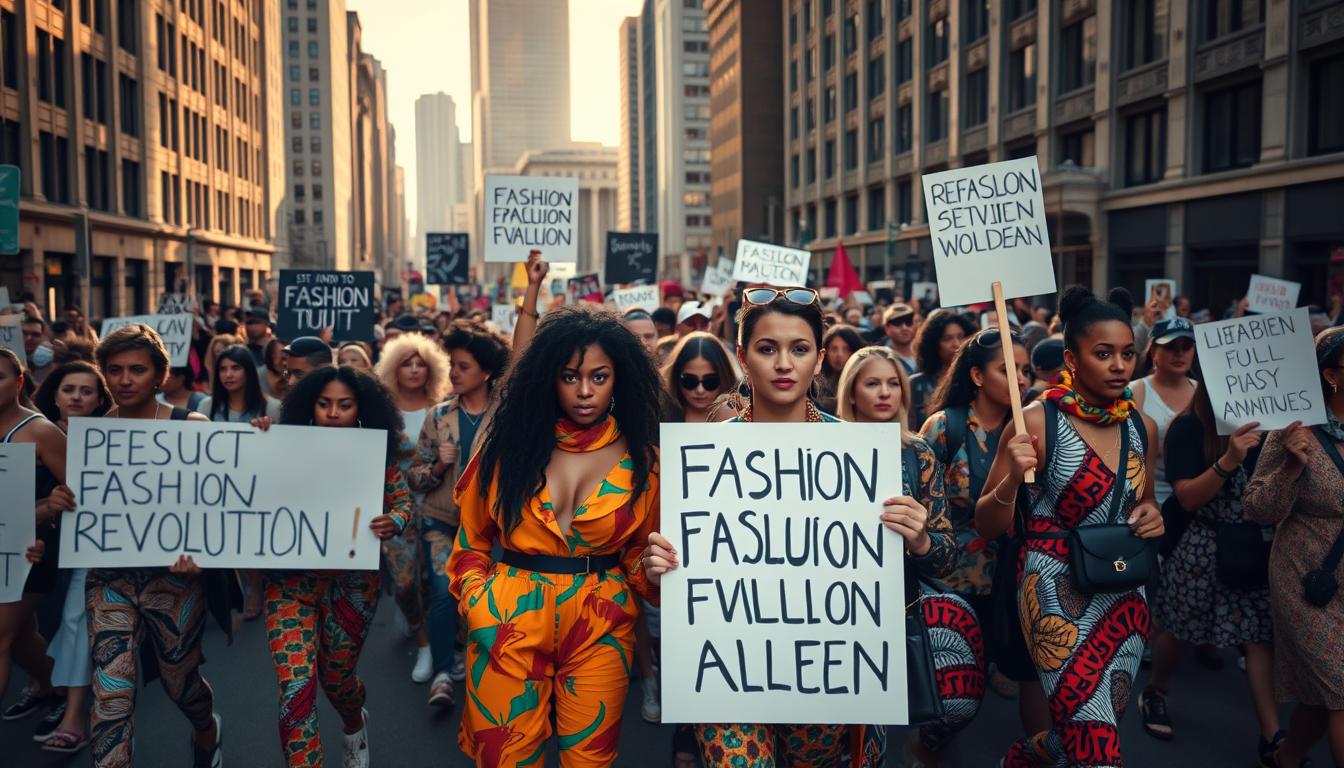
Today, protests mix history with current issues. In 2020, Black Lives Matter protesters wore face masks with “I Can’t Breathe” shirts. The Guy Fawkes mask, from V for Vendetta, became a symbol of resistance during Occupy Wall Street. Even simple choices like wearing a Palestinian keffiyeh or a climate justice tee show fashion’s power to express dissent.
The Intersection of Art and Fashion
Art and fashion have always talked to each other, with artistic clothing influence changing how we see style. Alice + Olivia’s 2018 collection, with Keith Haring’s bold images, made clothes into fashion as art form. It tackled big issues like the AIDS crisis. This designer artistic collaboration shows clothes can start important talks.
Calvin Klein’s 2018 Spring line mixed Andy Warhol’s pop art with everyday clothes. It showed fashion can show art in simple ways. The Whitney Museum’s Warhol show even featured these designs, mixing galleries and runways.
Yves Saint Laurent’s 1965 Mondrian dresses turned geometric art into something you can wear. Louis Vuitton’s Takashi Murakami bags made monograms into psychedelic art.
Fashion is the art of the people.
Designers like Alexander McQueen and Damien Hirst made scarves that mix biology and high fashion. Fendi’s street artist murals and Gucci’s Sistine Chapel remake show art fashion relationship makes high art for everyone. Museums now show off haute couture alongside paintings, seeing its cultural value.
From prints that protest to gowns that are gallery-worthy, these partnerships show fashion is more than clothes. It’s a canvas for creativity. When designers and artists work together, they make outfits into lasting statements, making art something you can wear.
The Future of Fashion and Cultural Change
Future fashion trends are changing how we show who we are and what we value. Designs that blend genders and new norms, like Zoom backgrounds in dress codes, show a move towards being more inclusive. Big brands are now breaking old rules by launching clothes for everyone, not just one gender.
Technology is leading the way in fashion’s future. Virtual clothes from places like The Fabricant could change how we own things. Blockchain helps make sure clothes are made right, and 3D printing cuts down on waste. These advancements mean the next big thing in fashion is about being open and green.
People want clothes that are good for the planet. Movements like #WhoMadeMyClothes are making brands open up. Size inclusivity is also changing how we see beauty. Social media is helping voices that were once ignored, making fashion a way to fight for equality.
From Coco Chanel to today’s digital fashion shows, every era has left its mark. Your closet is more than clothes; it’s a place for change. As fashion keeps evolving, it’s clear: the clothes we wear will always reflect and help society move forward.